OK. I'll do one too. Stolen from Sarah who stole it from Maury D'Annato.
Name or Nom de Blogge: I've always wanted a made up name. Barbara Baker is just not very interesting. I thought Barbara Belleza, la Contessa di Follia, but that would be hard to live up to.
Age: Too old. This is a young person's activity. 65 last week.
Locale: Frederick MD followed by London England.
Raison de blogre: It was a present, but I'm easily dragged into obsessions.
Intended tone of blog: Intellectual insanity mixed with free association.
Voice type (real): contralto when I was young, baritone now.
Voice type (in yer dreams): Agnes Baltsa/Susan Graham. Somewhere in there. Any voice that could sing Octavian. As long as I'm wishing, a Strauss soprano like Kiri, perhaps.
Arias sung in the shower: The last one I heard. "Es gibt ein Reich" "Let the bright seraphim". At my age I'm reduced to whistling.
Arias of other gender sung in shower: "Questa o Quella," this week anyway.
First opera seen: Madame Butterfly, Sacramento, CA
First opera to elicit madly queeny reaction of obsession and dedication to a lifetime at the opera: I'm afraid I fell in love with doing it: Vaughan-Williams' Riders to the Sea. Answer to the actual question is Elisabeth Schwarzkopf singing the Marschallin in Der Rosenkavalier.
Uberdiva living: Cecilia. You knew that.
Uberdiva of the past: Callas now. Marilyn Horne.
Newest enthusiasm: Anna Netrebko.
Fave singer you never hear anyone else enthuse about: Me. Why would they? But I do seem to insist on blowing my own horn.
Favorite line from a libretto: "Halten und nehmen, halten und lassen." It is a goal not yet achieved.
Opera you'd rather eat thumbtacks than sit through ever again: I used to say that about Simon Boccanegra until I saw a good one. I made up the rule of three baritones for it (Never go to an opera with three baritones.) Any opera without girl singers. Streetcar. Lustige Witwe. I'd put in Tristan and Isolde but I've actually never made it all the way to the end. This list is a little long.
"Why won't the Met/my local company put on...": For me there cannot be too much Strauss.
"A perfect role assumption I have seen was...": Leontyne Price substituting for Margaret Price in Aida. Unbelievable.
"If I had a time machine...": Geraldine Farrar in her youth. Malibran. She only had a youth, I guess. And her sister. Didn't she sing the Alto Rhapsody? And one more time with Elisabeth.
Saturday, December 31, 2005


Theory of Opera
Ok, here's my theory. The explosive success of Italian opera in the Baroque occurred because of the serendipitous confluence of two factors.
1. Throughout its history until near the time of Rossini's retirement (coincidence?) the church forbade women to sing in the church. In Rome this prohibition extended to all other public venues as well. From the mid 16th century this gap was filled by castrati who were limited to singing the multi-voiced counterpoint of Lasso and Palestrina. It is my understanding that they ornamented in this style, too, though it is a bit hard to imagine. Despite that, the style didn't allow sufficient scope for their virtuosity. For a castrato singing is his life.
2. The Florentine camerata invented a medium of theatrical solo singing based on the classics.
The two streams met in Rome in the 1620's, and a colossal explosion occurred. Castrato virtuosity met the perfect context for its display, and the rest is history. For the first 200 years that was the fundamental purpose of opera everywhere except France where castrati were never fully accepted. Did I say that strongly enough? I am proposing that castrati are the reason for opera, and not opera the reason for them, as I had always thought.
That's my theory.
1. Throughout its history until near the time of Rossini's retirement (coincidence?) the church forbade women to sing in the church. In Rome this prohibition extended to all other public venues as well. From the mid 16th century this gap was filled by castrati who were limited to singing the multi-voiced counterpoint of Lasso and Palestrina. It is my understanding that they ornamented in this style, too, though it is a bit hard to imagine. Despite that, the style didn't allow sufficient scope for their virtuosity. For a castrato singing is his life.
2. The Florentine camerata invented a medium of theatrical solo singing based on the classics.
The two streams met in Rome in the 1620's, and a colossal explosion occurred. Castrato virtuosity met the perfect context for its display, and the rest is history. For the first 200 years that was the fundamental purpose of opera everywhere except France where castrati were never fully accepted. Did I say that strongly enough? I am proposing that castrati are the reason for opera, and not opera the reason for them, as I had always thought.
That's my theory.
Friday, December 30, 2005
Favorites by Year 2005 👍🏻
I was still working when I began blogging. It was a present from my son. I traveled from the DC area where I lived to Zurich and San Francisco. I watched and blogged a lot about DVDs since the nearest opera company was in Washington. I reviewed 35 performances which included 27 DVDs and only 9 live performances in 4 different houses.
Favorite Performances
- Susan Graham's La Belle Epoche album of songs by Reynaldo Hahn. This album was my favorite thing to listen to while I worked. CD
- (CB) Zurich Giulio Cesare I traveled to Zurich on one of my many trips to see Cecilia Bartoli. This time she was doing Handel's Giulio Cesare in a relatively sedate production. The Egyptians wore
blue and white striped outfits. Cecilia was incredible. By this time I
had been a fanatical fan of Cecilia for over 10 years. I still love
her best. Travel **
- Licitra's Tosca in Washington Salvatore Licitra performed Tosca at the Washington National Opera. I have a soft place in my heart for tenors. Local **

- The Pearl Fishers in San Francisco Bizet's Pearl Fishers appeared at the San Francisco Opera (SFO) long before it came to the Met. What I appear to have enjoyed most were the very sexy Charles Castronovo and Norah Amsellem. Travel **
- (CB) Opera Proibita, both live and on CD. Berkeley This is the long ago time when Cecilia Bartoli still came to Berkeley virtually every year. I was the only one who noticed that she wasn't just waving her arms randomly but was instead conducting the orchestra. Travel **
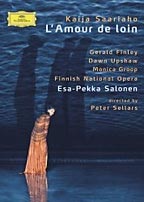
- L'Amour de Loin by Saariaho (It doesn't get newer than this.) It took me a long time and several tries to get through this, but now it is coming to the Met with a Cirque de Soleil staging. The two lovers here are sung by Dawn Upshaw and Gerald Finley, both wonderful in modern repertoire. DVD
- Montserrat Caballé's video biography This is still recommended even if you have no idea who she is. "Casta diva" in the wind is still the best thing ever. DVD
Singer of the Year
Cecilia Bartoli was singer of the year for her wonderful Cleopatra and her Opera Proibita album.
Didn't like
People say I like everything, but actually that's not true. This year I didn't much like: The Rape of Lucretia because of the disturbing mixture of pagan history and Christian commentary; The Dangerous Liaisons by Susa is just musically boring; Doctor Atomic where the characters never seem to be talking to one another.
New to Me Opera
New operas this year came almost exclusively from DVD or video. There are a lot of wonderful performances in this list, but only Doctor Atomic is actually new.
- Adams' Doctor Atomic was live at SFO. This is new to everyone. **
- Barber's Vanessa was on DVD and starred Kiri te Kanawa.
- Bernstein's Candide was on DVD.
- Britten's The Rape of Lucretia (live in San Francisco) **
- Donizetti's Roberto Devereux was a DVD with Montserrat Caballe.
- Giordano's Fedora was on DVD.
- Halévy’s La Juive was on DVD.
- Larson's Rent was on DVD.
- Mozart's Mitridate Re di Ponto was on DVD.
- Monteverdi’s L’Incoronazione di Poppea with Maria Ewing was on DVD..
- Rossini's Il Viaggio a Reims was on DVD.
- Saariaho's L'Amour de Loin was on DVD.
- Susa's The Dangerous Liaisons was on Video.
- Verdi’s Stiffelio was on Video.
##20 top 20 all time
** live, live stream or live in HD
Things recommended to buy
#ad
Books
Books about opera lying around my house:
These books fall basically into three categories: books to help opera goers enhance their opera experience (Rough Guide, Getting Opera, World’s great Operas, etc.), books for professionals (Stanislavski, Smith), and books speculating on what opera is about. Because…. We aren’t really sure why we like opera. When we are watching car chases or love scenes in the movies, we are pretty sure why we like it. Opera inspires people to explain themselves. Missing from the list are biographies of singers and composers.
I. Books for everyone
The Rough Guide to Opera by Matthew Boyden.
This book divides opera into chronological periods and discusses selected works from each period. There is a plot summary and a discussion. Then recordings of each work are recommended and described. Missing is the standard list of characters with the vocal classification for each. This would make it easier to tell who was singing what in the recording listings. For the record collector this is the book. New editions appear periodically. If you own only one book about opera, it should probably be this one.
Getting Opera, a Guide for the Cultured but Confused by Matt Dobkin, 2000.
The first half is intended to draw people into opera who are not now interested in it. I am interested in two lists: opera on film and opera in film. There are a couple here that I haven’t seen. He has a sexy singers list and there is no overlap with mine. Isn’t that interesting! His includes Susan Graham, an idea that simply never occurred to me. In the second half of the book he describes 50 operas selected from all of opera, beginning with Monteverdi’s Orfeo and ending with Adams’ Nixon in China.
The New Kobbe’s Complete Opera Book by The Earl of Harewood, 1969, 1972, 1976 (originally by C.W. Kobbe, 1919.)
This is an extremely thorough plot book with voice classifications and musical examples. Material from the twentieth century has been added, including Britten, Stravinsky, Prokofiev, etc. My favorite is the inclusion of two operas by Ethel Smyth.
The World’s Great Operas by John Tasker Howard, 1948, 1959.
This is a plot book of over 200 operas, arranged more or less alphabetically. He includes the vocal classifications of the characters. There are appendices for composers, librettists, literary sources and characters.
II. Books that go deeper into the subject
Opera, a History by Christopher Headington, Roy Westbrook and Terry Barfoot, 1987.
This makes for interesting reading.
A Historical Study of the Opera Libretto by Patrick J. Smith, 1970.
Some librettists receive whole chapters of their own: Busenello (Venetian opera), Quinault (Lully), Metastasio (opera seria), Wagner (Wagner), Boito (Verdi, himself) and finally Hofmannsthal (Strauss). How interesting! He discusses Da Ponte from the perspective of his other librettos. Who knew he had other librettos? This is an excellent book written from a more academic perspective than opera books usually are. He fills in the holes between the works that remain in the repertoire and discusses the entire body of opera.
The Castrati in Opera by Angus Heriot, 1956.
This contains both general and very specific information about castrati, where they came from, who they were, where they went.
Stanislavski on Opera by Constantin Stanislavski and Paval Rumyantsev, 1975.
Constantin Stanislavski studied to be an opera singer before becoming the leader of the Moscow Art Theater after the Russian revolution. This is a fascinating book describing in detail Stanislavski’s approach to directing seven operas: Eugene Onegin, The Tsar’s Bride, La Boheme, A May Night, Boris Godunov, The Queen of Spades and The Golden Cockerel. There is also a long introduction called “In the Opera Studio” which describes the activities of Stanislavski’s opera studio. This book is essential reading for anyone interested in directing operas or acting in one of the operas listed.
III. Books on the meaning of opera
Opera’s Second Death by Slavoj Zizek and Mladen Dolar, 2002.
What was the first death? This discusses why opera isn’t keeping up with modern life. I have my own opinions.
A Song of Love and Death, the meaning of opera by Peter Conrad, 1987.
He begins with a section titled Rite and subdivides it into Orpheus, Dionysus, Eros, Mephistopheles and Dagon. Then he describes the opera of each historical period. I haven’t read this, but it looks interesting.
Opera as Theater by George R. Marek, 1962.
He works his way through ten operas from the standard repertoire and discusses how they are staged.
Opera as Drama by Joseph Kerman, 1956.
He gets pretty theoretical.
The Queen’s Throat; Opera, homosexuality and the mystery of desire by Wayne Koestenbaum, 1993.
This is not a sensible book, but why should it be? Opera is not at all sensible. There is an entire chapter on the Callas cult and another on how to behave like a proper diva.
These books fall basically into three categories: books to help opera goers enhance their opera experience (Rough Guide, Getting Opera, World’s great Operas, etc.), books for professionals (Stanislavski, Smith), and books speculating on what opera is about. Because…. We aren’t really sure why we like opera. When we are watching car chases or love scenes in the movies, we are pretty sure why we like it. Opera inspires people to explain themselves. Missing from the list are biographies of singers and composers.
I. Books for everyone
The Rough Guide to Opera by Matthew Boyden.
This book divides opera into chronological periods and discusses selected works from each period. There is a plot summary and a discussion. Then recordings of each work are recommended and described. Missing is the standard list of characters with the vocal classification for each. This would make it easier to tell who was singing what in the recording listings. For the record collector this is the book. New editions appear periodically. If you own only one book about opera, it should probably be this one.
Getting Opera, a Guide for the Cultured but Confused by Matt Dobkin, 2000.
The first half is intended to draw people into opera who are not now interested in it. I am interested in two lists: opera on film and opera in film. There are a couple here that I haven’t seen. He has a sexy singers list and there is no overlap with mine. Isn’t that interesting! His includes Susan Graham, an idea that simply never occurred to me. In the second half of the book he describes 50 operas selected from all of opera, beginning with Monteverdi’s Orfeo and ending with Adams’ Nixon in China.
The New Kobbe’s Complete Opera Book by The Earl of Harewood, 1969, 1972, 1976 (originally by C.W. Kobbe, 1919.)
This is an extremely thorough plot book with voice classifications and musical examples. Material from the twentieth century has been added, including Britten, Stravinsky, Prokofiev, etc. My favorite is the inclusion of two operas by Ethel Smyth.
The World’s Great Operas by John Tasker Howard, 1948, 1959.
This is a plot book of over 200 operas, arranged more or less alphabetically. He includes the vocal classifications of the characters. There are appendices for composers, librettists, literary sources and characters.
II. Books that go deeper into the subject
Opera, a History by Christopher Headington, Roy Westbrook and Terry Barfoot, 1987.
This makes for interesting reading.
A Historical Study of the Opera Libretto by Patrick J. Smith, 1970.
Some librettists receive whole chapters of their own: Busenello (Venetian opera), Quinault (Lully), Metastasio (opera seria), Wagner (Wagner), Boito (Verdi, himself) and finally Hofmannsthal (Strauss). How interesting! He discusses Da Ponte from the perspective of his other librettos. Who knew he had other librettos? This is an excellent book written from a more academic perspective than opera books usually are. He fills in the holes between the works that remain in the repertoire and discusses the entire body of opera.
The Castrati in Opera by Angus Heriot, 1956.
This contains both general and very specific information about castrati, where they came from, who they were, where they went.
Stanislavski on Opera by Constantin Stanislavski and Paval Rumyantsev, 1975.
Constantin Stanislavski studied to be an opera singer before becoming the leader of the Moscow Art Theater after the Russian revolution. This is a fascinating book describing in detail Stanislavski’s approach to directing seven operas: Eugene Onegin, The Tsar’s Bride, La Boheme, A May Night, Boris Godunov, The Queen of Spades and The Golden Cockerel. There is also a long introduction called “In the Opera Studio” which describes the activities of Stanislavski’s opera studio. This book is essential reading for anyone interested in directing operas or acting in one of the operas listed.
III. Books on the meaning of opera
Opera’s Second Death by Slavoj Zizek and Mladen Dolar, 2002.
What was the first death? This discusses why opera isn’t keeping up with modern life. I have my own opinions.
A Song of Love and Death, the meaning of opera by Peter Conrad, 1987.
He begins with a section titled Rite and subdivides it into Orpheus, Dionysus, Eros, Mephistopheles and Dagon. Then he describes the opera of each historical period. I haven’t read this, but it looks interesting.
Opera as Theater by George R. Marek, 1962.
He works his way through ten operas from the standard repertoire and discusses how they are staged.
Opera as Drama by Joseph Kerman, 1956.
He gets pretty theoretical.
The Queen’s Throat; Opera, homosexuality and the mystery of desire by Wayne Koestenbaum, 1993.
This is not a sensible book, but why should it be? Opera is not at all sensible. There is an entire chapter on the Callas cult and another on how to behave like a proper diva.
Wednesday, December 28, 2005
Kennedy Center Honors 2005
This is such a great idea. We get to see film of the honoree in action followed by tributes. This year that meant shots of the always fabulously gorgeous Robert Redford in some of his most memorable films.
Helen Mirren came to honor Julie Harris, an honor indeed. I completely adore Helen Mirren. And Tyne Daly was also there to honor Harris. These people are the best. It’s too bad we didn’t get more of them.
Suzanne Farrell’s dance company did her proud. They jumped and bounced and threw themselves into dance with wonderful freshness and enthusiasm, making themselves seem lighter than air, the ultimate goal of ballet. It was a lesson.
This is definitely the most I have liked K D Lang, or is it k d lang? She sang “What a wonderful World” to honor Tony Bennett.
What a triumph over life is Tina Turner, who looks more gorgeous than ever. She has achieved the impossible—she is envied by Oprah Winfrey. And emulated by Beyonce who did her best imitation of Tina dancing to “Proud Mary.” She was rewarded with two thumbs up from Tina herself. My thumbs are also up.
Helen Mirren came to honor Julie Harris, an honor indeed. I completely adore Helen Mirren. And Tyne Daly was also there to honor Harris. These people are the best. It’s too bad we didn’t get more of them.
Suzanne Farrell’s dance company did her proud. They jumped and bounced and threw themselves into dance with wonderful freshness and enthusiasm, making themselves seem lighter than air, the ultimate goal of ballet. It was a lesson.
This is definitely the most I have liked K D Lang, or is it k d lang? She sang “What a wonderful World” to honor Tony Bennett.
What a triumph over life is Tina Turner, who looks more gorgeous than ever. She has achieved the impossible—she is envied by Oprah Winfrey. And emulated by Beyonce who did her best imitation of Tina dancing to “Proud Mary.” She was rewarded with two thumbs up from Tina herself. My thumbs are also up.
Sunday, December 25, 2005
Levine
While driving to Ohio on Saturday, I heard a very nice interview with James Levine in his role as the successor of Seiji Ozawa at the Boston Symphony. I've always thought that James Levine was astounding, a musician for all styles.
He talked about his problems with his legs and how he now sits while conducting. He talked about his baton technique and emphasized his very strong contrast with Ozawa who was known for leaping around on the podium and waving his arms. He was performing a kind of ballet to the music.
In contrast Levine sits quietly and moves his baton a tiny amount. There was even a quote from one of the horn players saying that Levine looked his way with a sense of deep satisfaction instead of giving a cue. The horn player thought he played better than he ever had. Levine emphasized that the music is in the sounds we are hearing and not in the conductor's ballet. At the opera, of course, the conductor is virtually invisible.
Music is such a great thing. We love it so much because its depths contain no bottom.
He talked about his problems with his legs and how he now sits while conducting. He talked about his baton technique and emphasized his very strong contrast with Ozawa who was known for leaping around on the podium and waving his arms. He was performing a kind of ballet to the music.
In contrast Levine sits quietly and moves his baton a tiny amount. There was even a quote from one of the horn players saying that Levine looked his way with a sense of deep satisfaction instead of giving a cue. The horn player thought he played better than he ever had. Levine emphasized that the music is in the sounds we are hearing and not in the conductor's ballet. At the opera, of course, the conductor is virtually invisible.
Music is such a great thing. We love it so much because its depths contain no bottom.
Saturday, December 24, 2005
This countertenor thing
Sarah says:
"Do you know about Michael Maniaci? Countertenor who has sung Cherubino and I think has said he would like to sing Octavian. Now this I don't like at all. Others disagree."
Hmmm. Countertenors come into the picture because the roles they sing were actually sung by men as characters who are men. Cherubino and Octavian are boys who were both intended to be sung by women. Both composers are playing with gender identity. In both roles the characters disguise themselves as women--a woman disguised as a boy disguised as a woman. It's a great joke, part of the sexual tension of these two operas which are both entirely about sexual tension. What is the joke if they are actually sung by men?
On the other hand, I heartily approve of this. Maniaci claims to be a natural soprano and not a falsettist. Dare I say it? A castrato would sound like this.
"Do you know about Michael Maniaci? Countertenor who has sung Cherubino and I think has said he would like to sing Octavian. Now this I don't like at all. Others disagree."
Hmmm. Countertenors come into the picture because the roles they sing were actually sung by men as characters who are men. Cherubino and Octavian are boys who were both intended to be sung by women. Both composers are playing with gender identity. In both roles the characters disguise themselves as women--a woman disguised as a boy disguised as a woman. It's a great joke, part of the sexual tension of these two operas which are both entirely about sexual tension. What is the joke if they are actually sung by men?
On the other hand, I heartily approve of this. Maniaci claims to be a natural soprano and not a falsettist. Dare I say it? A castrato would sound like this.
Wednesday, December 21, 2005
Messiahs I have known
I brought my battered score that has lost its cover page and still shows charring along the top from when I rescued it from a burned house. I was taking it to the Fredereck Messiah sing-along.
The alto solos in my score still show the red underlines, ornaments and markings from when I was a Messiah soloist too many years ago. The same score also shows when to stand and when to sit from the years I was in the San Francisco Symphony Chorus. The symphony performed Messiah with a chorus of only about 25 people, which meant no malingering. Doing Messiah like this four nights in a row is one of the reasons I quit the symphony. It was just too much for a working person.
The first complete recording I owned of anything was the Huddersfield Choral Society recording of Handel's Messiah, so the piece is in my head with a chorus of 250, not 25. So what's not to like? "Worthy is the lamb" is fabulous with that big blast of sound coming at you. This is yet more evidence that I am a philistine.
The Frederick Messiah sing-along had a 15 piece orchestra, including clarinets and an excellent trumpeter, the star of the evening. She used an instrument that looked just a little bigger than a bugle. We didn't form into sections, so I was on my own.
Handel would not have used clarinets since they hadn't been invented yet, but they remind me of the fact that the SF Symphony occasionally performed Messiah in an arrangement by Mozart who wanted it orchestrated for his standard orchestra instead of Handel's very different one. The trumpet parts were changed to French horns. The text was in German, as I recall.
In my day we hardly ornamented at all, performing Messiah virtually as notated, but today's soloists ornament freely, especially the soprano, Leah Inger. She was very into this.
The conductor of the Frederick sing-along, Judith L. DuBose, took everything at quite a breath-taking clip, showing us sing-alongers no mercy. The great curiosity of Messiah is how the choral parts are more ornamented than the solos. Other Handel oratorios are just not like that.
My voice doesn't work at all any more, but I croaked my way through anyway. Were we supposed to rehearse?
The alto solos in my score still show the red underlines, ornaments and markings from when I was a Messiah soloist too many years ago. The same score also shows when to stand and when to sit from the years I was in the San Francisco Symphony Chorus. The symphony performed Messiah with a chorus of only about 25 people, which meant no malingering. Doing Messiah like this four nights in a row is one of the reasons I quit the symphony. It was just too much for a working person.
The first complete recording I owned of anything was the Huddersfield Choral Society recording of Handel's Messiah, so the piece is in my head with a chorus of 250, not 25. So what's not to like? "Worthy is the lamb" is fabulous with that big blast of sound coming at you. This is yet more evidence that I am a philistine.
The Frederick Messiah sing-along had a 15 piece orchestra, including clarinets and an excellent trumpeter, the star of the evening. She used an instrument that looked just a little bigger than a bugle. We didn't form into sections, so I was on my own.
Handel would not have used clarinets since they hadn't been invented yet, but they remind me of the fact that the SF Symphony occasionally performed Messiah in an arrangement by Mozart who wanted it orchestrated for his standard orchestra instead of Handel's very different one. The trumpet parts were changed to French horns. The text was in German, as I recall.
In my day we hardly ornamented at all, performing Messiah virtually as notated, but today's soloists ornament freely, especially the soprano, Leah Inger. She was very into this.
The conductor of the Frederick sing-along, Judith L. DuBose, took everything at quite a breath-taking clip, showing us sing-alongers no mercy. The great curiosity of Messiah is how the choral parts are more ornamented than the solos. Other Handel oratorios are just not like that.
My voice doesn't work at all any more, but I croaked my way through anyway. Were we supposed to rehearse?
Sunday, December 18, 2005
Toujour
This film, La Callas Toujour from EMI of Maria Callas in recital at the Paris opera in 1958 is a joy. One suffers terribly from not having seen anything of her except the Tosca Act II from Ed Sullivan. Here she is in concert doing the first act of Norma, an aria from Il Trovatore and "Una voce poco fa" by Rossini. Then in the second half of the concert she performs Tosca Act II in costume with Tito Gobbi as Scarpia. What a magnificent artist.
She came equipped with this huge buzz saw voice that simply cut through everything she saw, and then she handled it with such grace and control. The brightness of her tone and the completeness of her technique, and the greatness of her musical intelligence allowed her complete control of her phrasing. "Una voce poco fa" is particularly a joy to see.
It's not a beautiful voice. Why hear this? Because you cannot keep it out. Because it takes hold of you whether you wish it to or not.
In Norma the sound of her voice makes possible this marvelous controlled performance. She never shifts into heavy chest, never descends into melodrama, always keeps her control of the phrase. In every note is perfect truth.
It is wonderful to see her acting. She shows Tosca's sweetness and vulnerability as well as her anger and strength. Watch it without the titles. She seems fragile and vulnerable herself, something I did not expect. 1958 was in the middle of her troubles with the press. One wishes there were more films.
Gobbi is also magnificent as Scarpia.
#ad
She came equipped with this huge buzz saw voice that simply cut through everything she saw, and then she handled it with such grace and control. The brightness of her tone and the completeness of her technique, and the greatness of her musical intelligence allowed her complete control of her phrasing. "Una voce poco fa" is particularly a joy to see.
It's not a beautiful voice. Why hear this? Because you cannot keep it out. Because it takes hold of you whether you wish it to or not.
In Norma the sound of her voice makes possible this marvelous controlled performance. She never shifts into heavy chest, never descends into melodrama, always keeps her control of the phrase. In every note is perfect truth.
It is wonderful to see her acting. She shows Tosca's sweetness and vulnerability as well as her anger and strength. Watch it without the titles. She seems fragile and vulnerable herself, something I did not expect. 1958 was in the middle of her troubles with the press. One wishes there were more films.
Gobbi is also magnificent as Scarpia.
#ad
Opera as Drama
I have bought a book, Opera as Drama by Joseph Kerman, and in the Epilogue he says, "Opera entails the revelation of the quality of human response to actions and events."
There is a conventional wisdom about opera. All the serious writers on opera as theater point to the same sources and reach the same conclusions. All look back to Sir Donald Tovey for their inspiration. All discuss the same small list of operas: Figaro, Don Giovanni, Otello, Die Meistersinger. George R. Marek in his book Opera as Theater adds Fidelio, Carmen, La Traviata, Tosca, Turandot and Der Rosenkavalier to this list. Joseph Kerman in Opera as Drama adds Monteverdi’s Orfeo, Gluck’s Orfeo and Pelleas and Melisande.
According to the conventional wisdom, the Italians rise to the level of mention only when they acquire the virtues of the Germans, as in Verdi’s Otello. Mozart and Wagner tower above all the others, casting them into deep shadow. The conventional wisdom requires us to endlessly praise the finales in Figaro and the effect of the leitmotiv in Wagner’s Ring. I have known people who only go to performances of Wagner’s final operas, considering them the only operas worthy of their notice. I am a bit on the other side and have never sat all the way through a performance of Tristan or Parsifal. In contrast my interest flagged in the equally lengthy Saint Francis only during the bird calls scene.
My experience of Wagner is that you are caught up in the spirit of what he is doing or you are not. Terry McEwan’s Ring cycle hooked me. James Morris and Eva Marton riveted my attention. Die Götterdämmerung was not a minute too long. For me Die Walküre is Wagner’s best opera, and I like Meistersinger more and more as the years pass. This kind of getting caught up hasn’t happened for me in Tristan, and I actively loathe Parsifal. I was caught up in the religious ecstasy of Saint Francis. I’ve warned before that I was a philistine.
Kerman describes Wagner’s main dramas as, “Opera as Symphonic Poem.” This is excellent. I was describing these works as the development sections of symphonies with all the exposition and recapitulation left out, but symphonic poem is better, more historically accurate. They descend from the ideas of Berlioz and Liszt, the inventor of the symphonic poem.
Kerman describes the Baroque, apart from Monteverdi’s Orfeo, as the Dark Ages. Associating opera with form is an interesting exercise. Opera in the early Baroque had not yet acquired its obsession with form and produced more dramatically effective opera-drama, especially in the operas of Monteverdi, not just Orfeo. Cavalli has also been revived recently. The interest in these operas stems from the fact that they are effective as theater.
As the Baroque progressed, the formal structure of the da capo aria dominated the requirements of theater. Opera became a series of set pieces with a cursory narrative between the long, showy arias. All of music, not merely opera arias, took on this formal, single affect per movement form. You will find it also in the Brandenberg Concertos or the Quattro Staggione. Why can we accept this in a concerto grosso but not in an opera?
Is Gluck’s Orfeo ed Euridice significantly more interesting than the more traditional La Clemenza di Tito? Or even the completely stereotypical opera seria Giulio Cesare in Egitto? If it is, why is it done so seldom? It doesn’t make my A or my B list.
My take on these writers is that they come to opera from somewhere else, from symphony, from instrumental music generally, and having thoroughly hashed over the symphony and decided what makes a great symphony, they are looking for those same virtues in operas. Great symphonic development doesn’t guarantee a great opera. They keep Wozzeck alive because they adore the fact that all the scenes are based on forms derived from instrumental music, as though this made it a better opera.
The test for a great opera is simple: does it engage the emotions? Do we connect emotionally to the people on the stage? Do their woes reflect our own? Do their joys touch us?
The drama is in the humans. I propose that this explains my conclusions that L'Amour de loin is a great opera while Doctor Atomic is a bad one, though both are directed and produced by Peter Sellars, and both are relatively static in terms of action.
In L'Amour the play is about human response. The entire drama is about human emotion and hardly a line of the dialog is not about emotion, longing, desire, love. Once it is decided how to display this visually, it's all downhill after that. It flows from passion to passion.
Atomic is just ordinary people talking about their ordinary lives. The security guard is a major character because Adams insists on using the actual words spoken by the actual people, except for the poem by John Donne we are told Oppenheimer read. The emotions of the characters are completely missing and replaced by a huge replica of the atomic bomb. The drama has to come from the people. Without Mr. Sellars' bomb there would be nothing.
Opera is about human emotion.
There is a conventional wisdom about opera. All the serious writers on opera as theater point to the same sources and reach the same conclusions. All look back to Sir Donald Tovey for their inspiration. All discuss the same small list of operas: Figaro, Don Giovanni, Otello, Die Meistersinger. George R. Marek in his book Opera as Theater adds Fidelio, Carmen, La Traviata, Tosca, Turandot and Der Rosenkavalier to this list. Joseph Kerman in Opera as Drama adds Monteverdi’s Orfeo, Gluck’s Orfeo and Pelleas and Melisande.
According to the conventional wisdom, the Italians rise to the level of mention only when they acquire the virtues of the Germans, as in Verdi’s Otello. Mozart and Wagner tower above all the others, casting them into deep shadow. The conventional wisdom requires us to endlessly praise the finales in Figaro and the effect of the leitmotiv in Wagner’s Ring. I have known people who only go to performances of Wagner’s final operas, considering them the only operas worthy of their notice. I am a bit on the other side and have never sat all the way through a performance of Tristan or Parsifal. In contrast my interest flagged in the equally lengthy Saint Francis only during the bird calls scene.
My experience of Wagner is that you are caught up in the spirit of what he is doing or you are not. Terry McEwan’s Ring cycle hooked me. James Morris and Eva Marton riveted my attention. Die Götterdämmerung was not a minute too long. For me Die Walküre is Wagner’s best opera, and I like Meistersinger more and more as the years pass. This kind of getting caught up hasn’t happened for me in Tristan, and I actively loathe Parsifal. I was caught up in the religious ecstasy of Saint Francis. I’ve warned before that I was a philistine.
Kerman describes Wagner’s main dramas as, “Opera as Symphonic Poem.” This is excellent. I was describing these works as the development sections of symphonies with all the exposition and recapitulation left out, but symphonic poem is better, more historically accurate. They descend from the ideas of Berlioz and Liszt, the inventor of the symphonic poem.
Kerman describes the Baroque, apart from Monteverdi’s Orfeo, as the Dark Ages. Associating opera with form is an interesting exercise. Opera in the early Baroque had not yet acquired its obsession with form and produced more dramatically effective opera-drama, especially in the operas of Monteverdi, not just Orfeo. Cavalli has also been revived recently. The interest in these operas stems from the fact that they are effective as theater.
As the Baroque progressed, the formal structure of the da capo aria dominated the requirements of theater. Opera became a series of set pieces with a cursory narrative between the long, showy arias. All of music, not merely opera arias, took on this formal, single affect per movement form. You will find it also in the Brandenberg Concertos or the Quattro Staggione. Why can we accept this in a concerto grosso but not in an opera?
Is Gluck’s Orfeo ed Euridice significantly more interesting than the more traditional La Clemenza di Tito? Or even the completely stereotypical opera seria Giulio Cesare in Egitto? If it is, why is it done so seldom? It doesn’t make my A or my B list.
My take on these writers is that they come to opera from somewhere else, from symphony, from instrumental music generally, and having thoroughly hashed over the symphony and decided what makes a great symphony, they are looking for those same virtues in operas. Great symphonic development doesn’t guarantee a great opera. They keep Wozzeck alive because they adore the fact that all the scenes are based on forms derived from instrumental music, as though this made it a better opera.
The test for a great opera is simple: does it engage the emotions? Do we connect emotionally to the people on the stage? Do their woes reflect our own? Do their joys touch us?
The drama is in the humans. I propose that this explains my conclusions that L'Amour de loin is a great opera while Doctor Atomic is a bad one, though both are directed and produced by Peter Sellars, and both are relatively static in terms of action.
In L'Amour the play is about human response. The entire drama is about human emotion and hardly a line of the dialog is not about emotion, longing, desire, love. Once it is decided how to display this visually, it's all downhill after that. It flows from passion to passion.
Atomic is just ordinary people talking about their ordinary lives. The security guard is a major character because Adams insists on using the actual words spoken by the actual people, except for the poem by John Donne we are told Oppenheimer read. The emotions of the characters are completely missing and replaced by a huge replica of the atomic bomb. The drama has to come from the people. Without Mr. Sellars' bomb there would be nothing.
Opera is about human emotion.
Saturday, December 17, 2005
Rigoletto
Rolando and Anna, pronounced Anya I guess, were on the radio today in Verdi's Rigoletto. I thought the role a bit heavy for Villazon, but exactly right for Netrebko. I really love her singing.
David Daniels
I am listening to Rinaldo. I think it is the force of his voice and of his personality that is the attraction of David Daniels, countertenor. The sound isn't exactly beautiful but it fits the heroic characters he is portraying.
This is heavy going for me. It's no wonder I don't listen to this much. I just don't care to hear falsettists.
#ad
This is heavy going for me. It's no wonder I don't listen to this much. I just don't care to hear falsettists.
#ad
Norma
I bought also the 1978 film of Montserrat Caballe’s Norma from the Bel Canto Society.
The character of Norma is one of the things that keeps this opera at the top of the bel canto repertoire. She is a powerful woman, the head of her Druid religion, but bound in this role to complete chastity. Instead, she has two sons by Pollione, the Roman consul. When she finds he is having an affair with Adalgisa, another priestess, she contemplates murdering his sons, like Medea, but decides instead to send them to her father. The opera ends with Norma and Pollione being burned alive, a particularly gruesome way to die.
The other thing that keeps us listening is the incredible vocal line that Bellini has composed. Phrasing “Casta diva” is one of the great tests for a soprano.
The role is defined for us today by the 1954 and 1962 recordings of Maria Callas. Caballe and Callas performed the same repertoire but were very different singers. The first difference is in the sound of their voices: Callas had a hardness in her tone which made it easy for her to bring intensity and drama into her characterizations, while Caballe with her large, beautiful instrument must work harder to get the right theatrical effect with her voice.
In this video Caballe shifts frequently into a heavy chest voice for effect. Callas in the same music can concentrate on the line and get all the drama she needs from her emotions without deliberately manipulating her tone. Of course, there are the Callas high notes in the later recording. Caballe’s voice is always beautiful throughout its range. I never feel that I mind the sound of Callas’ voice. It expresses what she wants to say.
Is it unfair to compare the two? The “Casta diva” on the Caballe biography video with the white robes blowing in the wind is better than this one, where she works very hard to bring drama into her characterization to the detriment of the overall sound. The sweetness of her character is also at odds with Norma's. The singing in Semiramide and Roberto Devereaux is more spectacular.
That said, Caballe comes as close as anyone has to Callas’ standard. I think if I was to pick just one video of the three for Caballe, it would be Roberto Devereaux, perhaps in the version from the bel canto society.
The character of Norma is one of the things that keeps this opera at the top of the bel canto repertoire. She is a powerful woman, the head of her Druid religion, but bound in this role to complete chastity. Instead, she has two sons by Pollione, the Roman consul. When she finds he is having an affair with Adalgisa, another priestess, she contemplates murdering his sons, like Medea, but decides instead to send them to her father. The opera ends with Norma and Pollione being burned alive, a particularly gruesome way to die.
The other thing that keeps us listening is the incredible vocal line that Bellini has composed. Phrasing “Casta diva” is one of the great tests for a soprano.
The role is defined for us today by the 1954 and 1962 recordings of Maria Callas. Caballe and Callas performed the same repertoire but were very different singers. The first difference is in the sound of their voices: Callas had a hardness in her tone which made it easy for her to bring intensity and drama into her characterizations, while Caballe with her large, beautiful instrument must work harder to get the right theatrical effect with her voice.
In this video Caballe shifts frequently into a heavy chest voice for effect. Callas in the same music can concentrate on the line and get all the drama she needs from her emotions without deliberately manipulating her tone. Of course, there are the Callas high notes in the later recording. Caballe’s voice is always beautiful throughout its range. I never feel that I mind the sound of Callas’ voice. It expresses what she wants to say.
Is it unfair to compare the two? The “Casta diva” on the Caballe biography video with the white robes blowing in the wind is better than this one, where she works very hard to bring drama into her characterization to the detriment of the overall sound. The sweetness of her character is also at odds with Norma's. The singing in Semiramide and Roberto Devereaux is more spectacular.
That said, Caballe comes as close as anyone has to Callas’ standard. I think if I was to pick just one video of the three for Caballe, it would be Roberto Devereaux, perhaps in the version from the bel canto society.
Friday, December 16, 2005
Koyaanisqatsi
A couple of things came together for me--my interest in the minimalists and Alex Ross' article on Philip Glass' score--that made me think it was finally time for me to see Koyaanisqatsi, or Life out of Balance.
There's a little joke at the beginning: the DVD has a screen offering subtitles in Francais and Espagnol. The joke is that there is no dialog, just film and music. I am imagining words running across the bottom of the screen.
We begin with empty deserts and oceans and move gradually into human life. There is beautiful footage of a cave with bats flying in and out. The music and the film become gradually more and more frenzied, with film of explosions, buildings falling down and time lapse photography of cars going by. The musical score and the pictures complement each other. Glass' style consists of simple 2-4 note figures that are repeated in simple harmonic contexts. With these tools he is able to create large musical landscapes, larger than should actually be possible.
I wonder if this would make a good exercise video. I used to like to exercise to the video of the Joffrey doing Rite of Spring. I generally think exercise videos are too unimaginative. Why not exercise to Philip Glass and rockets taking off?
There is film of my beloved Bay Area with people riding BART and driving on the freeway that collapsed in the earthquake.
How can we judge that it is life out of balance? It is the only life we know.
#ad
There's a little joke at the beginning: the DVD has a screen offering subtitles in Francais and Espagnol. The joke is that there is no dialog, just film and music. I am imagining words running across the bottom of the screen.
We begin with empty deserts and oceans and move gradually into human life. There is beautiful footage of a cave with bats flying in and out. The music and the film become gradually more and more frenzied, with film of explosions, buildings falling down and time lapse photography of cars going by. The musical score and the pictures complement each other. Glass' style consists of simple 2-4 note figures that are repeated in simple harmonic contexts. With these tools he is able to create large musical landscapes, larger than should actually be possible.
I wonder if this would make a good exercise video. I used to like to exercise to the video of the Joffrey doing Rite of Spring. I generally think exercise videos are too unimaginative. Why not exercise to Philip Glass and rockets taking off?
There is film of my beloved Bay Area with people riding BART and driving on the freeway that collapsed in the earthquake.
How can we judge that it is life out of balance? It is the only life we know.
#ad
History
I've been reading a book called "Opera, A History" by Headington, Westbrook and Barfoot.
They tell us that Mozart wrote Mitridate for Milan and that this explains its completely conventional makeup. I think that's why it's a disappointment: he never steps out of the frame. We have come to expect more from Mozart. Idomeneo was Mozart's 13th work for the stage.
They also discuss castrati, saying that they sang most of the parts for both genders. That they were larger than women is easy to imagine, but the exaggeration of their capabilities is a bit hard to buy. They were specifically trained for their professions to a degree that it is hard to imagine would be true for women at the time.
You don't think I should read about things before I write about them, surely! I would like to read more about the true influence of Gluck's reforms on French opera and the transition to the romantic operas of Weber. I think like most transition periods, the leaders of change are not well known to us. I always remember how much Berlioz loved Spohr.
They tell us that Mozart wrote Mitridate for Milan and that this explains its completely conventional makeup. I think that's why it's a disappointment: he never steps out of the frame. We have come to expect more from Mozart. Idomeneo was Mozart's 13th work for the stage.
They also discuss castrati, saying that they sang most of the parts for both genders. That they were larger than women is easy to imagine, but the exaggeration of their capabilities is a bit hard to buy. They were specifically trained for their professions to a degree that it is hard to imagine would be true for women at the time.
You don't think I should read about things before I write about them, surely! I would like to read more about the true influence of Gluck's reforms on French opera and the transition to the romantic operas of Weber. I think like most transition periods, the leaders of change are not well known to us. I always remember how much Berlioz loved Spohr.
Candide
My latest DVD from Netflix is Candide by Leonard Bernstein.
This is my first experience of Candide, except for the book by Voltaire, of course. It hasn't quite made the transition from novel to opera/operetta and requires a narrator to keep it going. It calls itself an operetta and the songs are operetta-like. I'm used to edgier Bernstein, prefer edgier Bernstein.
It almost works. It's more of a morality tale or mystery play than a musical. We live in the best of all possible worlds. I have always noticed that according the logic at work here, we also live in the worst of all possible worlds. It's what we've got, so just go with it. Build your house, chop your wood, grow your garden. Why can't I picture either Voltaire or Bernstein doing any of these things? I am left wishing for more.
This is my first experience of Candide, except for the book by Voltaire, of course. It hasn't quite made the transition from novel to opera/operetta and requires a narrator to keep it going. It calls itself an operetta and the songs are operetta-like. I'm used to edgier Bernstein, prefer edgier Bernstein.
It almost works. It's more of a morality tale or mystery play than a musical. We live in the best of all possible worlds. I have always noticed that according the logic at work here, we also live in the worst of all possible worlds. It's what we've got, so just go with it. Build your house, chop your wood, grow your garden. Why can't I picture either Voltaire or Bernstein doing any of these things? I am left wishing for more.
Wednesday, December 14, 2005
Castrati
Opera from Monteverdi to Rossini contains a dirty little secret: the castrato. Dramatic presentations in Rome in this period, whether operas or oratorios, used all male casts, because of the church’s complete oppression of women. For some reason not clear to modern minds it was felt better to castrate men than to allow women to appear in public performances. The Roman opera from its origin in the 1620’s performed with all male casts, with castrated men playing the female roles.
In my discussion of the unknown opera composers I left out Landi, Mazzocchi, Marazzoli and the two Rossis, the composers of the Roman school, from my list. My apologies.
Cecilia Bartoli’s Sacrificium goes into detail about when, how and how frequently the castration took place. The sources for this data seem a bit sketchy.
In my discussion of the unknown opera composers I left out Landi, Mazzocchi, Marazzoli and the two Rossis, the composers of the Roman school, from my list. My apologies.
Cecilia Bartoli’s Sacrificium goes into detail about when, how and how frequently the castration took place. The sources for this data seem a bit sketchy.
Monday, December 12, 2005
Rent
It’s hard not to see Rent, a reworking of La Boheme, as politics. What a sad picture of modern life it presents as La vie Boheme. In a century we are generally rid of tuberculosis, but now we have aids and drugs to replace it. Several of the characters are on AZT, and one, a drag queen named Angel, dies of aids. Mimi dances in a club and earns extra money with prostitution. She mainlines.
But when she says, “I’m called Mimi,” you have to respond, “I knew that,” or perhaps, "but my real name is Lucia." She blows out her own candle so they can search for matches.
To be our Boheme they must include lesbians and gays, obsess over commitment, and live in a loft in New York City. This is 1990, the end of the millennium, before 9/11, and the world trade center still stands.
What is the same as that other La Boheme? Friendship, youth, joy, love, most of all love. They haven’t paid the rent, so there is no heat. They worry over selling out for money.
I’m going to be 65 in a couple of days and can’t remember ever being this young. I love Angel and the mixed race dyke that is Musetta’s lover. Forgive me if I call them their other names. And there is tango, which I adore. People dance on table tops and shout out their love of La vie Boheme. There is no yesterday; there is no tomorrow. There is only this moment.
Someone named Jonathan Larson made this. It’s us, our young ones, loving and dying and being young. The music is us, too. I dreamt about it.
#ad
But when she says, “I’m called Mimi,” you have to respond, “I knew that,” or perhaps, "but my real name is Lucia." She blows out her own candle so they can search for matches.
To be our Boheme they must include lesbians and gays, obsess over commitment, and live in a loft in New York City. This is 1990, the end of the millennium, before 9/11, and the world trade center still stands.
What is the same as that other La Boheme? Friendship, youth, joy, love, most of all love. They haven’t paid the rent, so there is no heat. They worry over selling out for money.
I’m going to be 65 in a couple of days and can’t remember ever being this young. I love Angel and the mixed race dyke that is Musetta’s lover. Forgive me if I call them their other names. And there is tango, which I adore. People dance on table tops and shout out their love of La vie Boheme. There is no yesterday; there is no tomorrow. There is only this moment.
Someone named Jonathan Larson made this. It’s us, our young ones, loving and dying and being young. The music is us, too. I dreamt about it.
#ad
Sunday, December 11, 2005
Mitridate

Where besides opera would you be so unable to predict what you will see? So why exactly are these people wearing what look like French Farthingales in a production of Mozart's Mitridate, Re di Ponto? Men playing men, women playing women and women playing men--all are wearing them in an opera first performed in 1770. The style, worn by women, died out c. 1600. And the drama takes place in 63 bc.
Dramatis Personæ:
Mitridate, King of Pontus and other kingdoms, in love with Aspasia (tenor-played by a man--Bruce Ford)
Aspasia, betrothed to Mitridate and already declared Queen (soprano-Luba Organasova)
Sifare, son of Mitridate and Stratonica, in love with Aspasia (male soprano-played by a woman-Ann Murray)
Farnace, eldest son of Mitridate, also in love with Aspasia (male alto-played by a man-Jochen Kowalski)
Ismene, daughter of the King of the Parthians, in love with Farnace (soprano-Lillian Watson)
Marzio, Roman Tribune, friend of Farnace (tenor-Justin Lavender)
Arbate, Governor of Nymphæa (male soprano-played by a woman-Jacquelyn Fugelle)
The most interesting thing about this opera is that it was written by Mozart when he was 14. It is a fully realized opera seria in a style that I would call rococo. Every bit of it is recognizably Mozart. He shows no interest in the Gluck reform movement going on then and composes roles for castrati in formal set-piece arias. Mozart grows up into a more sophisticated composer, but so does the world generally. He is completely in tune with his era.
The singing is lovely, and the vocal writing is amazing. Try to ignore the incongruous costumes.
This opera makes clear all the problems of opera seria. From a theatrical perspective it is too static and meditative for modern life. Nothing lifts this from the surrounding repertoire except that it is by Mozart at 14. If you're curious, definitely look it over. If you want to be entertained, it will not do at all.
#ad
Saturday, December 10, 2005
Minimalists
I am researching the music of the last 30 years in order to write a chapter about it. I have already compiled and am working on a list of operas. See here.
Minimalism descends from the avant garde of the 1950's and is led by Steve Reich, Philip Glass and Terry Riley. The first and last of these three I am familiar with through listening to the recordings of the Kronos Quartet. Kronos used to rehearse in the school near my house in Berkeley. I am a big fan of Kronos.
An early landmark is Steve Reich's "Drumming," 1970-71. Which I have heard. It's, what can I say, it's ... a lot of drumming. Not percussion, just drumming. How more minimal can you get? There used to be people who jammed on drums for hours on end on the cement stairs on the Bay at the head of Hyde Street. You could join in if you brought your own drum. They sort of swung, if I recall correctly. Reich is just drumming.
Some of his early stuff is actually tape manipulations of people talking, which I consider more avant garde than minimalist. Glass is the most minimal of the minimalists. He just does simple triads and arpeggios over and over until your mind goes completely numb.
I have been investigating the work of Arvo Pärt recently and find him repetitive. [Insert laughter here.] That is a gag line. If I have to explain it, it isn't funny. He is doing antique textures--Schütz or Perotin--with modern harmony. It generally has a religious context, and is in fact, intensely religious.
The rest of the group of minimalists are John Adams (not so minimal), Le Monte Young, Meredith Monk, Sol Lewitt, Donald Judd, Carl Andre, Richard Serra and Bruce Nauman. Except for Adams, I can't tell you anything about these guys.
It is possible to get your brain around the music of the minimalist school which makes them a huge improvement over most of serialism. Less is more.
Minimalism descends from the avant garde of the 1950's and is led by Steve Reich, Philip Glass and Terry Riley. The first and last of these three I am familiar with through listening to the recordings of the Kronos Quartet. Kronos used to rehearse in the school near my house in Berkeley. I am a big fan of Kronos.
An early landmark is Steve Reich's "Drumming," 1970-71. Which I have heard. It's, what can I say, it's ... a lot of drumming. Not percussion, just drumming. How more minimal can you get? There used to be people who jammed on drums for hours on end on the cement stairs on the Bay at the head of Hyde Street. You could join in if you brought your own drum. They sort of swung, if I recall correctly. Reich is just drumming.
Some of his early stuff is actually tape manipulations of people talking, which I consider more avant garde than minimalist. Glass is the most minimal of the minimalists. He just does simple triads and arpeggios over and over until your mind goes completely numb.
I have been investigating the work of Arvo Pärt recently and find him repetitive. [Insert laughter here.] That is a gag line. If I have to explain it, it isn't funny. He is doing antique textures--Schütz or Perotin--with modern harmony. It generally has a religious context, and is in fact, intensely religious.
The rest of the group of minimalists are John Adams (not so minimal), Le Monte Young, Meredith Monk, Sol Lewitt, Donald Judd, Carl Andre, Richard Serra and Bruce Nauman. Except for Adams, I can't tell you anything about these guys.
It is possible to get your brain around the music of the minimalist school which makes them a huge improvement over most of serialism. Less is more.
Thursday, December 08, 2005
Squillo
Here is an interesting discussion of technique from the Bel Canto Society:
What gives [Mario] Del Monaco’s sound its elemental excitement? Ring, ping, what the Italians call “squillo.” Most singers merely have resonance, which in and of itself is never exciting.
Tones without squillo cannot pierce or punch. They may exude sorrow but not heartwrenching suffering or violent rate. For me, singers lacking squillo can never be entirely satisfying as, say, Otello. The full-bodied tones of Carreras and Domingo may please, but they cannot thrill. To thrill, such singers have to rely on the use to which they put their tones, on musical interpretation and vocal acting.
The following have or had voices with resonance but no—or little—squillo: Battistini, Blake, Bonci, Borgioli, Bruson, Caballe, Clement, Corena, Finelli, Freni, McCormack, Olivero, Schipa, Simionato, Tagliavini, Valletti and Vrenios. Though he did not have a great deal of squillo, Gigli, for one, generated excitement through exuberance of manner.
The following have or had squillo: Bergamaschi, Cerquetti, Christoff, De Muro, Escalais, Fleta, Groh, Korjus, Kurz, Lauri Volpi, Martinelli, Nilsson, Pavarotti, Ponselle, Rosvaenge, Ruffo, Tamagno, Tebaldi, Tetrazzini and Zenatello. Sometimes a singer will have squillo on high notes only—Bonisolli, for instance. Sometimes a singer will have it on good days only—myself [Stefan Zucker], for instance. Sometimes a singer will have squillo on the Italian vowels “e” and “I” only—De Lucia, for instance. Sometimes a singer will have it but lose it—Callas and Slezak, for instance. Bjoerling and Caruso each relied on resonance and squillo in about equal proportion.
You can increase squillo by lowering your larynx—but you don’t have to lower your larynx to have it. (Getting your larynx to stay really low while singing or talking takes some doing.)
According to Del Monaco’s autobiography, La mia vita e I miei successi, at the beginning of his career he appeared as Ernesto and Alfredo—and couldn’t be heard. Then he pioneered a lowered-larynx technique taught by Arturo Melocchi, who had learned it in China from a Russian [so this is the Russian secret!]—the technique previously was unknown in Italy. It gave Del Monaco a powerful, brassy sound, but there were tradeoffs: the sound was thick, sometimes muscular, and he had limited ability to color, to modulate between loud and soft and to sing with agility or legato. Often the sound was constricted in the passaggio (the area of the voice where head resonance begins to predominate over chest resonance).
Corelli, to overcome these drawbacks, modified the technique: whereas Del Monaco held his larynx very low at all times, Corelli caused his, in his word, to “float.” Overall the result was more satisfying even if Del Monaco’s B-flats were more trumpet-like than anyone else’s. In any case, the standard repertory sung with a lowered larynx is as anachronistic as Bach played on a concert grand—although the result can be thrilling. (Corelli’s rejoinder is that in today’s theaters, with today’s louder and more brilliant orchestras, singers need the power and steel that come from the lowered larynx.)
… On early records many singers have squillo. Since then, it has become hard to find apart from those who lower their larynxes.
Dr B: Interesting, don't you think? I think there are degrees of lowered larynx, some more extreme than others, but that everyone lowers it at least a little. At least some of the names are familiar.
He says Caballe has no squillo. Well, see her Norma from bel canto society. We need a list that's more up to date.
What gives [Mario] Del Monaco’s sound its elemental excitement? Ring, ping, what the Italians call “squillo.” Most singers merely have resonance, which in and of itself is never exciting.
Tones without squillo cannot pierce or punch. They may exude sorrow but not heartwrenching suffering or violent rate. For me, singers lacking squillo can never be entirely satisfying as, say, Otello. The full-bodied tones of Carreras and Domingo may please, but they cannot thrill. To thrill, such singers have to rely on the use to which they put their tones, on musical interpretation and vocal acting.
The following have or had voices with resonance but no—or little—squillo: Battistini, Blake, Bonci, Borgioli, Bruson, Caballe, Clement, Corena, Finelli, Freni, McCormack, Olivero, Schipa, Simionato, Tagliavini, Valletti and Vrenios. Though he did not have a great deal of squillo, Gigli, for one, generated excitement through exuberance of manner.
The following have or had squillo: Bergamaschi, Cerquetti, Christoff, De Muro, Escalais, Fleta, Groh, Korjus, Kurz, Lauri Volpi, Martinelli, Nilsson, Pavarotti, Ponselle, Rosvaenge, Ruffo, Tamagno, Tebaldi, Tetrazzini and Zenatello. Sometimes a singer will have squillo on high notes only—Bonisolli, for instance. Sometimes a singer will have it on good days only—myself [Stefan Zucker], for instance. Sometimes a singer will have squillo on the Italian vowels “e” and “I” only—De Lucia, for instance. Sometimes a singer will have it but lose it—Callas and Slezak, for instance. Bjoerling and Caruso each relied on resonance and squillo in about equal proportion.
You can increase squillo by lowering your larynx—but you don’t have to lower your larynx to have it. (Getting your larynx to stay really low while singing or talking takes some doing.)
According to Del Monaco’s autobiography, La mia vita e I miei successi, at the beginning of his career he appeared as Ernesto and Alfredo—and couldn’t be heard. Then he pioneered a lowered-larynx technique taught by Arturo Melocchi, who had learned it in China from a Russian [so this is the Russian secret!]—the technique previously was unknown in Italy. It gave Del Monaco a powerful, brassy sound, but there were tradeoffs: the sound was thick, sometimes muscular, and he had limited ability to color, to modulate between loud and soft and to sing with agility or legato. Often the sound was constricted in the passaggio (the area of the voice where head resonance begins to predominate over chest resonance).
Corelli, to overcome these drawbacks, modified the technique: whereas Del Monaco held his larynx very low at all times, Corelli caused his, in his word, to “float.” Overall the result was more satisfying even if Del Monaco’s B-flats were more trumpet-like than anyone else’s. In any case, the standard repertory sung with a lowered larynx is as anachronistic as Bach played on a concert grand—although the result can be thrilling. (Corelli’s rejoinder is that in today’s theaters, with today’s louder and more brilliant orchestras, singers need the power and steel that come from the lowered larynx.)
… On early records many singers have squillo. Since then, it has become hard to find apart from those who lower their larynxes.
Dr B: Interesting, don't you think? I think there are degrees of lowered larynx, some more extreme than others, but that everyone lowers it at least a little. At least some of the names are familiar.
He says Caballe has no squillo. Well, see her Norma from bel canto society. We need a list that's more up to date.
Wednesday, December 07, 2005
An American Tragedy
There is an excellent article in Wikipedia about the novel An American Tragedy. According to my rule that opera is about love this should work as an opera. But the reviews I am seeing are all pans.
Here's a nice quote from the Chicago Tribune: "[Dolora] Zajick sucked up every ounce of oxygen on stage in her showy scena, complete with fearless leaps into the vocal stratosphere." She plays the hero's mother. Why can't I write like that?
Here's a nice quote from the Chicago Tribune: "[Dolora] Zajick sucked up every ounce of oxygen on stage in her showy scena, complete with fearless leaps into the vocal stratosphere." She plays the hero's mother. Why can't I write like that?
Sunday, December 04, 2005
Roberto Devereux
Since this is a blog and not a real job, I get to follow my inclinations wherever they go. After watching her biography, my inclinations are taking me to Montserrat Caballe. I was never a fan of Caballe, and now I have to wonder why. Ignorance, probably. After seeing the bio, I bought two videos from the Bel Canto Society--Semiramide and Norma--and one from House of Opera--a 1977 performance of Roberto Devereux by Donizetti from Aix-en-Provence with a very young and very robust sounding Jose Carreras. Like any of HofO's material, it is not up to commercial standards. This DVD is worth the price just for Carreras alone. I notice that the bel canto society also offers this. They apparently have access to the original tapings and don't have to rely on broadcasts.
The picture on the cover of Caballe's bio Beyond Music is from this production, where she is simply amazing. Why Caballe? The size, color, beauty and flexibility of her voice would be hard to top in bel canto repertoire. She can do it all. Nothing ever happens that is even remotely too much for her. Everything in this really very heavy opera is completely within her power and control--every note, every phrase, every emotion. How often can you say that?
I think I personally prefer a balance between heaviness and fioratura that is more toward the Rossini balance. Rossini never forgets it's about singing, but Donizetti is trying for heavier drama. My heart didn't stop for this as it did for Semiramide.
The picture on the cover of Caballe's bio Beyond Music is from this production, where she is simply amazing. Why Caballe? The size, color, beauty and flexibility of her voice would be hard to top in bel canto repertoire. She can do it all. Nothing ever happens that is even remotely too much for her. Everything in this really very heavy opera is completely within her power and control--every note, every phrase, every emotion. How often can you say that?
I think I personally prefer a balance between heaviness and fioratura that is more toward the Rossini balance. Rossini never forgets it's about singing, but Donizetti is trying for heavier drama. My heart didn't stop for this as it did for Semiramide.
Christmas gifts
Of the things I have reviewed this year, these are the best of what's still available:
For the devoted opera lover:

This is the hot new singer Anna Netrebko's best CD.

Equally hot is Rolando Villazon's French aria CD.
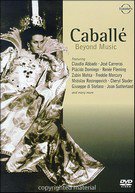
For the devoted old-fashioned opera lover, Caballe's DVD bio is fabulous.
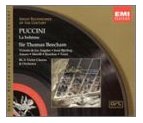 No one's record collection should be without this La Boheme with Beecham and company.

For the newcomer to opera Domingo is always recommended, as in this well-produced Tales of Hoffmann DVD.
For those ready to branch out:

Of course. Don't miss this. Give Bartoli's Opera Proibita CD to everyone if you want.

I loved this DVD film of Ruslan and Lyudmila. Anna Netrebko is in this, too.
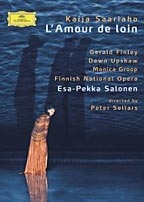
This is for those who are ready for true adventure: L'amour de loin.
#ad
For the devoted opera lover:

This is the hot new singer Anna Netrebko's best CD.

Equally hot is Rolando Villazon's French aria CD.
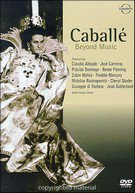
For the devoted old-fashioned opera lover, Caballe's DVD bio is fabulous.
 No one's record collection should be without this La Boheme with Beecham and company.
For the newcomer to opera Domingo is always recommended, as in this well-produced Tales of Hoffmann DVD.
For those ready to branch out:

Of course. Don't miss this. Give Bartoli's Opera Proibita CD to everyone if you want.

I loved this DVD film of Ruslan and Lyudmila. Anna Netrebko is in this, too.
This is for those who are ready for true adventure: L'amour de loin.
#ad
Saturday, December 03, 2005
News
Friends are trying to keep me up on things.
Here's an item of interest. Opernwelt, a German language magazine on opera, has awarded the Stuttgart Opera the production of the year award for Doktor Faust. My friend has written, "Can you believe this?" on the edge of the clipping. This production made its debut in San Francisco, and I have expressed elsewhere in this blog that I loathed it. Doktor Faust works in a factory as a computer worker, apparently. What they're doing with the computers isn't clear, but a lot of time is spent staring at the screens. That is an accurate representation of computer work. Doktor Faust also sleeps in the factory and has visitors who seem to be up to no good. That's all I can tell you. It made no sense at all. Maybe German opera critics know more about Busoni's Doktor Faust than I do and could figure out what was supposed to be going on. The set design by Anna Viebrock also won an award. It's hard to take in.
Here's an item of interest. Opernwelt, a German language magazine on opera, has awarded the Stuttgart Opera the production of the year award for Doktor Faust. My friend has written, "Can you believe this?" on the edge of the clipping. This production made its debut in San Francisco, and I have expressed elsewhere in this blog that I loathed it. Doktor Faust works in a factory as a computer worker, apparently. What they're doing with the computers isn't clear, but a lot of time is spent staring at the screens. That is an accurate representation of computer work. Doktor Faust also sleeps in the factory and has visitors who seem to be up to no good. That's all I can tell you. It made no sense at all. Maybe German opera critics know more about Busoni's Doktor Faust than I do and could figure out what was supposed to be going on. The set design by Anna Viebrock also won an award. It's hard to take in.
Subscribe to:
Posts (Atom)


