Showing posts with label Danielle de Niese. Show all posts

Monday, August 10, 2020

Giulio Cesare from Glyndebourne


Conductor William Christie
Director David McVicar

Giulio Cesare - Sarah Connolly, mezzo
Curio - Alexander Ashworth
Cornelia, Pompei's wife - Patricia Bardon
Sesto, Pompei's son - Angelika Kirchschlager, mezzo
Cleopatra - Danielle de Niese, soprano
Nireno - Rachid Ben Abdeslam, countertenor
Tolomeo, Cleopatra's brother - Christophe Dumaux, countertenor.
Achilla - Christopher Maltman, baritone

This performance of Handel's Giulio Cesare took place at Glyndebourne in 2005.  This is the David McVicar version that ran at the Met with David Daniels and Natalie Dessay in 2013.  I called it Julius Caesar the Musical.  I enjoy remembering that Natalie was ill for one of the performances, and Danielle de Niese was in town.  Naturally she took advantage of the opportunity and stood in for Natalie.  That would have been fun to see.

We are projected in time into the British Empire.  The Egyptian servants wear the Fez, and the Roman Army are dressed in the red uniforms of the British Army.  There is no evidence of Islam, I guess.  Cleopatra looks like a modern woman.  There are WWII ships and dirigibles.
In the real time of Julius Caesar the rulers of Egypt were descendants of one of the generals of Alexander the Great but still called themselves Pharoahs.  This is the original and in my opinion is better than the Met version.

I think I prefer this cast.  They are sincere in their change from Roman to British empire.  Angelika Kirchschlager is maybe the best trouser singer I have ever experienced.  It's worth it to see her alone. 
I'm never really wild about countertenors, so I am happy to see that Giulio Cesare is sung by the great Dame Sarah Connolly.  She even sort of looks like Caesar and carries herself like a great general.  This is Danielle de Niese's first big success, indeed this is her masterpiece.  She sings, she dances, she brings us joy.

I notice that the two dead guys, Tolomeo and Achilla, come back to life.  I also noticed this in Cecilia Bartoli's version.  The characters must have singing in the finale.  Here it is staged, but we're not sure what it should mean.

I loved it.  It runs for a little longer from Glyndebourne, so try to see it.


Sunday, January 15, 2017

Bel Canto on PBS

 
Conductor: Sir Andrew Davis
Production: Kevin Newbury

Prisoners:
Roxane Coss, American opera singer (soprano): Danielle de Niese
Katsumi Hosokawa, Japanese businessman, party honoree (bass-baritone): Jeongcheol Cha
Gen Watanabe, Hosokawa's translator (tenor): Andrew Stenson
Ruben Iglesias, vice president (tenor): William Burden
Father Arguedas (baritone): Takaoki Onishi
Victor Fyodorov (bass): Rúni Brattaberg
Joachim Messner, red cross messenger (baritone): Jacques Imbrailo

Captors:
Carmen (mezzo-soprano): J'Nai Bridges
César (countertenor): Anthony Roth Costanzo
General Alfredo (tenor): Rafael Dávila
General Benjamín (bass): Bradley Smoak

Jimmy López's opera Bel Canto premiered at Lyric Opera of Chicago in Dec 2015 and was filmed for the Great Performances television series the following month.  My tv is on the fritz, so I am viewing it from an online source.  It is based on Ann Patchett's novel which is in turn a fictionalized version of an historical event which took place in Lima, Peru, in 1996-97.  See here where I suggested this novel would make a good opera.

One of the fun things about this opera is that people sing in a lot of different languages — English, Spanish, Japanese, Latin, Russian, French, German and the native Peruvian tongue of Quechua.  The voice lessons are in Italian.  The characters drift toward people who speak their language.  We are at a birthday party for a rich Japanese businessman who loves the opera singer Roxane Coss.

My first reaction is that the role is too heavy for Danielle de Niese, a wonderful lyric soprano.  We need some more spinto.  The terrorists think the Japanese businessman is the president.  Good to remember here that the president of Peru at the time of the attack was Alfredo Fujimori, a Peruvian of Japanese descent.  They say "Tupac Amaru" for no apparent reason.  This is the name of the last Inca ruler.

My second reaction is that the piece is over orchestrated.  Opera is about the singing.  Think about how your opera would sound with only the singing.  I feel it's over orchestrated even in comparison with something like Tristan.  For such a loud orchestra we need Sondra Radvanovsky, not Danielle de Niese.  How happy I felt when I heard a bit of "Laschia chio pianga."  The composer seems only interested in the orchestra.  Since I am not in the hall, I could just be describing the recording.

Past the middle is a lyrical section which I like very much.  J'Nai Bridges has a beautiful solo.  So does Anthony Roth Constanzo.  It's consistently too loud in the orchestra compared to the singers, but the lyrical parts are attractive.  Less heavy on the brass and percussion.

In the real world of opera singing Roxane would speak more languages than anyone else.

There is a lot to like about this opera.  I'm adding a small post script.  When one is sitting in the opera house, one cannot lookup in Wikipedia that the president of Peru was of Japanese descent or other details of this type.

Thursday, October 16, 2014

Partenope

Think of her as one of a pair of twin girls:  PeNELope and ParTENope.  Penelope, Partenope, Penelope,  Partenope.  You'll be close enough to how to pronounce it.

We are referring, of course, to the Handel opera Partenope now playing at the San Francisco Opera.  Get up from your couch and get down to see this.

David Daniels selfie

Cast

Partenope:  Danielle de Niese
Rosmira:  Daniela Mack
Arsace:  David Daniels
Emilio:  Alek Shrader
Armindo:  Anthony Roth Costanzo *
Ormonte:  Philippe Sly

Conductor:  Julian Wachner * 
Production:  Christopher Alden
Dramaturg:  Peter Littlefield


I was ready for this because I read this tweet from David Daniels:

Opening Night of PARTENOPE  #Cards #Bourbon #cigarettes #gasMasks & #HANDEL TOYZ!

It has all this and tap dancing, toilet paper, bare chested man not baritone and a gorgeous homage to art deco.  Favorite joke:  Sound of a toilet flushing followed by Arsace saying "I hear her."  It all kind of went like that.

The production, originally in English at the ENO, is a constant flow of references to the artists of Paris in the twenties.  There is a film by Man Ray, gas masks a la photographer Lee Miller, Ezra Pound, etc.

Lee Miller photograph

The plot can be briefly summarized.  Partenope has three male suitors:  Arsace, Armindo and Emilio.  At the start of the opera she prefers Arsace and has completely rejected Emilio.  She is ambiguous toward Armindo.  Rosmira arrives disguised as a man who wishes to kill Arsace.  At the end Arsace has returned to Rosmira and Partenope has turned to Armindo.  Ormonte is a servant?  As Baroque plots go, it is quite sweet and uncomplicated.

This is the first time in all my years at the San Francisco Opera when I have seen a Dramaturg listed in the program.  A dramaturg is someone who conducts historical research and places the action within the historical period.  You see this in European opera companies quite a lot.  So why would you need a dramaturg for Partenope?

They have moved the action from 1730 to 1930 Paris.  Or perhaps, since Partenope is an historical figure, from 300 b.c. to 1930 Paris and the great art movements between the wars.  So Partenope may or may not be the photographer Lee Miller, Arsace may or may not be the writer Ezra Pound and Emilio is definitely the photographer Man Ray.  Or Maybe Arsace is Tristan Tzara, also a writer.  I'm sure there were more historical references I didn't pick up on.  Perhaps the dramaturg is for making any sense at all of the historical environment of 1920's Paris.

I simply loved it.  It was beautiful to see and hear.  The set was simply gorgeous, and it was populated by some of the most gorgeous singers around.  The countertenor Anthony Roth Costanzo entertained us with beautiful singing, astounding acrobatics on the staircase, a scene where he bares his chest for Partenope and tap dancing.  AND he gets the girl.

Alex Shrader photographs people, develops the pictures and hangs them on the wall, all while entertaining us with some spectacular singing.  One aria is sung while....  I'm giving too much away.

Danielle de Niese gets four wonderful costumes, including a tuxedo, to display gracefully while she sings her arias.


In case you were wondering why Partenope wore a tuxedo in Act II, this is from the movie Morocco 1930 where Marlene Dietrich wears one in her night club act.

The sweetest arias were for Arsace, sung beautifully by David Daniels.  I can't exactly explain the effect this had on me which consisted of smiles and contentment.

In spite of all the smoking I didn't smell any tobacco smoke in case you are worrying about that.

Oh, and I forgot shadow puppets.

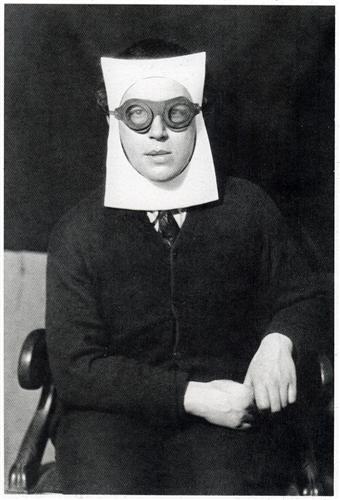
André Breton - Man Ray

At last!  This is a portrait of Andre Breton, the founder of surrealism, by Man Ray.  Yeah!!  Alex Shrader wears something that looks like this in Act I.

Sunday, April 27, 2014

Cosi in HD


Conductor:  James Levine
Production:  Lesley Koenig

Ferrando:  Matthew Polenzani (tenor)
Guglielmo:  Rodion Pogossov (bass)
Don Alfonso:  Maurizio Muraro (bass)
Fiordiligi:  Susanna Phillips (soprano)
Dorabella:  Isabel Leonard (mezzo-soprano)
Despina:  Danielle de Niese (soprano)

Because I was tired from my trip to San Francisco, I didn't make it to the end of Cosi fan tutte in HD on Saturday.  Perhaps I will try again on Wednesday.  For some reason not known to me the Metropolitan Opera is transmitting two repeats of Cecilia Bartoli productions in a row.  She is something of a significant figure in my life, so I could not help feeling her ghost lurking in the wings.  Also this is my third Cosi in the last year.  I left shortly after a lovely "Soave al vento."

As an advertisement for La Cenerentola, a film of Joyce DiDonato played with her singing "Una voce poco fa."  I had to go out during the original broadcast of this aria, so I was pleased to see it.

None of these performers actually reminded me of Cecilia.  Danielle de Niese created her own personal version of Despina which did not summon images of her predecessor in the role. Actually no one ever reminds me of Cecilia, so I should just relax and enjoy it.  Danielle is the correct Fach for Despina. 

In Cecilia's performance she carried the entire show.  Everyone else on the stage was virtually inert.  That was certainly not the case this time.  This is a terrific, well-balanced and lively cast of wonderful singing actors.  I have to come back to see how it ends.  There are never spoilers for Cosi.  Each production invents a new ending.

I went again and made it to the intermission.  I wanted to see the poison scene.  For her magnet Despina uses pruning shears.  It made me want to see the original again.

Saturday, January 18, 2014

Babes of Opera


An article in the Daily Mail has come to my attention.  It says that "opera gets sexy."  I beg your pardon.  Opera has always been sexy.  There can be no question that our up-coming Partenope star, Danielle de Niese, is about as sexy as it gets.  She already appeared in our sexiest list here.

She is currently appearing at the Bayerische Staatsoper in Munich in La Calisto (see above), one of the sexiest operas ever. Here is Danielle in Giulio Cesare.  I also flagged her for a very sexy Poppea here.


Read the article for yourself.  The subject matter appears to be that Danielle has compared her own on stage sexiness (artistic integrity) with Miley Cyrus (sexuality for the wrong reasons).

This doesn't sound like an argument we wish to become involved in, but we do very much prefer Danielle to Miley.

Saturday, January 24, 2009

Orfeo ed Euridice


Orfeo...................Stephanie Blythe  (mezzo-soprano)
Euridice................Danielle de Niese  (soprano)
Amore...................Heidi Grant Murphy  (soprano)

Conductor...............James Levine
Production..............Mark Morris

The only surprise for the HD broadcasts from the Metropolitan Opera (besides will you get to see or hear anything) is who will host. She is in town so why not ask Joyce DiDonato to host Gluck's Orfeo ed Euridice? She was excellent, though she didn't get to do quite so much. Orfeo was presented without intermission so she interviewed only James Levine and Mark Morris, the production designer, who introduced himself as an opera queen. We would like to see Joyce again. Singing? She would make a great Orfeo.

She wished Levine "Toi toi toi" as he left. When I began my stint at the Ulmer Theater, I was told that "Beinbruch" (break a leg) was reserved for sport in Germany. In the theater one said "Toi toi toi," preferably while spitting over the other person's left shoulder. Joyce left out the spitting. Presumably, without the spitting the good luck imparted is only partially effective.

It's actually supposed to be three acts, but was done as one. I am strictly guessing here, but I am imagining that some repeats were cut to create the effect of a through-composed opera. It still sounded like numbers to me. Overture, chorus, dance, recitative, aria. They made a point of mentioning that this was the earliest possible score that was being used and not the Berlioz arrangement.

Stephanie Blythe has a wonderful voice for this role with no weakening in the center. Her character is on stage throughout the opera.


But this is a Mark Morris production and the ballet dominated the action. Gluck starts with Euridice already dead which focuses the action on the trip to the underworld. It's sort of an American Eurotrash minimalist production with modern outfits for the ballet and other characters on stage. The gimmick of the production is that the chorus who sit in the stage machinery, thus eliminating any need to move them around and leaving the stage to the dancers, are each dressed as an historical figure. When the production first came out, there was a quiz to guess who the historical figures were.

I have to say this. There was an incongruity in the casting of the gorgeous Danielle De Niesse as Euridice and the less than gorgeous Blythe, but the action seems to require that Orfeo be mad for Euridice regardless of whether or not the reverse is also the case.

I think the Amor was Heidi Grant Murphy. Sometimes cast sheets are handed out at the theaters for HD, but not this time.

After the fiasco at Glimmerglass, this was my first fully staged Gluck Orfeo. I thought it worked. I went to a different theater and there were no technical problems.

[See Kinderkuchen History 1760-1780]