Showing posts with label Northern California. Show all posts

Saturday, December 04, 2021

A Baroque Christmas in Sacramento


Last night at SAFE Credit Union Performing Arts Center in Sacramento we attended a lovely small orchestra concert with Margaret Batjer, conductor and violin.  I am calling these types of concerts twofers.  That means you get a soloist and a conductor for the price of one.  It's becoming very popular.  In fact the previous Sacramento Philharmonic and Opera concert was also a twofer.   Margaret's experience is as a concert mistress, and that's where she spent most of her time in the concert.  Only in the Bach violin concerto did she stand in front of the orchestra.  The rest of the time she sat in concert master's place on a raised platform where everyone could easily see her.

BACH Violin Concerto in A minor 

Allegro 
Andante 
Allegro assai

HAYDN Symphony No. 8 in G major "Le soir"

Allegro molt
Andant
Minuetto
La tempesta: Presto

Since it was in fact Haydn who invented the four movement symphony format, I reminded my friends that the other guys were not familiar with this form.  Corelli was even earlier than Bach.

 CORELLI Concerto Grosso in G minor.  "Christmas Concerto"

I. Vivace – Grave 
II. Allegro
III. Adagio - Allegro – Adagio
IV. Vivace
V. Allegro 

A concerto grosso involves a small ensemble, this time a string quartet, that alternates with the full orchestra.

BACH Brandenburg Concerto No. 4 in G major

I. Allegro
II. Andante
III. Presto

The Brandenburg Concertos are also concerti grossi.  The small ensemble in this particular case is a violin and two flutes.  The two flutists were not named, but I am going to assume they were Matthew Krejci and Elizabeth Coronati.

Our complaints about the previous concert seemed not to apply here.  We were quite happy with the acoustics.  Our guest violinist seemed to play significantly louder than the other string players.  We loved both the chosen repertoire and the manner in which it was played.


Sunday, November 28, 2021

Cosi fan tutte in San Francisco


Conductor: Henrik Nánási 
Director: Michael Cavanagh 

Ferrando: Ben Bliss*
Guglielmo: John Brancy
Don Alfonso: Ferruccio Furlanetto
Fiordiligi: Nicole Cabell
Dorabella: Irene Roberts
Despina: Nicole Heaston 

The San Francisco Opera is currently showing Mozart's Cosi fan Tutte.  Starting this season if you do not want to go into a crowded opera house, you can for a fee watch the opera at home on live stream.  I would like to suggest that it should be possible to make this available to play later for the same fee.  This would allow friends in Europe to watch it.  It's the middle of the night there.

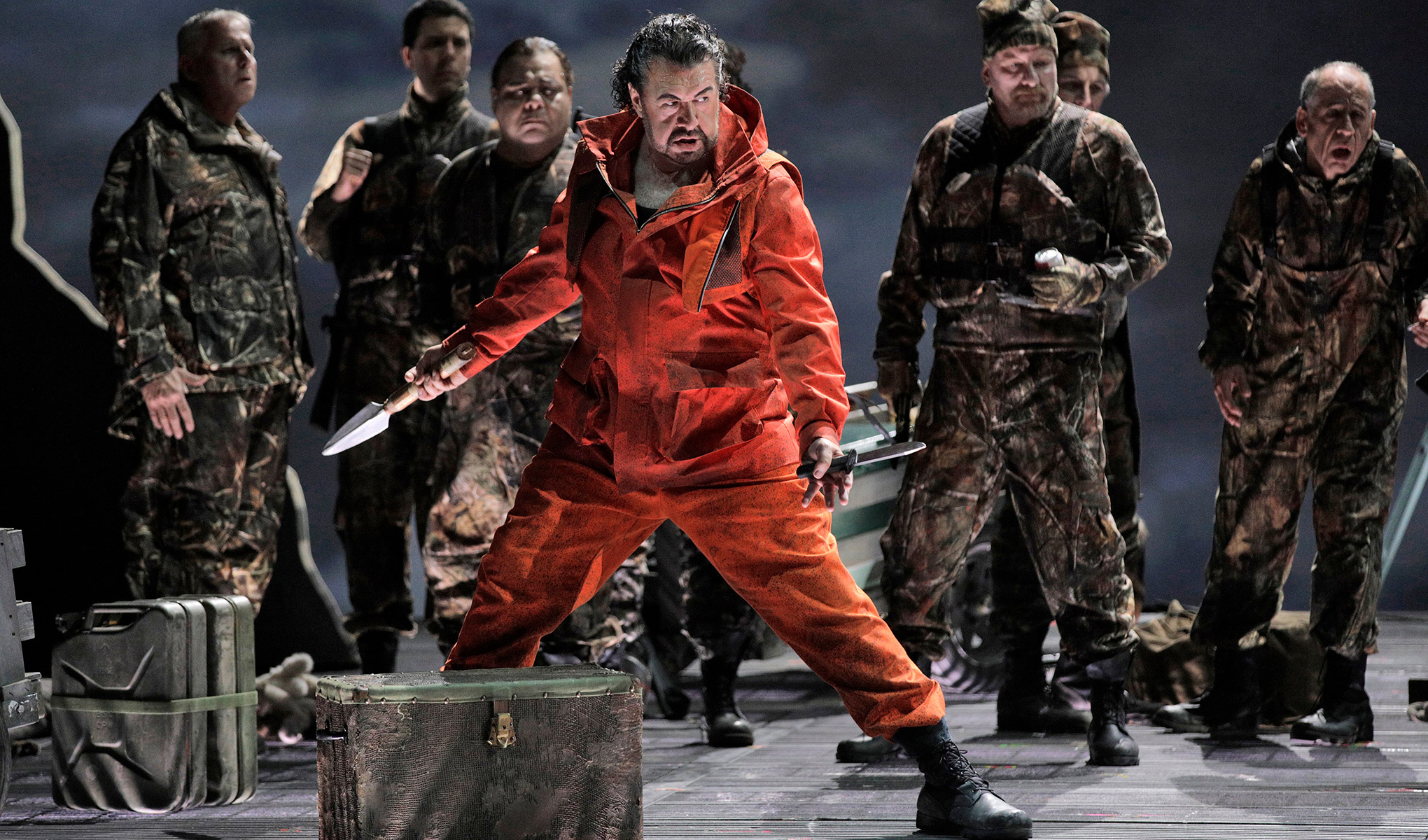
This production began in 2019 with Figaro as part of a Mozart/Da Ponte trilogy and will continue to its conclusion later this season in Don Giovanni.  All three operas are set in the same basic house structure.  In this opera the house is now a country club with sports, dining, and other facilities.  I felt that the concept worked very well.  In the picture above the guys are in the men's locker room.  I liked the look of it and felt that it served very well to clarify the story.  The singers were expected to be rather more athletic than is generally a good idea. 

My only problem with it was with the music.  The music sounded very much like a performance of a Mozart symphony--intense and dramatic.  It wasn't exactly bad, but didn't make me feel like I was seeing a comedy.  My overall take is positive.  This opera is often hated, and I overcame my tendency in this direction.  It was good to see Ferruccio Furlanetto.


Monday, November 22, 2021

SAFE Credit Union Performing Arts Center is Back


The Sacramento Philharmonic and Opera gave their first performance of this season in the recently refurbished  SAFE Credit Union Performing Arts Center.  The program consisted of:

Beethoven "The Consecration of the House" Overture, Op. 124

Mozart Piano Concerto No. 17 in G major, K. 453.

Sibelius Symphony No 2 in D minor, Op 43.

Jeffrey Kahane both conducted and played the piano in the Mozart.  This is something going on now.  Instead of hiring both a conductor and a pianist, one hires someone who can do both at the same time, thus getting two for the price of one.  This is, of course, what would have happened in Mozart's day.  The concert was good but not very exciting.

The picture above is the only one I could find that shows the new configuration of the seats in the reconstructed center.  Previously the seats extended all the way across with aisles only at the ends. Now we have a more conventional configuration.  There is an orchestra pit, but it was covered for our performance.  

They told us the sound was amplified.  It had a kind of flat sound which diminished the expected and desired dynamic range.  Classical music is not normally amplified, and if you are amplifying it, it is considered a sign that you have failed in any kind acoustic design. People came down from the balcony and said they could hear nothing up there.  We'll see.


Friday, September 17, 2021

Keith Bohm in Recital


Faculty Recital: Keith Bohm, saxophone

Sacramento State School of Music
Capistrano Hall - Room 151
Accompanied on the piano by John Cozza.
 
The earliest piece in this recital was written in 1959:  Printemps by Pierre Gabaye, with piano accompaniment.

Arabesque on a theme by Debussy (2018) by Jenni Watson was accompanied by an electronic sound track.  This was fun.

Suite en duo (1971) Aria, Allegro, by Guy Lacour came in 2 movements and was played on two saxophones with no accompaniment:  Keith on tenor sax and Russell Veirs on alto sax.  There was much talking about the fact that originally the slow movement Aria followed the fast movement Allegro, but Keith likes it better this way.

Soar (2016) by Alastair Penman brings us back to piano accompaniment.

Ray (2017) brings us back to Jenni Watson.

All of these pieces have at least a hint of jazz.  Keith seems not to care for ugly modernity.

Fuzzette, the Tarangula (1962) by Robert Muczynski is in 9 movements and has a narrator and a flute player.

The program ended with Tango Suave (2012) by Jean Matitia.  

A whole program of saxophone is not unpleasant.

Saturday, September 11, 2021

Saint-Saëns Organ Symphony in Sacramento


Sacramento Philharmonic & Opera opened their 2021-2022 season last night in the Memorial Auditorium.  This venue was chosen because it is one of the few places with a built in pipe organ, and they wanted to feature the Organ Symphony by Camille Saint-Saëns.  The rest of the program also included organ. 

The conductor for the performance was Robert Moody,


and the organist was James Jones. 

Originally the program was set to include Barber's Adagio for Strings in an arrangement for organ, but the organ itself is being repaired and would not play the piece.  Short pieces for organ were substituted.

Next was Edward Elgar's (1857-1934) Enigma Variations (1899). One source says there are 14 variations.  This information would have made sense to include in the program.  Some but not all of the variations included organ for a different sound.

To end the program we enjoyed the Organ Symphony by Camille Saint-Saëns (1835-1921).  I liked the sound of this piece much better than the previous one.  Memorial Auditorium is not an ideal space for classical concerts due to the acoustics.  Towards the end of this piece the organ began to boom in.  I was disappointed that we had to wait so long for this loud booming sound.  All in all it was enjoyable.  Welcome back.


Sunday, August 29, 2021

Le Chevalier de Saint-Georges Premier


The project I mentioned here will have its first showing on August 27.

I attended this first showing, and my friend Omari Tau turned out to be the star.  The life of the Chevalier was dramatized with all the other characters portrayed in silhouette.  This film was created for educational purposes and should not be confused with the movie Chevalier de Saint-Georges starring Kelvin Harrison Jr. 

Monday, August 02, 2021

Katya Kabanova at West Edge


Conductor / Music Director - Jonathan Khuner
Production Director - Indre Viskontas

Katya - Carrie Hennessey
Kabanicha, mother in law -  Kristin Clayton
Boris, boy friend - Christopher Oglesby
Tichon, Katya's husband - Alex Boyer
Kudrjaš - Chad Somers
Varvara, Tichon's sister - Sarah Coit
Dikój, Boris's uncle  - Philip Skinner

Leoš Janáček's Káťa Kabanová (1921) played at the Bruns Amphitheater in the East Bay hills as part of the season for West Edge Opera.  It's sunny and hot when the sun is shining on you, and cold when it isn't.  You may rent yourself a blanket.  Luckily I brought a hat and a jacket.  This is normally the venue for what is lovingly called Cal Shakes, meaning UC Shakespeare, I assume.  Adjustments were made to accommodate the orchestra who played from under the stage.  In the current era where performing before an audience is difficult, I suppose they were lucky to get it.  I felt that the heat/cold situation was extreme and the acoustics, particularly for the singers, were bad.

I have seen this opera before at the San Francisco Opera before I began blogging.  I remember only the part where Katya throws herself into the Volga.  I felt that this staging introduced the characters and their relationships more successfully.  The stage didn't become cluttered with irrelevant people, because the tiny chorus seemed always to be offstage.  Everyone dresses in modern clothing.  The singers for Tichon and Boris look similar, but were clearly distinguished through their costumes.

This opera would probably best be described as verismo, concerned with the hum drum problems of ordinary people.  Katya and Tichon love one another, but then there is the boss/mother in law who expects to be always the center of attention.  She runs a business and Tichon works for her.  Katya seems to want to be a good girl, and when it transpires that she cannot manage this, she wants to be punished.  She goes around asking everyone to accommodate this desire, and when they don't, she kills herself.

I am a fan of Carrie Hennessey whose character pretty much carries this opera.  (Pun?)  I enjoy her work, and felt that the cast did a fine job.  This is not in line to become a favorite opera.


Monday, July 12, 2021

San Francisco Opera 2021-2022

The season has been announced for 2021-2022 at the San Francisco.  To reduce the number of people in the house at any given time, they are switching to the kind of season where only one opera plays at a time.  This change will result in only 5 operas.  We can only hope for a return to normal in the following season.


August 21, 27, 29; September 3, 5  Puccini's Tosca with the new music director Eun Sun Kim and starring Ailyn Pérez, Michael Fabiano, and Alfred Walker.  This is an excellent group.  


October 14, 17, 20, 22, 26, 30  Beethoven's Fidelio in a new production by Matthew Ozawa, starring Elza van den Heever and Russell Thomas. Music Director Eun Sun Kim conducts.  These are also excellent singers.  Fidelio is one of my favorites.


November 21, 23, 27; December 1, 3  Mozart's Cosi fan tutte.  Henrik Nánási conducts an  ensemble featuring Nicole Cabell, Irene Roberts, Benjamin Bliss, John Brancy, Ferruccio Furlanetto, and Nicole Heaston.  This is part 2 of the Mozart/Da Ponte trilogy production by director Michael Cavanagh.  I saw part 1 in 2019 here.  It seemed to work well.


June 4, 10, 12, 15, 18, 21, 26; July 2, 2022  Mozart's Don Giovanni conducted by Bertrand de Billy and starring Étienne Dupuis, Luca Pisaroni, Adela Zaharia, and Carmen Giannattasio.  This is part 3 of the Mozart/Da Ponte trilogy production by director Michael Cavanagh. 


June 14, 17, 19, 23, 25; July 1, 3, 2022   Sheng's Dream of the Red Chamber.  I saw this opera in 2016 at the world premier.  They have not provided much additional information.


Thursday, July 08, 2021

West Edge Postponed

2021 has arrived and here is the West Edge Opera summer postponed from last year.  The text is the same, but the pictures are new and dates and location are added.

This is the publicity for the 2020 season of West Edge opera:
 Leoš Janáček’s  Katya Kabanova
 Elizabeth Cree, by Kevin Puts and Mark Campbell
 Francesco Cavalli’s Eliogabolo

August 6, 2019


West Edge Opera’s Mark Streshinsky | Credit: Mark Mayfield

While West Edge Opera has your attention, as their season rolls out, the company has announced next year’s season. No surprise, it’s just as ambitious as this year’s season. The festival opens a week earlier, July 25, 2020, instead of the first week in August and, just as with the current productions, you will have to wait for Artistic Director Mark Streshinsky to do location scouting to discover where the shows will be held, so stay tuned.


As usual, there is no sign of a top 50 opera anywhere, which is why some of us regard WEO so highly. However, there is a lot of great music in the works: the 2020 festival opens with Leoš Janáček’s brilliant, realistic drama Katya Kabanova with soprano Carrie Hennessy in the title role. This is a show that will challenge the company on a number of levels, but WEO has waded into these waters before, producing Janáček’s The Cunning Little Vixen in 2016. If they succeed, it will be one of the highlights of the Bay Area’s musical year.   July 24, Aug 1 & 5

 
The contemporary opera that the company always offers will be Elizabeth Cree, by Kevin Puts and Mark Campbell, based on a novel by Peter Ackroyd and premiered by Opera Philadelphia in 2017. The opera is the third collaboration by Puts and Campbell, following Silent Night (2012) and The Manchurian Candidate (2015). Despite the fact that the opera is about a grisly murder, it is, the authors insist, darkly comic, and Puts believed it was his best theater work up to that time. His tonal idiom and command of period style should work well in this tale of a music hall singer of the 1890s who is accused of murdering her surgeon husband. July 25, 30 & Aug 7

 
Francesco Cavalli’s Eliogabolo (1667), from the anything-goes Venetian opera houses of the 17th century is the third show of the season. The tale of a perverse and depraved Roman emperor, it almost feels like a modern show (an operatic Caligula, maybe) and in fact it never got its Venetian premiere, but not because it was too risqué. (It was replaced by an opera on the same subject by a different composer.) Maybe it was that Cavalli was too old-fashioned at the time, but in the 21st century, audiences have come around to Cavalli. The show has major productions at Theatre de la Monnaie (Belgium, 2004), the Aspen Festival (2007), Gotham Chamber Opera (NY, 2013), and Paris Opera (2016/17). Not bad for a modern opera. The West Edge production will star countertenor Randall Scotting in the title role, a part he can only hope leaves him clothed most of the time.   July 31, Aug 6 & 8

Michael Zwiebach is the senior editor/ content manager for SFCV. He assigns all articles and content, manages the writing staff and does editing. A member of SFCV from the beginning, Michael holds a Ph.D. in music history from the University of California, Berkeley.

BB.  This will all take place in The Bruns Amphitheater in Orinda in 2021.

Sunday, March 28, 2021

San Francisco Ring -- Götterdämmerung


Conductor - Donald Runnicles 
Director - Francesca Zambello 

Brünnhilde - Iréne Theorin 
Siegfried - Daniel Brenna 
King Gunther - Brian Mulligan 
Hagen, Alberich's son - Andrea Silvestrelli 
Gutrune, sister of Gunther - Melissa Citro 
Waltraute - Jamie Barton 
Alberich - Falk Struckmann 

Götterdämmerung completes the Richard Wagner Ring cycle.  This is my first time for this production.

Act I

The balance between the orchestra and the three Norns is terrible. Why is this always such a problem?  Why don't properly placed microphones solve this?  Instead of threads, these strands of fate are fat electrical cables, and when one breaks, the Norms die.

We see Siegfried and Brünnhilde after their night together still blissfully in love.  He gives her the ring and goes off to explore.  The Rhein valley looks like a refinery.  

Siegfried ends up at the posh home of Gunther, Hagen and Gutrune.  He has taken the tarnhelm with him and tells them where he got it.  He drinks a potion, falls immediately for Gutrune and forgets all about Brünnhilde.  

Now we are back with Brünnhilde where she waits for Siegfried.  Her sister Waltraute arrives.  I like very much Iréne Theorin.  I remember that she was an emergency replacement.  I'm not sure I think Jamie Barton is a Wagnerian.  Waltraute tells Brünnhilde about how much Wotan has changed.  

After Waltraute leaves, Siegfried returns with the tarnhelm on his head.  The other three parts of the San Francisco Ring had subtitles, but this one does not.  It's hard.  He takes the ring from Brünnhilde and leads her off.

Act II

Alberich shows up to lecture his son Hagen.  If the ring is so powerful, why doesn't it work for anyone but Alberich?  I have always wondered about this.  I'm trying to make it all the way to the end, but it's pretty rough going.  Gunther drags Brünnhilde onto the stage in front of a crowd of his subjects.  Siegfried has eyes only for Gutrune, and she for him.  Siegfried swears he doesn't know Brünnhilde, and she swears things, too, only hers are true and his are not.  I enjoy very much how Theorin enthusiastically jumps about in her role.

Act III

All the fun parts of this opera are in this act.  The Rhein maidens are back, and they are covered in plastic bags full of garbage.  Siegfried enters and I'm booing. He's carrying a military style rifle which the maidens take from him.  Perhaps none of them can rule the world with the ring because they haven't renounced love.  It's harder than you think. The bad acoustics at the San Francisco Opera House are all too apparent in this recording.  They give him back his gun and he goes off.

One both hates and loves Daniel Brenna's Siegfried.  One loves the singer and hates the character.  One is no longer charmed by his egotism.  I'm shouting at the screen "You f**d up buddy."  Hagen, Gunther and Siegfried are together.  Hagen gives Siegfried a potion to reverse the other one, and he tells the story of Brünnhilde in the ring of fire.  That means he lied when he swore he didn't know her.  So Hagen kills him.  The big discovery of this Ring cycle was Andrea Silvestrelli as Hagen.  Magnificent.

For the ending we return to Gutrune with Siegfried's body.  When Hagen tries to steal the ring from Siegfried's dead hand, S raises it in the air and Brünnhilde appears.  It works out as it should.  My favorite thing is Brünnhilde gets to be Brünnhilde again.  Big finish.  I'm crying.  The sheet of gold is back where it belongs.  It's all about women now.  A great ending.

We loved Donald Runnicles, and it's great to see him again.

Saturday, March 20, 2021

San Francisco Ring -- Siegfried


Conductor: Donald Runnicles 
Director: Francesca Zambello 

Mime: David Cangelosi 
Siegfried: Daniel Brenna *
The Wanderer (Wotan): Greer Grimsley 
Alberich: Falk Struckmann 
Fafner: Raymond Aceto 
Forest Bird: Stacey Tappan 
Erda: Ronnita Miller 
Brünnhilde: Iréne Theorin 

I am enjoying that at the beginning of Siegfried Mime is banging in the rhythm of the score.  We are up to the part of the San Francisco Ring that I have not seen before.  The last time I simply was too tired to do four long operas in a row.  This is part of the caravan series.  Mime and Siegfried live in a busted up caravan.  We actually get a bear--not an actual bear.  

Wotan comes in to check on Siegfried.  I actually love Greer's harsh, growly voice as Wotan.  Mime and the The Wanderer are exchanging riddles and Mime recognizes that this is Wotan.  He is too dumb to figure out who it is who has never known fear.  We figure this out easily.  How about someone who brings a live bear home with him?  The reforging of the sword is very convincing.  In retrospect I suspect that Mime is pretending not to know.

This scene with Alberich and The Wanderer is reminding my of my rule of 3 baritones.  "Never go to an opera with three baritones."  This is a hell of a lot of snarling and growling.  Wotan by himself is fine.  Wotan wanders from place to place seemingly to provide Wagner with someone to explain what is going on.  I insist on my no explaining/all showing philosophy.  These operas are so long because someone is always explaining something.

The character of Siegfried in the person of Daniel Brenna is enjoyable.  The production seems to work in spite of the fact that the dragon is a machine.  Theoretically the machine should disappear when Siegfried takes the Tarnhelm from Fafner.

I like more and more the Wotan of Greer Grimsley.  However, he summons Erda and then doesn't really ask her anything.  He predicts the end of the gods, including her.  Then when Siegfried breaks Wotan's spear with Notung, all truly is over.

This is very cool.  "Mother, behold your fearless child."  He's terrified of a sleeping woman.  Herr Wagner, at last you have done it.  He kisses her awake like sleeping beauty.  We waited a very long time, but this is the best thing ever.  He thanks his mother for giving him life.  If it only ended here!


Sunday, March 14, 2021

San Francisco Ring -- Die Walküre


Conductor: Donald Runnicles 
Director: Francesca Zambello 

Sieglinde - Karita Mattila 
Siegmund - Brandon Jovanovich 
Hunding - Raymond Aceto 
Wotan - Greer Grimsley 
Brünnhilde - Iréne Theorin 
Fricka - Jamie Barton 

Die Walküre is of course the next installment in the San Francisco Ring.  Wotan lives in a skyscraper high over a relatively small city somewhat like San Francisco.

Act I is in Hunding's house which looks like an American house in the woods.  Inside is a cabinet full of sport trophies.  This Hunding is really a brute.  There's no question about whose side we are on.

Act II Scene 1.  is in the high rise built by the giants in Das Rheingold.  Jamie Barton is a truly magnificent Fricka.  She storms with great style.  He is clearly for Siegmund, but Fricka turns him to Hunding's side.  The goddess protects marriage no matter how bad it is.  There is lots of plot stuff in this act.  At the beginning Wotan orders Brünnhilde to defend Siegmund.  Then after Fricka's complaints, he reverses himself and tells her Siegmund must die.

Act II Scene 2.  In this scene Sieglinde and Siegmund are under a freeway, the latest symbol of urban wilderness.  Sieglinde has begun to feel guilt, both for staying with a husband who did not love her and for leaving him for Siegmund.  Brünnhilde enters and tells Siegmund he must come with her to Valhalla, thus at least attempting to fulfill Wotan's orders.  Siegmund says he will not go without Sieglinde.  This is all quite wonderful.  Brünnhilde changes her mind when Siegmund threatens to kill both himself and his twin even after Brünnhilde tells him Sieglinde is carrying his child.  The child must live.  I think we have here not at all the normal ending.  Hunding kills Siegmund, Wotan kills Hunding and Brünnhilde rescues Sieglinde.  Wotan just says to tell Fricka that he killed Siegmund, but he didn't actually.

Act III is the only part I remember vividly.  During the Ride of the Valkyries they enter on wires, which I see now are supposed to be parachutes.  I love this.  They are all wearing flying suits except Brünnhilde.

I just realized that Siegfried is a joining of the words for victory and peace.  One who brings peace in victory.  Forgive me Karita, but I long to hear Sieglinde in the voice of LD. Karita's performances always bring us her own personal intensity.

The Ring is very unliberated.  Where is Susan B Antony when you need her?  The gods can only imagine women belonging to men.  I enjoy Greer in many scenes, but he seems able to bring only anger into his voice.  And now I'm going to do what I criticize in others.  For me there is only one Wotan's Farewell and that is James Morris.  Greer has done well, but I want to hear the love bursting forth.  This is the only Wagner I truly love.  The ring of fire is perfect.


Saturday, March 06, 2021

San Francisco Ring -- Das Rheingold


Conductor: Donald Runnicles
Director: Francesca Zambello

Wotan, head god:  Greer Grimsley
Loge, god of fire:  Štefan Margita
Alberich, Nibelung: Falk Struckmann*
Fricka, Wotan's wife:  Jamie Barton
Erda, goddess of the earth, Ronnita Miller
Mime, Alberich's brother: David Cangelosi
Fasolt, giant: Andrea Silvestrelli
Fafner, giant: Raymond Aceto
Donner, god of thunder: Brian Mulligan
Froh, god:  Brandon Jovanovich
Freia, goddess of the apples;  Julie Adams
Woglinde, Rhinemaiden:  Stacey Tappan
Wellgunde, Rhinemaiden:  Lauren McNeese
Flosshilde, Rhinemaiden:  Renée Tatum

I've seen this San Francisco Opera production of Wagner's Das Rheingold twice before.  I don't remember the other times hardly at all.  I can read about them in this blog, of course, here and here. 

Runnicles still feels like the best Wagner conductor around.  I liked the production better than before and found that it clarified all plot points even to my fussy standards.

It is a surprise how much I like Greer Grimsley as Wotan.  I don't seem to be able to write a lot these days.  They are streaming the entire Ring throughout the month of March.  I am determined to make it through all four operas this time.


Saturday, January 23, 2021

Samson et Dalila


Conductor - Patrick Summers 
Production - Nicolas Joël 

Samson - Clifton Forbis
Abimélech - Eric Jordan
The High Priest of Dagon - Juha Uusitalo
A Philistine Messenger - Noah Stewart
An Old Hebrew - Oren Gradus 
Dalila - Olga Borodina

This performance of Camille Saint-Saëns' Samson et Dalila, 1877, comes from the San Francisco Opera in 2007.  I saw Olga sing this opera three times around that time.  Read about it here.

I love Olga's voice for this.  For me she has the perfect sound.  And all the good stuff in this opera is written for her.  For her type of heavy mezzo this is the peak experience.  I don't mind Elina in the role, but true love is only for Olga.  The second verse of "Mon coeur" is a duet.  For some reason I didn't remember this.  I think it's better without the tenor.

I enjoy the other singers in this production.  This is old fashioned, lush late romantic, in singing, in conducting, and in visual tone.   It is well worth a visit.


Friday, January 01, 2021

Three Decembers


Composer --  Jake Heggie
Librettist --  Gene Scheer from play by Terrence McNally
Conductor -- Christopher James Ray
Director -- Tara Branham

Madeline Mitchell, theater icon -- Susan Graham
Beatrice, Madeline's daughter -- Maya Kherani
Charlie, Madeline's son --  Efraín Solís

Heggie's Three Decembers premiered at the Houston Grand Opera in 2008. This performance streams from the San Jose Opera.  The singers are accompanied by two grand pianos.  The pianists wear masks and were separated by a sheet of plastic.

Christmas 1986

This part is just for people who have walked across the Golden Gate Bridge in San Francisco and then down into Sausalito.  As I have.  With son Chris.  We took the ferry back to the City.  This is Madeline's memory of their father on Christmas when he was still alive.  All three are on the same stage singing, but each is in a different place.  Mom has written a letter and kids are discussing it on the phone.  Mom is going to star in a Broadway musical.  Mom sends greetings to Charlie's gay lover, calling him Curt instead of Burt.  Burt has AIDS.  

Mom and daughter fight in a dressing room somewhere.  Then Charlie and Bea walk across the Golden Gate Bridge and complain about how cold it is.

This opera is socially distanced.  Each of the three characters has their own part of the stage, and they talk on the phone. 

1996

Burt has died.  Charlie is boxing up his stuff.  Mom sings him a lovely lullaby when he lays down to sleep.  Mom is taking Bea to the Tonys with her.  She expects to win.  The children sing about shoes as they prepare to accompany their mother to the Tonys.  When she finally arrives, they fight and Mom reveals that their dead sainted father was a drunk and jumped in front of the subway.  The children storm off, leaving her to go to the Tonys alone.

2006

Mom dies in her sleep, and everyone talks about her.  She appears to talk about herself.  She praises life, art, music and theater, all things that I love, too.  Susan Graham is in her element.

It streams to the end of January from San Jose Opera.

Messiah from San Francisco

This is a performance of Handel's Messiah from Grace Cathedral, an Episcopal cathedral on Nob Hill in San Francisco, by the American Bach Soloists.  They are the original instruments ensemble I visit regularly in Davis, but they perform Messiah only in Grace Cathedral, which is a bit far away for me.  They are seriously striving for an authentic style, and I think the effort here was very successful.  If you are not getting enough Messiah, I recommend this one.  Disclaimer--there is no historical basis for using a countertenor to replace the alto solo.  This is my usual complaint.


Monday, November 30, 2020

The Elixir of Love


Conductor:  Bruno Campanella
Director:  James Robinson

Giannetta: Ji Young Yang
Adina: Inva Mula
Nemorino:  Ramón Vargas
Belcore: Giorgio Caoduro
Dr. Dulcamara: Alessandro Corbelli
 
This version of Donizetti's L’Elisir d’Amore from 2008 at the San Francisco Opera is completely new to me.  How is this possible?  We are in Napa in California before the US entrance into WWI.  Uncle Sam is recruiting for the army.  For people from California this completely works.  Farms, wine, a rich lady farm owner.  Yes.  Adina and Nemorino are singing and eating ice cream.  They just nibble, or we would worry. 
 
Ramon Vargas is the perfect Nemorino, overflowing with cheerfulness..  This performance includes the greatest of all comic Italian baritones--Alessandro Corbelli.  He seems like the ideal con man.  This is charming and fun.  This is Inva Mula's only appearance at the San Francisco Opera.  She is not my favorite Adina but projects the too good for Nemorino aura required.  Stylistically she is dead on.

There is an ice cream truck and a motorcycle with a side car.  Belcore has boxing gloves instead of a uniform.  All the young men put on military uniforms as volunteers for the war.  It's fun and transfers effectively to Napa.

Sunday, November 22, 2020

Rigoletto SFO stream


Conductor Nicola Luisotti 
Director Harry Silverstein 

The Duke of Mantua - Francesco Demuro 
Rigoletto - Željko Lučić
Gilda - Aleksandra Kurzak 
Maddalena - Kendall Gladden 

I appear to have missed this series of Rigoletto performances at the San Francisco Opera in 2012.  It's the same production as the one I saw in 2017.  I saw the second cast in 2012 which consisted of Marco Vratogna as Rigoletto, Albina Shagimuratova as Gilda and Arturo Chacón-Cruz as The Duke of Mantua.

We have more name artists than in the other presentations.  Perhaps this was Zeljko Lucic's preparation for his Met performance in 2013.  I like Željko Lučić in roles where he is truly nasty:  Iago, Scarpia.  That sort of thing.  Rigoletto is a truly tragic figure who demands more.  He was fine in the clownish rat pack version from the Met.  He does not replace Quinn Kelsey from 2017 in my heart.  "Cortigiani" should tear your heart.

This may be my first view of a performance by Aleksandra Kurzak, whom I know mostly for her relationship with Roberto Alagna.  I will have to listen to something more recent.  She very successfully brings us the youth and innocence of Gilda.  For this innocent child Rigoletto should have had an entirely different reaction.

The ending is excellent. Lučić rises to the occasion.  I'm sorry I missed them the other time.

Sunday, November 08, 2020

Festival of New American Music Part II

Saturday Afternoon


Lara Downes (1973-  ), piano 

Florence Price (1887–1953):  Clouds

Stephanie Ann Boyd (b. 1990):  My Grandmother’s Garden(world premiere)

Mary Kouyoumdjian(b. 1983):Aghavni(2009)

Florence Price:  Meditation(1929)

Abbey Lincoln (1930–2010):  Caged Bird (with Magos Herrera, mezzo)

Marta Valdés (b. 1934):  ¿Hacia Dónde? (with Magos Herrera, mezzo)

Margaret Bonds (1913–1972): Tangamerican

Elena Ruehr(b. 1963): Quiet Streets.  This piece includes a small instrumental ensemble which remains invisible.

I read that Lara grew up in San Francisco near the beach.  She has a very distinctive style of playing which very much suits and brings alive these pieces, which are all by women.


Wednesday, November 04, 2020

Festival of New American Music

I am currently watching the 43rd Annual Festival of New American Music at Sac State.  Normally I would drive over the bridge and go inside, but this year it is a virtual festival.  Probably the artists aren't even in town.

Sunday

It began with a Gala Concert featuring Hub New Music, Lara Downes and Loadbang.  I think the way this festival works is a member of the faculty is assigned to organize it, and then the artists reflect that person's taste.  They are trying to feature female composers.

Monday


Monday an entire concert featured Hub New Music, an ensemble of Michael Avitabile, flute; Nicholas Brown, clarinet; Alyssa Wang, violin; and Jesse Christeson, cello. The flute doubles on piccolo, and the clarinet doubles on bass clarinet.   I liked this combination of instruments.

Kati Agócs (b. 1975):  Rogue Emoji (2019) 

Takuma Ito (b. 1984):  Wavelengths (2019) 

Hannah Lash (b. 1981):  The Nature of Breaking (2020) 

  1. Refractions 
  2. In remembrance of 
  3. Time/place4.Hold nearly


Tuesday


Next loadbang reappeared.  This is a wind ensemble featureing Andy Kozar, trumpet; William Lang, trombone; Adrián Sandí, bass clarinet; and Jeffrey Gavett, baritone voice.  For me this ensemble is a little strange.  Maybe I'm just out of touch.  The baritone behaves like just another wind instrument and basically just makes sounds. 

Angélica Negrón (1981):  Dóabin (2016)

Heather Stebbins (1987):  Quiver (2014)

Chaya Czernowin (1957):  IRRATIONAL (2019)

Eve Beglarian (1958):  Island of the Sirens (2011)

Li Qi (1990):  Like a Dream (2018)

Paula Matthusen (1974):  old fires catch old buildings (2016)

You can see from the dates of the pieces listed that this music is indeed very new.  Perhaps it is too new for my old ears.  Loadbang appeared again on Wednesday afternoon to present a program of pieces by students at Sac State

Wednesday


Tony Arnold, soprano will perform this evening.  Her repertoire is not quite as exotic as the other performers.  There are men, and I've actually heard of these people.  I will report additional information after I've heard this.  No accompanist is listed, so we will see.  And what we see is her singing alone.

Carlos Sánchez-Gutiérrez (b. 1964):  ChanceForest Interludes(2015)  Short vocal pieces, each dramatized.  It's in English.  Each small piece has a literary quote to introduce it.

Chaya Czernowin(b. 1957):  Adiantum Capillus-Veneris I (2015)  Sounds.  No words.  Breathing sounds.

Luciano Berio (1925–2003):  Sequenza III(1966)  This has words though they are not understandable.  She calls herself Screamer, but when she screams her face turns red.

Kaija Saariaho(b. 1952):  Lonh(1996)  This is very much accompanied, both instrumentally and vocally.  The text is in English and is about love from a distance.  I'm going to guess that it is in anticipation of L'Amour de Loin, her opera which came 4 years later.  I'm enjoying this the most.  Saariaho is a wonderful composer.

This was all astoundingly amusing.