Showing posts with label Eric Owens. Show all posts

Tuesday, March 29, 2022

Don Carlos in HD


Patrick Furrer

Conductor -Patrick Furrer

Headshot of Sonya Yoncheva

Élisabeth de Valois -Sonya Yoncheva


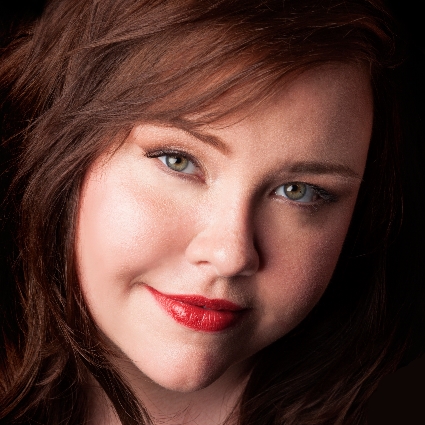
Headshot of Jamie Barton

Eboli -Jamie Barton


Headshot of Matthew Polenzani

Don Carlos -Matthew Polenzani

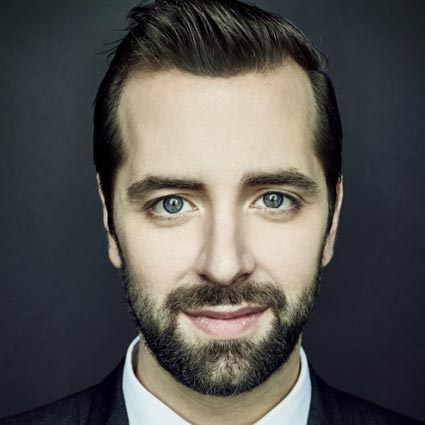
Headshot of Etienne Dupuis

Rodrigue -Etienne Dupuis


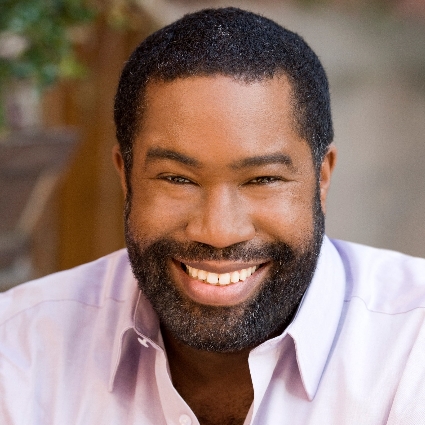
Headshot of Eric Owens

Philippe II - Eric Owens


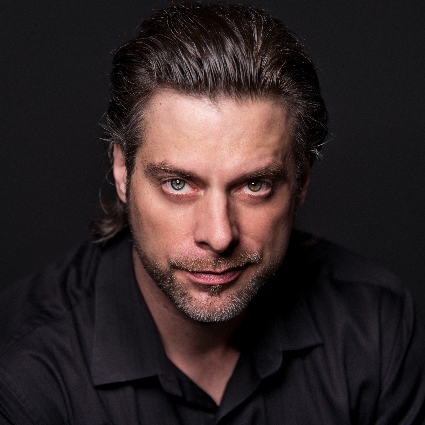
Headshot of John Relyea

Grand Inquisitor - John Relyea

Production by David McVicar

Saturday we viewed the live HD performance of the French version of Verdi's Don Carlos. This opera seems to be attempting to imitate reality, so perhaps a little reality is required. This is a calendar of historical events related to the life of Philip II of Spain. 

1527 Philip born
1543 Philip marries Maria Manuela of Portugal
1545 Carlos born, Maria Manuela mother
1545 Maria dies
1545 Elisabeth of Valois born
1554 Philip marries Mary I of England [bloody Mary] becoming her co-regent
1556 Philip becomes King of Spain
1558 Mary dies, Philip returns to Spain
1559 Philip marries Elisabeth of Valois
1568 Elisabeth dies
1568 Carlos dies
1570 Philip marries Anna of Austria
1580 Anna dies
1598 Philip dies

From this we see that Carlos and Elisabeth were about the same age and died at about the same time. Philip was already King of Spain for three years before he married Elisabeth of Valois. So it is unlikely that his coronation took place after he married Elisabeth.

The plot begins when Carlos, who believes he will marry Elisabeth, wishes to meet his future wife and tracks her to the Forest of Fontainebleau, France. They meet and fall in love.  By the end of the scene a political agreement has been reached offstage, and Carlos and Elisabeth find that she is to marry Carlos' father Philip.  This is the context for the rest of the opera, so the story doesn't make much sense if this scene is omitted.

I thought this was a brilliantly and beautifully executed performance.  The story felt right, perhaps for the first time.  This is the most I have liked Sonya Yoncheva whose performance shaped the drama.  I never felt a desire to go home early because it was all so fascinating.

Friday, July 16, 2021

Porgy and Bess HD Rerun

Conductor...............David Robertson

Porgy...................Eric Owens
Bess....................Angel Blue

I saw Wednesday's rerun of Gershwin's Porgy and Bess from the Metropolitan opera at my local theater.  I didn't enjoy it as much as the last time.  I think the sound in my theater was not adequate to the task of reproducing the voices. 

Tuesday, March 12, 2019

Lawrence Brownlee and Eric Owens


Lawrence Brownlee and Eric Owens came to visit at Mondavi to perform arias, spirituals, pop songs and whatever else they wanted.  They brought Myra Huang to accompany them on the piano.  She skillfully navigated the range of musical styles on this concert.  The whole concert was performed with the lid all the way up which sometimes worked and sometimes didn't.

The program was divided into two parts:  the operatic repertoire they are famous for and spirituals, pop songs, and gospel songs.  We'll begin with the classical.  The house lights remained up for this part.

Larry and Eric are at opposite ends of the male operatic voices.  Eric is a bass-baritone while Larry soars high above almost everyone in the coloratura tenor category.  Eric does Wagner and Gershwin while Larry does Mozart, Rossini and Donizetti.  There isn't a lot of overlap in their repertoire.

To represent his usual stuff Larry brought us:
  • Il mio tesoro from Mozart's Don Giovanni
  • Una furtiva lagrima from Donizetti's Elixir of love
  • Ah mes amis from Donizetti's Daughter of the Regiment
This pretty much covers it.  The Donizetti arias are the main ones that receive encores these days, and he gave encore worthy performances.

"Una furtiva lagrima" came after they sang a duet from the same opera where the baritone conman sells the tenor a bottle of wine as a supposed love potion, "Voglio dire."  This is more fun when it's acted.

Eric sang
  • Se vuol ballare from Mozart's Marriage of Figaro
  • Infelice! E tuo crevedi from Verdi's Ernani
  • Le veau d'or from Gounod's Faust
They finished with "Au fond du temple saint" from Bizet's Pearl Fishers, one of the greatest male duets in the repertoire.  I enjoyed all of this, but Larry in his high tessitura more successfully soared over the piano.

The lights went down for part 2.  The rest of the program started with spirituals such as Marian Anderson used to sing.  I thought of her when they performed a duet of "He's got the whole world in his hands."  This was her trademark song.  Eric excelled in "Deep River."

I didn't know all of the pop songs, but Eric Owens singing "Some enchanted evening" was wonderful.  The selection was puzzling.

They finished with two gospel songs.
  • I don't feel no ways tired
  • Every time I feel the spirit
It seemed like a concert as co-biography.  There was an encore but my memory has failed me.

It was a pleasure.

Saturday, March 25, 2017

Idomeneo in HD


Conductor...................James Levine
Production..................Jean-Pierre Ponnelle

Idomeneo, King of Crete:  Matthew Polenzani
Idamante, his son:  Alice Coote
Ilia, princess from Troy:  Nadine Sierra
Elettra, princess from Argos:  Elza van den Heever
Arbace:  Alan Opie
High Priest:  Noah Baetge
Voice of Neptune:  Eric Owens

Eric Owens was also the host for the Metropolitan Opera HD presentation of Mozart's opera seria Idomeneo, composed when Mozart was only 24.  It is very much in the traditional Neapolitan style of endless da capo arias.

Idomeneo has sworn to Neptune that if he lives through a storm at sea, he will sacrifice the first person he sees on the shore to him.  He lives.  He walks down the stage already lamenting the death to come when his son Idamante approaches him.  The plot has the best possible ending.  Idomeneo does not kill his son but instead cedes his kingdom to him.  Opera seria usually has happy endings.

It was as long as Tristan and did not start early.  A lovely film of a much younger James Levine coaching Jessye Norman and Kathleen Battle in Ariadne auf Naxos was inserted between acts II and III.  I miss them.  It was nice to see them, but this added to the length of the performance.

The camera showed Levine conducting the Mozart overture today, and I thought his movements looked much better than the last time I saw him.  This didn't help the draggy tempos. There needed to be cuts.  By the third act it all began to seem tedious.  I think we are in a period where people refuse to cut anything.

People have jumped on Elza van den Heever for her manic performance, but I found her refreshing and the highlight of the program.  I always love Nadine Sierra, and she was outstanding here.  There were three tenors, but none of them were in the Mozart tenor tradition.  We had big singing and intense drama from all of them, especially our hero Matthew Polenzani.  Perhaps Alan Opie is considered a baritone, but this role was on the high side.  The only disappointment was Alice Coote who seemed out of sorts.

Sunday, February 26, 2017

Rusalka in HD


Conductor:  Mark Elder
Production:  Mary Zimmerman

Rusalka:  Kristine Opolais
Prince:  Brandon Jovanovich
Princess:  Katarina Dalayman
Jezibaba:  Jamie Barton
Gnome:  Eric Owens

Dvorák's Rusalka was live from the Metropolitan Opera on Saturday. Many of the people around me had never seen this opera.  This is my fourth time with all the previous times starring Renée Fleming. 

I was completely won over by the water nymphs at the beginning.  First they danced and then suddenly as if by magic they sang.


In case you thought after her appearance in Nabucco that Jamie Barton was boring, her Jezibaba was evil and fun and completely upstaged everyone else.  Except maybe the water nymphs.

Eric Owens owns the Gnome. He pointed out in his interview that this was his actual Fach while L'Amour is more a baritone role.

This is an excellent role for Kristine.  Someone has to step into Fleming's repertoire.  Her acting is far more intense than Fleming which changes the dramatic intensity of the opera.  Her voice is not really heavy enough for most of the roles she sings, but if she keeps this under control, it should be good for her.

I thought the castle sequence in Act II worked better here than other productions I have seen.  Brandon was the picture of prince charming.  I liked it but don't want to go on and on about it.  The Wagner loving conductor thinks it's one of the great post Wagnerian operas, but for me it's just ok. I tend to think of Dvorák as post Brahms rather than post Wagner.  Wagnerians ignore Brahms.

Matthew Polenzani was an excellent host.

Friday, June 17, 2016

Gockley Gala 2016


This is the set for last night's David Gockley Gala celebrating the retirement of the current San Francisco Opera Intendant at the end of the current season.  Most of Gockley's opera management career took place in Houston, and the Gala was specifically designed to celebrate his entire career.  Gockley was general director of the Houston Grand Opera from 1972 to 2006, and then became the general director of the San Francisco Opera up to the end of the current season.

Overture from Porgy and Bess, George Gershwin, conducted by John DeMain.  1/4

Many people were introduced at this point in the program.  The masters of ceremony were Frederica von Stade and Thomas Hampson.  We were reminded that Gockley had commissioned Heart of a Soldier for him.  Gockley commissioned about 45 new operas. 

Saturday, April 30, 2016

Elektra in HD


Conductor:  Esa-Pekka Salonen
Production:  Patrice Chéreau

Klytämnestra, Elektra's mother: Waltraud Meier (mezzo-soprano)
Elektra: Nina Stemme (soprano)
Chrysothemis, Elektra's sister: Adrianne Pieczonka (soprano)
Aegisth, Klytämnestra's new husband: Burkhard Ulrich (tenor)
Orest, Elektra's brother: Eric Owens (baritone)

Two different performances of Richard Strauss' Elektra in the same month is a bit overwhelming.  The first was at the Deutsche Oper Berlin on April 7.  The second was the live simulcast from the Metropolitan Opera.  I will not be able to help comparing them.  The libretto is by Hugo von Hofmannsthal.

We were told in the interviews at the beginning that this was probably the largest orchestra ever crowded into the Met orchestra pit.  The simulcasts seem to find a way around any problems with the orchestra covering the singers.  Both Esa-Pekka Salonen and Donald Runnicles are excellent conductors, though I have heard Runnicles many more times.

There is not much to contrast about the productions.  Both were drab, gray, modernized productions designed to emphasize the grimness of the story.  Elektra, Chrysothemis and Orest are all children of Agamemnon, the chief commander on the Greek side of the Trojan war.  While he is gone for 10 years fighting the war over Helen, his wife Klytämnestra takes up with another man.  When Agamemnon returns, Klytämnestra and Aegisth kill him with an ax.  Orest is banished, and Elektra spends her years wishing for revenge.

The two productions reference the ax differently.  In Berlin Klytämnestra enters using it as a cane, and she leaves it behind when she flees from Elektra who is threatening her.  In New York Elektra brings the ax out of Agamemnon's tomb where she has been keeping it.  I think the New York production follows the libretto more closely.  It is clear there that Klytämnestra is making animal sacrifices to appease the gods.  I thought for some reason that in Berlin she carried the ax around to kill people with it and don't remember a reference to animal sacrifices.  She comes to visit Elektra to ask her what she must do to stop dreaming that Orest will come to kill her.  What sacrifice must I offer?  Who do I need to kill?  Elektra's answer:  yourself.

In Berlin Klytämnestra and Aegisth were both killed at the back of the stage by Orest.  At the Met Orest's tutor kills Aegisth downstage while Orest is offstage.  For me the Berlin staging of the killings worked better.  It's perhaps a tossup.

The Elektras from both productions are the same age, 53.  The greatest contrast in the two productions was in the singing.  At the Met the whole cast were heavier voices than the Berlin cast, with the possible exception of Waltraud Meier who sang in  sweet but terrified style.  She is a wonderful singer who brings her great presence to the role.  [Was she wearing Venetian beads?]

In Berlin Chrysothemis was sung by a lyric soprano, while Adrianne Pieczonka is a dramatic and sang much heavier.  She seemed to be auditioning for Elektra.  Perhaps.  I always love and respect Nina Stemme who was simply glorious.  The intensity and drama carried throughout both productions.  In Berlin Elektra dances and then dies.

Occasionally you hear in the orchestra tiny hints of the Strauss opera which comes next:  Der Rosenkavalier.  I feel that I have had my fill of Elektra.

Thursday, March 13, 2014

Porgy and Bess from San Francisco


The San Francisco Opera has released on DVD and Blue Ray their 2009 Porgy and Bess that I praised so highly here. This is the Eric Owens Porgy and Laquita Mitchell Bess. It was the experience of a lifetime.
#ad

Sunday, March 02, 2014

Prince Igor


Conductor Gianandrea Noseda
Production Dmitri Tcherniakov

Host Eric Owens

Cast

Prince Igor:  Ildar Abdrazakov
Prince Galitsky (Igor's wife's brother):  Mikhail Petrenko
Vladimir Igorevich (Igor's son):  Sergey Semishkur
Skula (deserter):  Vladimir Ognovenko
Yeroshka (deserter):  Andrey Popov
Yaroslavna (Igor's wife):  Oksana Dyka
Polovtsian Maiden:  Kiri Deonarine
Konchakovna (Khan Konchak's daughter):  Anita Rachvelishvili
Ovlur (Christian Polovtsian):   Mikhail Vekua
Khan Konchak (Polovtsian general):   Štefan Kocán
Yaroslavna’s Nurse:  Barbara Dever

My list says that I have seen Alexander Borodin's Prince Igor at the San Francisco Opera in 1996.  I don't remember.  There has been a massive effort to improve the theatrical viability of this opera and to alter the score to include only music by Borodin. 

Traditionally the scenes are:

Prologue--Igor's army leaves for battle.
Act I scene 1--Prince Galitsky's drunken bash.
Act I scene 2--Yaroslavna's chamber, news that Igor is defeated, enemy is approaching.
Act II--Singing and dancing in Polovtsian camp.
Act III--Igor and Vladimir are to escape, but Vladimir stays for Konchakovna.
Act IV--Igor returns home and is celebrated.

I am looking at the program for this performance live from the Metropolitan Opera in HD and it seems to be incorrect.  I will attempt to explain what happens.  The Prologue is as before, but it is followed by the scene of singing and dancing in the Polovtsian camp.  This is the famous Polovtsian dances and takes place in a field of red poppies.  It is Igor's reality and fantasy mixed.  The enemy general and his daughter are introduced, and she falls in love with Vladimir.

Act II in this version includes scenes where women of the village come to Yaroslavna to complain that Galitsky has abducted a girl from the village.  Then there is a drunken bash with Galitsky where he plans to overthrow the rule of Yaroslavna.  Then there is a scene when the city council meets, declares that Igor has been captured, his army killed and the enemy is advancing.  Galitsky tries to overthrow Yaroslavna, but is killed.

Then there is a scene where Ovlur tries to persuade Igor and Vladimir to escape, but Vladimir stays for Konchakovna.  This is Act III above, but does not appear in the handout. In the end Igor returns to a ruined city and encourages rebuilding.

I felt that these changes were successful, that a level of theatricality had been achieved and that Igor became central.  The choral work in this opera is spectacular.  But in either arrangement bad guys always seem to have more charisma, and Prince Galitsky is wonderfully nasty.

The singing was particularly enjoyable.  I especially liked Oksana Dyka and Anita Rachvelishvili, next season's Carmen.  Her Carmen will be wild.

Dmitri Tcherniakov talks about his production and what it means.  He tells that Igor has had a transforming experience, that he immediately starts in to reconstruct his land, that he wishes to turn his attention to peaceful, constructive purposes, but when we see the dialog on the screen we know that this isn't what he is saying.  He wants to go back to fighting.  This is why the audience is confused.  I don't think this opera will make it into standard repertoire. 

P.S.  All my reviews are a work in progress.  After the Oscars I want to point out the original field of red poppies:  the Wizard of Oz.  Of course, these are California poppies.

#ad

Saturday, January 11, 2014

Lots Happier

If you want to keep up with what's going on in American opera, the Richard Tucker Gala is a must.  I found it on the PBS website.

A lot of previous winners were on the program:

Isabel Leonard, 2013 Richard Tucker Award Winner 
2012 Ailyn Pérez
2011 Angela Meade
2009 Stephen Costello
2004 Matthew Polenzani
2002 Joyce DiDonato
1999 Stephanie Blythe 
1990 Renée Fleming

Other equally wonderful people on the program:
Susan Graham
Greer Grimsley
Eric Owens
Maestro Riccardo Frizza

Program

  • Isabel Leonard "Gracia mia" by Granados.
  • Stephen Costello and his wife Ailyn  Pérez did a scene from The Elixir of Love.  She gets more and more beautiful.
  • Eric Owens sang "Te Deum" from Tosca.  I find his voice very beautiful but not very evil sounding.
  • Renée and Susan sang the Flower duet from Lakme.   Gorgeous.
               Renée, "Olympics of Singing."
               Susan, "We are slowly morphing into each other."
  • Matthew Polenzani "Kleinzach" from The Tales of Hoffmann.   He recently sang Hoffmann here and was marvalous.  I shouted for him.
  • Angela Meade "No, mi lasciate... Tu al cui sguardo." I Due Foscari.  The audience loved her best.  Her vocal gifts are truly astounding.
  • Isabel Leonard "Ombre vane" from Griselda.  She was spectacular in this at Santa Fe.  It's too bad she couldn't sing the whole role, but maybe that would be too much.  She was wonderful.
  • Stephanie and Greer sang a scene from Samson and Dalilah, the heaviest item on the program.
  • Susan sang "J'aime la militaire" from La Grand Duchesse de Girolstein by Offenbach with soldiers, uniform and everything.  I should have gone to Santa Fe last summer.
  • Stephen Costello sang "Salut demeure chaste et pure" from Faust.  I hear weight coming into his voice.
  • Renée "ombra di nube" by Refice.
  • Joyce DiDonato "Tanti Affetti" from La Donna del Lago.  I guessed it from the first 2 chords.
  • Finale from William Tell.

This was a wonderful concert with a lot of spectacular singing.  I would have liked more.  I flagged this as television even though it wasn't for me.  My favorites are Matthew, Joyce, Ailyn, Isabel, Renée and Susan, but truly I think I love them all.  These people with maybe here and there others are the cream of American singing now.  I don't know who picks them, but they have their shit together.

I'm going for Jamie this year.  Who do you pick?

Thursday, October 04, 2012

Capulets and Montagues

Or Bellini's I Capuleti e i Montecchi at the San Francisco Opera.

The opera.

We studied the Guelphs and Ghibellines in my class in Florence. The Guelphs, represented here by Giuletta's family the Capuleti, support the Pope, and the Ghibellines, represented here by Romeo's faction the Montecchi, support the Holy Roman Empire. So you see it isn't just two families that don't like each other. It's a war that went on in Italy from 1140 to 1289. Then the Guelphs won, split into two parties and went on fighting with each other. Dante was on the wrong side of this part of the war. In the 15th century they were still at it.

You don't need to remember any of this, but to Shakespeare in the late English Renaissance it just looked like a silly family quarrel. We're not doing Shakespeare. Romeo killed Juliet's brother in a battle in the war, but her father still does not want her to marry Romeo. By 1830, the date of the opera, this was Italian history.  When the opera begins, Romeo and Juliet have already met and established their relationship.  I am reminded of Rossini's Otello which similarly omits all the happy parts.

The production.

We start off with saddles hanging in the air, see top.  I think this is supposed to tell you we are doing war with horses and not just a street fight.  The men all wear top hats which places the setting in the nineteenth century. You can see in the top picture and this next one that the way the sets are painted is very attractive.  In the picture immediately below, for the second scene with the gorgeous love duet, we had a sink attached to the wall which Nicole Cabell climbed on.


I had to search for quite a while to find a picture that shows Juliet's costume in the second scene, below worn by Netrebko in Munich.  You can see above that the floor in this scene is quite shiny, allowing us in the balcony to see up Juliet's dress, which hovered around her reflection like a halo.  The director always sits in the orchestra.  Just thought I would mention....


Below is the wedding scene with lots of supers dressed in outfits by Christian Lacroix.  The men are chorus, the women supers who don't sing.  Thus the flowers stuck in their mouths.  We are mystified.


In the picture below you can see this same flight of stairs from the other side.  People walk from above down into the slot below.  Nicole played this scene walking in her bare feet across the top of this narrow ledge.  She looked nervous.  You can also see the director's island in the middle of the orchestra.


Juliet is the only female character in the opera, and she is written as insane throughout.  In the bel canto it is difficult to find a normal woman in any of the operas.

I insist the production is to explain the opera.  Maybe you could get used to this, and it would start to seem normal, but for me this one just draws your attention away from the action.  Why is that there?  Why are saddles hanging in the air?  Why are we in Juliet's bathroom?  What is that moon sticking up out of the floor?

The singing.

All is forgiven.  One reviewer actually dinged Eric Owens.  Go figure.  He sings everything under the sun, but is most magnificent in Wagner.

The singing was magnificent, especially Joyce DiDonato as Romeo and Nicole Cabell as Giuletta.  Their voices are gorgeous together and separately.  It's hard to believe that this was Nicole Cabell's San Francisco Opera debut.  Joyce is getting her masculine swagger down.

The conducting was by Riccardo Frizza who only occasionally allowed the orchestra to play too loud.

It made me very happy.  More bel canto, please.


It's only fair to show our stars.
#ad

Sunday, February 12, 2012

Götterdämmerung

When I'm watching, I always remember that the libretto was written backwards--Götterdämmerung first, Rheingold last--and then it was composed in the opposite order.  This is why we have to listen to all those retellings of things we've already seen.  In the original concept the other three operas didn't exist.  It is also why we have to rehear every damn Leitmotiv that ever appeared.  Yes, that's Nothung all right.  And we know about the damned curse.

The Rhine maidens are still my favorite parts.  Eric Owens as Alberich and his son Hans-Peter König as Hagen were the only members of the cast with voices to match the traditional quality for a Wagnerian.  König received the ovation he deserved.  He was simply magnificent.


Our hostess Patricia Racette introduced the "legendary Waltraud Meier" in the role of Waltraute.  This was the best scene in the opera.  She deserves her legendary status.


I enjoyed watching Jay Hunter Morris and Deborah Voigt.  Debbie was suitably melodramatic, and it was nice to see at least an attempt to have her ride Grane into the funeral pyre.  Jay is adorable, but sings the lightest Siegfried imaginable.

I keep remembering Placido Domingo saying, "Better too soon than too late."  He was referring to the fact that he began singing Otello while still in his thirties.  Deborah Voigt has been afraid of singing Brünnhilde, and has put it off into her 50's.  Her voice has more and more of an edge.  Let's just say I wouldn't want to sit and listen to an audio only version of this Ring, but the visual parts were quite pleasing.  Her Brünnhilde blazes emotionally just as she should, but she will not erase the memory of Eva Marton in her prime.

Wire walking seems to have disappeared as a concept--good riddance.  When she sets the pyre ablaze, we hear the music for "Loge her," but not the words.


This is a member of our audience getting into the mood for Wagner's Twilight of the Gods.  They went down in style.  For me personally it was too much sitting for someone whose back is going out from not enough exercise.

And now I really must go outside and walk around.


#ad

Thursday, August 04, 2011

Outdoor Wozzeck


To give you an idea of the open air Santa Fe Opera, in the spot where Wozzeck says "I smell something.  I smell blood." I thought to myself, "I smell something, too--skunk."  Its timeliness was suspicious.

The set and its use in the drama was spectacularly serviceable on the tiny stage.  Panels came out quickly and smoothly from the side to create the different scenes with no pause in the action.  There are scenes in Wozzeck where large crowds are on stage, people dancing, bands that play on stage, almost mob scenes, and they manage it all quite gracefully.  They have their shit rather astoundingly together here.

Wozzeck is about a soldier of the rank and file.  He shaves his commanding officer every morning.  He gathers sticks in the field.  He supports his common-law wife and their child and supplements his income by allowing himself to be the subject of medical experiments.  In his particular experiment he is allowed to eat nothing but beans.  The production implied that he might also be injected with drugs.

As a result Wozzeck talks crazy.  For instance, he imagines he is pursued by Free Masons (Freimauern).

This is my third Wozzeck--once in the 60's with Marilyn Horne, once in the 80's with Janis Martin and now with Nicola Beller Carbone, a German soprano.  I was most interested in the differences in style of these three women.  Marilyn Horne could have been singing Bellini.  Janis Martin could have been doing Wagner.  Nicola Beller Carbone was doing Berg--a rather choppy modern Berg.


Wozzeck is in the full Second Viennese School style, including extensive Sprechstimme.  Wozzeck is particularly complex with all conceivable levels between talking and singing.  Richard Paul Fink was wonderfully grim and insane, altogether an outstanding Wozzeck.

There were two big men in the production--Eric Owens as the doctor and Stuart Skelton as the drum major--looming over the tiny stage.  Owens rides a bicycle right up to the edge of the pit.  It made me wonder if the orchestra gets hazard pay.  Skelton was a marvelous asshole, but he needs to see that he doesn't become typecast.

As the years go by the music sounds less and less harsh.  Now I hear the enormous variety of colors that Berg achieves with his large orchestra.  By now music in the movies has made modern music sound familiar.  Berg feels an old friend, a fascinating, very emotional old friend.

This is by far the most I have enjoyed Wozzeck.

Sunday, October 10, 2010

Rheingold

Wotan...................Bryn Terfel
Fricka..................Stephanie Blythe
Alberich................Eric Owens
Loge....................Richard Croft
Erda....................Patricia Bardon
Fasolt..................Franz-Josef Selig
Fafner..................Hans-Peter König
Freia...................Wendy Bryn Harmer
Froh....................Adam Diegel
Donner..................Dwayne Croft
Mime....................Gerhard Siegel
Woglinde................Lisette Oropesa
Wellgunde...............Jennifer Johnson Cano
Flosshilde..............Tamara Mumford

Conductor...............James Levine
Production..............Robert Lepage

The Metropolitan Opera has invested deeply in its new Ring cycle.  As Peter Gelb explained, they have even shored up the building to support the incredible piece of machinery that serves as the set for all four operas.

I really loved the beginning of Rheingold.  The rippling Rhine and the floating Rhine maidens were fabulously exciting.  And the staircase image going down to Nibelungenland was striking.  The rest was comme si comme sa.  I think we in the movie theater have the best view.

Loge and the Rhine maidens were on wires.  All of Loge's attention was focused on maintaining his balance on the wire, and nothing was left over for developing a character.  Bryn Terfel and Stephanie Blythe had "no wire walking" clauses in their contracts, I'm sure.  Or?  Was Bryn on a wire in the staircase scene?

Rheingold is a very funny opera, and I laughed out loud several times.  Nibelungens screaming and running here and there were especially amusing.

My son thought the tempos were too slow, but I was fine with it.  James Levine looks very frail these days, but the music is still there.

I would have thought that Bayreuth in the 50's would have proved once and for all that it isn't about the set.  In fact, it's never about the set.

It's about the singers:  how they sing, how they PHRASE, how they move, how they look, how they sing, and how they understand and conceive their roles.  They make the drama, not the stupid set.  The main role of the director is to conceive the characters within the drama and communicate that concept to the singers.  Who are they to one another?  How do they feel?  If your concept is that they are sticks of wood or at best pretty pictures, your opera will fail.

I don't know what to say about the singing.  No eggs were laid.  Eric Owens was an amazing Alberich.  I wanted to see this before I actually saw it.  Bryn was a terrible disappointment.  If he wants to impress me, he's going to have to try one hell of a lot harder.

The Ring is scored for an absurdly large group of brasses.  Even such a large orchestra as the Metropolitan Opera orchestra would have to call in extra players, players who had never played The Ring before.  I'm making excuses.  The performance of Das Rheinglold included a lot of out of tune brass playing.

This has to be contrasted with the really quite wonderful San Francisco Die Walküre. Maybe I'll go after all.

#ad

Friday, June 26, 2009

Porgy and Bess

👍🏻
Porgy, a crippled beggar: Eric Owens*
Bess: Laquita Mitchell*
Crown, a stevedore: Lester Lynch
Serena, Robbins's wife: Karen Slack
Clara, Jake's wife: Angel Blue
Maria, keeper of the cookshop: Alteouise deVaughn
Jake, a fisherman: Eric Greene
Sportin' Life, a dope peddler: Chauncey Packer

Conductor: John DeMain
Production: Francesca Zambello

I don't know if my writing is up to this, but here goes. Occasionally the planets align, the universe conspires to bring us greatness. Porgy and Bess at the San Francisco Opera was one of those times. I will attempt to tell why.

The time was moved to the 1950s, the time in our lives when the lives of our black neighbors first came to our attention. The time when they became fully realized human beings in our minds. The police look like policemen from photographs of the civil rights movement. We know what this world is like. When Porgy sings that he is going to New York to find Bess, we know the possibilities and the obstacles.

Modern productions have abandoned the cart Porgy used to ride around on in favor of crutches and less obvious crippling. We are happier to watch Porgy gain in strength through the opera and become someone who might kill his rival, someone who might indeed find Bess in New York.

I see the theatrical power of Porgy and Bess as I have never seen it before. It is a great opera in part because it is about love. In this production it was a love we could really believe in.

Only Eric Owens as Porgy and Karen Slack as Serena had ever appeared at the San Francisco Opera before. Eric Owens was here last summer in Ariodante. Karen Slack is someone whose career I follow, and she was excellent as Serena.

The whole cast was full of big voices and big acting. I liked the red wig of Laquita Mitchell as Bess--it made her easy to find on the crowded stage. She had great presence in the role. Other names: Lester Lynch as Crown, Angel Blue as Clara, Chauncey Packer as Sportin Life.

I liked them all. David Gockley insists on verisimilitude and provided us with an all black cast. Except the white characters, of course.


I haven't explained yet why it was the great Porgy and Bess of my lifetime. I noticed that the audience yelled loudly for everyone else but left unnoticed John DeMain when he came out to take his conductor's bow. I was the only one yelling. Bravo. What made this my best Porgy ever was the music. It rocked. Everyone sang big and rocked out. The chorus was the undisputed star. They were fabulous. Such consistently great music making throughout such a long, complicated piece with such a large cast must be credited to the conductor. That's his job. DeMain hangs out in Houston, which makes him a friend of Gockley.

About halfway through I realized: This is something truly wonderful.
#ad

Saturday, November 08, 2008

Doctor Atomic Revisited


Edward Teller...........Richard Paul Fink
J. Robert Oppenheimer...Gerald Finley
Robert Wilson...........Thomas Glenn
Kitty Oppenheimer.......Sasha Cooke
General Leslie Groves...Eric Owens
Frank Hubbard...........Earle Patriarco
Captain James Nolan.....Roger Honeywell
Pasqualita..............Meredith Arwady

Conductor...............Alan Gilbert
Production..............Penny Woolcock

I panned Doctor Atomic when I first saw it in San Francisco. I hated the fact that a bomb hanging in the air seemed to be all it was about. Even more I hated the emptiness of the second act. The SF production was by Peter Sellars.

Sellars is also the librettist for Doctor Atomic, and he and John Adams have worked over the second act considerably. People keep talking practically to the end now.

The Metropolitan Opera production, by Penny Woolcock, is far more interesting. There's still a bomb hanging in the air, but it is tucked back out of the way except when referred to. She kept people in proximity who might be supposed to be talking to one another--what a concept. The actors waiting for the blast, the "cloud flower," put on their dark glasses, and at the end there is a white flash of light, followed by the sound of someone speaking in Japanese asking for water. There is a definite sense of having reached the end of the opera, something completely missing in the version put on in San Francisco.

I think the closeups of the HD broadcast also helped make the opera dramatically more interesting. Video design was by Leo Warner and Mark Grimmer. Alan Gilbert, an American and the new conductor of the New York Philharmonic, ably conducted.

Gerald Finley who sang Dr. Oppenheimer did not take any bows, unless I was so distracted I completely missed them. I remember Sasha Cooke who sang Kitty (very nice), followed by John Adams, followed by nothing. Finley would have come between them, I would have thought. I thought this represented an excess of self-criticism. He was not in ideal voice but sounded fine. The role is not easy to sing. I recommend that he drop it from his repertoire.

I liked very much the Pasqualita of Meredith Arwady. I always watch for Thomas Glenn who sang Robert Wilson again. No one is going to make their career from singing in Doctor Atomic, but in general the singing was enjoyable, with lots of pleasant coloratura, especially for Kitty and Pasqualita.

I took away the impression that the entire staff at Los Alamos was slightly wacky. Edward Teller has long been a personal favorite for general insanity. The opera is an improvement over the San Francisco version, but I feel like I've seen it enough. Is it a great opera? It has edged toward being an opera at all, but not far. No amount of beefing up the parts of Mrs. Oppenheimer and her maid will make this a chick flick. A real opera on this subject would be about extramarital sex at Los Alamos. It's better, but it's still pretty much a yawner.

Disturbing comment by John Adams in the intermission: Dr. Oppenheimer was more cultured than Aristotle. Huh? I don't know that cultured is precisely the word I would have used to describe Aristotle.
#ad