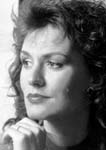
Conductor - Kirill Petrenko Production - Krzysztof Warlikowski
Tristan - Jonas Kaufmann Isolde - Anja Harteros King Mark - Mika Kares Kurwenal - Wolfgang Koch Brangäne - Okka von der Damerau
This is Wagner's Tristan und Isolde from the Bayerische Staatsoper. It's a regie production, naturally. Almost everything from there is. I'm not sure it provides a context. They all wear modern clothing, and we don't seem to be on a ship.
Act I.
Tristan has traveled to Ireland to bring back the future bride of King Mark of Cornwall. He is there in his official capacity as representative of Cornwall. Actually Tristan and Princess Isolde have an already existing relationship. In a war between the two kingdoms, Tristan has killed Isolde's fiance and been seriously wounded in the process. Isolde with the help of Brangäne nursed him back to health.
On the journey she tries to order him around. He remains distant and sends his assistant, Kurwenal. This bit is not precisely clear. Brangäne prepares a potion that Tristan and Isolde are to share. Tristan drinks half, and then Isolde drinks the rest. They seem to think it will kill them, but instead they fall hopelessly in love. I thought the sudden falling in love was well handled. We appear to be doing social distancing in this production. No one touches in this part.
Act II
Isolde keeps turning the lights on and off. I'm not sure what that's about. I've never seen this character portrayed as perverse. A feature of this production is that we see the characters live on the stage and projected on the wall in the form of a film at the same time. Brangäne blames herself for administering the potion, but Isolde blames the Love Spirit who spreads love all around. Isolde sees herself without love as destined for death.
I am an hour and a half in and did not ever before realize what a bear of a part Isolde is. Other characters make brief appearances. Finally Tristan enters and they talk about their time traveling to Cornwall. She feels that she loved him then, but he was there in the role of foe. Now they cannot simply forget that they love one another. There is much discussion of which is better: day or night? Night is chosen. Tristan wants to die. The picture above comes from this section.
In the real world they sit in chairs and sing, but in the film behind they meet in the bedroom. I don't know why I like this, but I do.
They sing for a long time about death, then suddenly they take needles from a bowl on the table and give themselves shots. Death? The bed in the background is suddenly surrounded by water. Then people begin to enter. They are discovered. King Mark tells his story, that it was Tristan who thought he should marry. Isolde is hearing this story for the first time.
This hardly seems like the same opera. We want these two singers together in this opera because they are together emotionally.
Isolde says that she will follow Tristan to his home. Melot, the betrayer, complains and the two men draw swords. The bald person reappears. Melot stabs Tristan.
Act III
Bald people in uniforms drinking coffee? This part of the production I don't get. Tristan sits with them and drinks coffee. Next to him they look like children. All but one appear to be puppets. A return to childhood? An English horn plays on the stage.
Kurvenal sings to the puppet Tristan while Jonas sings. Then they exchange places. The puppet in the yellow blouse is Isolde herself. I don't think I realized before how little time Tristan and Isolde spend on stage together. I feel like I have never seen this opera before. Opera's greatest singing actors have brought it to life as never before. Absolutely stunning.
Old age advice. Do not mourn that your love cannot be fulfilled. Rejoice that passion can come to you.
Conductor: Simon Rattle
Production: Mariusz Trelinski
Tristan: Stuart Skelton
Isolde: Nina Stemme
Brangäne: Ekaterina Gubanova
King Marke: René Pape
Kurwenal: Evgeny Nikitin
English Horn Solo: Pedro R. Díaz
Things I liked about Wagner's Tristan und Isolde live in HD today.
I liked the outstanding conducting by Simon Rattle. I very much enjoyed listening to him talk about today's performance.
I liked Debbie Voigt interviewing Nina Stemme, one Isolde to another. I liked it when Nina said playing a Valkyrie could make you more of a Valkyrie.
I liked that this was the first time I thought while listening to the performance that only the Metropolitan Opera orchestra could play this piece this much more beautifully than anyone else.
I liked Nina Stemme and Stuart Skelton putting their own personal stamps on this opera. So much emotion, so much emotional singing and acting.
I liked René Pape, the best Wagner baritone around.
I liked so much love. So much love by everyone on the stage, in the pit, behind the stage. So much love. I cried.
I liked the production which took images from the libretto to form the basis for its visual effects.
I liked talk about the anniversary performance of Antony and Cleopatra by Samuel Barber. It was a new house with all the fancy new equipment. Franco Zeffirelli used every new gadget in his production, and most of them failed. Rosalind Elias and Justino Díaz were interviewed from the original cast. And it's not true that the other performances were cancelled.
I liked Richard Wagner's libretto which I could primarily understand in Nina's singing. This was a surprise. This production might just work better without the surtitles. In the house this would be possible. For me the text was too bright against the dark background.
I liked seeing the love in their faces.
I haven't thought of anything I didn't like except Isolde smoking. I feel recovered from Donnerstag.
In case I haven't been clear enough I want to say that I found this Tristan und Isolde to be deeply satisfying on every level. I felt that the story penetrated my consciousness as never before, that the orchestra playing was profoundly beautiful and the singing actors the best ever.
Of course the production is Regietheater. We are moved to an abstraction of today with military uniforms and modern dresses. If there were difficulties, they were to be found in the projections, sometimes symbolic, sometimes personal. A boy is seen and a thin man in a white uniform who cannot be King Marke. I think this comes from the Act III solo by Tristan where he describes how he knows the sad tune he is hearing. His mother died when he was born and his father when he was still a child. So the projections picture the young Tristan and his father who must also have been a high ranking military man. The ghost child is also Tristan.
I thought I was seeing a solar eclipse in the black circle surrounded by light. And some kind of nautical device in the other circle. I always feel free to ignore symbolism.
Someone gave me a copy of Placido Domingo's recording of Tristan und Isolde. Nina Stemme is Isolde in this recording. She is incredible. One could wish to hear her with a real Heldentenor. Placido Domingo is not one. His voice sounds somewhat fragile, and the technicians seem to have done nothing to make him seem to balance with Stemme.
I'm not a fan of Tristan. In my search for a Tristan I could make it all the way through, I liked only Nilsson and Vickers. I don't hear Wagner in Domingo's voice. People don't always make the best decisions. Am I supposed to carry on about how old he is? Domingo's tone is self-consciously developed to sound like a certain type of tenor, and this isn't a Heldentenor. He does nothing here to sound like a Heldentenor.
I also own the Tristan with Christine Brewer and John Treleaven. Brewer is very bland compared to Stemme, and Treleaven is almost a baritone compared to Domingo. I think I prefer Runnicles conducting with Brewer to Pappano with Domingo. Do I totally love either one of them? Probably not. How about Stemme and Heppner? #ad
I moved this blog entry up because I found the Jessye Norman/Herbert von Karajon version at the bottom of the list. I was completely blown away by this. If you want Wagner to shake you down to your shoes, this is the one to hear. The films for this come and go from YouTube, so get them while they're there.
Shirley Verrett, 1977
Zubin Mehta is conducting. She is really a mezzo, but Wagner lies like a high, heavy mezzo. Surprising is the lightness of her voice and how in spite of that she makes the music work. I don’t recommend mezzos try this as a rule, but for her it seems quite beautiful. The very beginning is clipped off. She isn't a soprano at all and therefore doesn't make the list of 20 greatest sopranos.
Birgit Nilsson
This is in the 60’s, I don’t know who is conducting. It is important to contrast this film with the above, and maybe anything else on the planet. She is showing you how it’s done. Verrett shows a lot of tension in her neck, but Nilsson nothing. She could be lip syncing for all you can see of tension in her voice and body. Watch. This is important. She is controlling her voice from below exactly as it is always supposed to be done!!! This is why she is the greatest. Technique is never an impediment. It's also why years of singing such heavy music do not wear on her voice. When her voice rises to a crescendo, you see nothing. You hear everything. No element of expression is missing. It is magnificent beyond imagining. In the 20 greatest sopranos list she is number 5.
Maria Callas, 1957
There is no indication of who is conducting, audio only and in Italian. It is always interesting to read the comments about Callas. There was a shrillness in her voice that is distasteful to many. Perhaps she doesn’t achieve the total control from the diaphragm that Nilsson does. This is probably the explanation for Callas. The attraction of Callas lies in the expression. She may never have been a Wagnerian, but she gets it. It is a musically compelling performance. Her understanding here is as complete as in her more famous Italian performances. In the 20 greatest sopranos list she is number 1.
Kirsten Flagstad, 1936
Fritz Reiner is conducting, audio only. The delicacy of phrasing is astounding. No one else does it this way. She builds the entire piece to a clear, specific climax. It would be wonderful to have a film of this. In the 20 greatest sopranos list she is number 9.
Kirsten Flagstad, 1954
Wilhelm Furtwaengler is conducting, audio only, playing over a film. The delicacy of the earlier performance is gone. Her youth as a coloratura is gone completely. The performance retains its sense of growth over the length of the entire aria, but the effect is now monumental, grandiose as seldom heard in the work of any artist. It was her reading that made her the all time great. I take nothing away from Nilsson, but Flagstad makes it feel so much larger, so much more significant than anyone else. She was the greatest interpreter of Wagner.
Waltraud Meier, 1999
Zubin Mehta is conducting. Virtually worshiped in her home house in Munich, Meier is a unique performer of Wagner. She hasn’t the enormous physical equipment of Nilsson or Flagstad, and you see the tension in her neck. What she has is beauty and passion. She sings the whole damn thing in close-up. Who else would even try it? Hers is by far the most detailed reading. She does not even try to compete with her more famous counterparts, but creates her own original ecstatic performance. She does not make the list. The film linked here is from a performance at Bayreuth in 1995.
Donald Runnicles conducting, audio only. The beauty of her voice is unsurpassed. The style is there. But she does not dominate the material like Nilsson, and she does not feel the monumental structures like Flagstad. Good Isoldes are very rare so we should treasure her. In the 20 greatest sopranos list she is number 17.
Eileen Farrell
And how did I miss this the first time around? The fabulous Eileen Farrell, a very great singer missing from the great singers list, sings the Liebestod. She had a big beautiful voice she could do virtually anything with. I don't know Christine Brewer well enough to even consider placing her above Farrell.
Nina Stemme
The goosebumps are working. If you want someone to listen to now, she is the one. I wonder if she is doing this anywhere.
Jessye Norman, 1987
This film is posted as a memorial to Herbert von Karajan who is conducting his last performance. This is giving me shivers. This version is beautiful almost beyond belief. Notice the slow tempo. I think I'm going to declare a winner. No one tops Jessye at her very best. Please note: the great and fabulous Herbert von Karajan carefully and obsessively WATCHES THE SINGER throughout this piece.
Nilsson is voice, Flagstad is phrasing!, Norman is emotion, Meier may possibly be acting, Stemme is soul.
Tristan.................Robert Dean Smith [Debut]
Isolde..................Deborah Voigt
Kurwenal................Eike Wilm Schulte
Brangäne................Michelle DeYoung
King Marke..............Matti Salminen
Melot...................Stephen Gaertner
"Highlights of Robert Dean Smith's 2007/08 season include Lohengrin and Die Meistersinger in Dresden; Die Frau ohne Schatten at the Lyric Opera of Chicago with Deborah Voigt and Christine Brewer; Tristan und Isolde at the Madrid Teatro Real and the Bayreuth Festival; Tannhäuser at the Berlin Staatsoper; Der fliegende Holländer at the Bavarian State Opera(Bayerische Staatsoper) in Munich and the Vienna State Opera; Ariadne auf Naxos at the Royal Opera, London at Covent Garden; and Fidelio in Tokyo."
And now they include the role of Tristan in Wagner's Tristan und Isolde at the Metropolitan Opera. One of the people interviewed at intermission [sorry, I only remember my own name and names written down somewhere] claimed there were 10 people who currently could do Tristan, and she knew exactly where all 10 of them were at that moment. Ben Heppner has been ill.
I liked Robert Dean Smith who is from Kansas. Most of the time he matched pretty well with Deborah Voigt, who is tiny, I didn't realize. A bit of the time she was louder than him, but mostly not. He is cute and apparently coy about his age.
Wasn't that a nice Tristan? I actually cried more than once, a first for me. One down side to attending simulcasts instead of live performances is that no one shouts in the movie theater. There seems to be no point. There was a lot of shouting for this, and I would surely have joined in. Shouted for were Mr. Smith, Ms Voigt, Michelle DeYoung as Brangaene, Elke Wilm Schulte as Kurwenal, absolutely wonderful Matti Salminen as King Marke, and our lord and master James Levine and his orchestra.
Deborah Voigt was all the way up to the three Isoldes: the furious woman of act I, the lover of act II and the tragic figure of act III. She achieved ecstasy. I had no idea she was so good. She may never make anyone's top 20, but she found the theatrical center of each scene both physically and musically. She was especially fine at the end.
Well, obviously my problem with Wagner's Tristan und Isolde (see this entry and this one) has been that I have never seen it with Birgit Nilsson and Jon Vickers in the starring roles with Karl Böhm conducting. This film from 1973 is remastered, but the result is only marginally better than something from House of Opera. But when you're watching it you know that this is it. They are both so much the ideal of voice and artistry, of all that is needed for these roles that the performance is completely transcendent. I confess I am actually thrilled. I can see why one would search the opera world for a repeat of this experience. I see also why one would fail to find it.
They are performing in the Theatre Antique d'Orange, an ancient amphitheater in Orange, France, with a huge surrounding audience. The sets are meager--white staircases in a tiny circle that fits into the small orchestra area of the amphitheater along with the orchestra. The chorus is always off stage. It doesn't matter at all. This isn't real love; it is the abstract idea of love.
Karl Böhm seems to control the slitheryness of the orchestral accompaniment much better than either Jimmy or Zubin. He provides the perfect context for these great singers, the grounding soup that makes it all work, with everyone completely under control at all times. Perhaps other conductors don't understand their subordinate role in this opera. Or perhaps they become interested in the orchestral writing and want the audience to pay attention to it, a fatal mistake.
Wagner directed during the building of Bayreuth that the orchestra would be under the stage, almost completely covered, in order to dampen the sound coming out to the audience. This same arrangement would bring the singers further forward, nearer to the audience and more easily heard. This means he understood his own intentions to be that the large, thick orchestra would be an underlying groan for the more prominent voices, an effect that is difficult to achieve in an ordinary theater where the conductor's control is crucial. Böhm understands this.
Isolde needs to come out as a complete all-consuming bitch in act I only to turn into a kitten in act II and then into a noble giant in act III. Even my beloved Kirsten Flagstad could not manage the intense fury that Nilsson achieves. Flagstad is still best for flow of the phrase, but she didn't have the edge to her tone or her personality that Nilsson had.
One is supposed to adore Nilsson, the incomparable Wagnerian soprano, the incomparable Isolde, and she is all that, but it is Jan Vickers that most impresses here. This is a Tristan to die for. He has the knife edge of the Heldentenor to its Nth degree, but he also has soul, a tragic beauty of phrasing that is simply not to be missed.
Both Nilsson and Vickers are the giants of voice and personality required to achieve the desired effect of love beyond a merely human scale. If you can even tolerate Wagner, you should hear this.
Rats! I've gone and gotten curious and am watching the Heppner/Eaglen Tristan und Isolde. It's on an old tape right after Priscilla, Queen of the Desert. You know there's a T&I movie opening this week just as I am flying off to another continent.
Ben Heppner is a very fine singer, but the Heldentenor knife-like edge of his tone is not as sharp as Jon Frederic West's. Ben is not entirely without squillo, but it only cuts a little, I'm afraid. This means he has to work harder, not necessarily a bad thing. His understanding of Wagnerian phrasing is infinitely larger, and that takes work. Jon's voice cuts easily through the mush of sound coming from the orchestra, and he doesn't actually have to work hard any of the time. And doesn't. He should regard this as a barrier to achievement and not an aid. The appropriate Wagnerian line will be hard work no matter what your voice sounds like.
Jane Eaglen isn't nearly as significant an improvement over Meier. Waltraud Meier is giving you a complete performance, and it's very effective, in my opinion. Few if any singers could withstand such a lengthy close-up as she does. She just needs a tenor who shares her gifts. There used to be a hunky German rock singer who sang Siegmund--he would be perfect.
It isn't easy to watch the Ben and Jane show. A CD would be fine. Levine is also a better conductor, brings more character into the playing. However, he doesn't exercise enough control of the loudness of the orchestra and allows them to cover way too often.
It would be truly annoying if I became interested in this opera.
It is too soon to declare victory, but my Tristan and Isolde DVD from the Munich state opera came today, and I have successfully made it through the first two acts. The best thing about this DVD is the presence of Waltraud Meier in the role of Isolde. With her long flowing red hair and her great beauty she seems actually to be an Irish princess. She also brings a lot of passionate emotion to the role. When King Mark calls her a miraculous woman, we can believe him.
The production is fun. The first act looks like a cruise ship with deck chairs and odd looking wispy clouds that float past. The fatal drinks are in colored plastic glasses with decorated bent straws. Fun. Why not fall in love on a cruise ship? The business about Tristan shaving seems a little forced. He wears shaving cream through the first act. He can't come to talk to Isolde because he's busy shaving.
The tenor on this video is Jon Fredric West, the same tenor who sang Apollo in Daphne at Kennedy Center last year. He is a heldentenor and was the only one of the cast of Daphne capable of blasting over the orchestra in the bad acoustics of the Kennedy Center concert hall. Maybe it's "squillo", but the heldentenor must have a knife-like edge to his voice to cut through the rumble of the orchestra and properly resonate the narrow German vowels.
The second act opens in a red and blue forest, and when Tristan enters, he brings a yellow sofa with pink flowers that looks like it came from Cost Plus or Viking Trader. It would help if they looked like they were in love.
I think I will make it all the way to the end, and may acquire enough curiosity about the music to want to hear parts of it with other voices, but I don't think I will ever overcome the fact that I don't really care for this lugubrious music with its complete lack of any square corners. I tried to think of a way to say this, and that's all I came up with. I don't experience the unresolved tension; for me it's simply shapeless.
Part II
Now suddenly it's the third act and the set is tan and barren with a slide show of unknown people playing on the back wall. How annoying. We're doing two operas, apparently: Deck chairs and bright colors for falling in love, black and tan for tragedy and death.
Would I recommend this to anyone? Not really. It is lovely to see Waltraud Meier, and she also sings well. But I don't think I enjoy listening to Jon Fredric West. As the opera goes on, his part gets bigger and bigger. Maybe that's why I never make it to the end.
Victory! Isolde when she comes is worth the wait. The Liebestod, filmed entirely in close-up, is marvelous, and she is truly gorgeous. Kurt Moll as the King is also very moving and intense. Maybe you could rent it from Netflix.
In the bows at the end of this opera the entire orchestra came up onto the stage together with the conductor, Zubin Mehta, to take a bow. I cannot recall ever seeing this before. #ad