Showing posts with label About Phrasing. Show all posts

Sunday, October 27, 2013

Performance Practice II

Continuing with Singing in Style by Martha Elliott, subtitled A Guide to Vocal Performance Practices:

Isn't this the coolest thing!   I swear I've never heard of this.  Caccini described an ornament where you start a third or fourth below the written pitch and slide up to the real note.  Another guy calls this cercar della nota (searching for the note).  This is an actual thing.  Doesn't that sound like a scoop to you?  Who knew?

For a description of a scoop see here.  For Part I see here.

Saturday, April 28, 2012

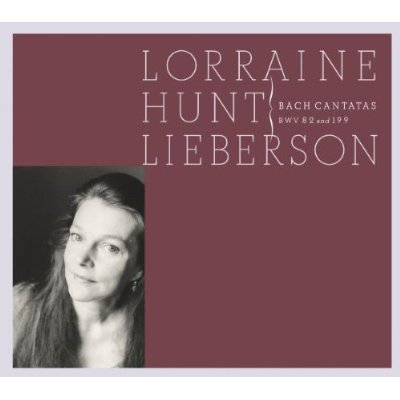
Lorraine sings Bach

I should be getting close to owning everything available for Lorraine Hunt Lieberson.  My first blog post was a death announcement here.

Then I checked the DVD for John Adams' El Nino out from the library.  She is in that, and I wanted to see it, but I couldn't stand the constant cutting back and forth between the stage and a film.  I couldn't follow either one of them.  Maybe audio would work better for me.

I started to become a fan with Neruda Songs, a wonderful set of songs by her husband Peter Lieberson.

Then I began some serious collecting with Lorraine at Wigmore, and her Handel arias, both fine recordings.  Though there is an audio version of Marc-Antoine Charpentier's Médée, recently rereleased, I wanted to see the action and bought a DVD of it from House of Opera.  Either version is highly recommended, but some people cannot stand House of Opera.  This was followed by her Dido with the Philharmonia Baroque.  I also own the recital at Ravinia which was nominated for a Grammy in 2010.  It includes a different recording of this gorgeous Brahms.  I highly approve.


Lorraine has her own very personal style of sliding, the mark of the great artist.  Don't let your teachers fool you into thinking you shouldn't slide.  All the great ones do it.

This brings us back to Bach.  If you can bear it, there is a YouTube video of the aria "Ich habe genug" with Lorraine in her hospital gown.  I cannot.  This is Peter Sellars' fault.  The quality of the CD is much better.

I am one of the ones who hear the soul in her singing.  For the Baroque it can be necessary to feel across extremely long phrases.  Phrasing in large part consists of deciding where is the beginning, where the middle, and where the end of the phrase.  Each short set of notes must be felt to move forward or hold back.  When the phrase is extremely long, the singer must feel it all the way to the end, even if a breath is necessary.

Surely they will run out soon.
 #ad

Wednesday, April 04, 2012

Joyce Teaches


This is simply incredible.

Footnote: Excuse me for the technical faux pas. If I get so many hits when I post nothing, I should try it more often.

Thursday, December 22, 2011

Scooping and Sliding


I keep thinking about this, so because today is Puccini's birthday, I have decided to post it. At least a month ago I attended a performance in the Crocker Art Museum. I won't name the singer, but her program included a group by Puccini, including "O mio babbino caro."

One programs "O mio babbino caro" to show off ones mastery of the Puccini style, specifically scooping and sliding. Angela Gheorghiu may be considered a master of this style, and performs it with at least 15 scoops and as many slides. Now try to imagine that someone would program this piece and not scoop or slide even so much as once. It was deeply shocking. I am still asking myself why.

Sliding.  A properly executed vocal slide goes from an upper note with a glissando to a lower note during the duration of the upper note, and lands on the lower note just at the right time to sing the lower note with the new word.   To emphasize the slide the lower note may be delayed by extending the glissando.  The slide ends with an anticipation of the next note.

Scooping.  A scoop approaches a note from below and begins at the time of the new note.  It's like you start flat and rise gradually to the right note.  A properly executed scoop must end in tune.

Saturday, October 08, 2011

Conversation

Son: I just don't get the French Baroque.

Mom: Huh?

Son: I don't understand at all Couperin the Great. [François Couperin (1668 – 1733)] I have recordings of his contemporary [Domenico] Scarlatti (1685 – 1757). Him I get. So why should the same harpsichordist playing music from the same period sound so different?

Mom: Well, there you have a misconception. Scarlatti is Baroque, but Couperin is considered Rococo. In fact he is more or less considered to have invented Rococo. With Scarlatti the music is in the notes. With Couperin the music is in the ornaments.

Son: I usually think you should just leave the ornaments out.

Mom: In the case of Scarlatti you could probably get away with that. In the case of Couperin nothing would be left. You need someone who understands the Rococo style.

Son: Why should it make any difference with a harpsichord?

Mom: I have a friend who wrote a book on expression on the harpsichord.

Footnote: We really do have conversations like this all the time. We agree that I shouldn't suppress my inner nerd. If I have to play to the masses, it isn't any fun.


Tuesday, May 24, 2011

Judi

I am currently reading Judi Dench's memoir And Furthermore. She advises that the way to learn to speak Shakespeare properly is to listen to John Gielgud and Frank Sinatra. "Sinatra presents you the entire arc. He never lingers too long on one thing. You appreciate the essence of the whole. You're led through a song with Sinatra. There's a beginning, a middle and end."

Judi Dench's career has included quite a lot of singing. A few examples are

She appeared in Sondheim's A Little Night Music
She sang Sally Bowles in Cabaret.
She sang "Plaisir d'amour" in Hay Fever
For my money she was the best singer in the movie Nine.
She sings the title music "This is a Fine Romance" in the TV series A Fine Romance.


I promise to love Sondheim if he's always done with Judi.

Compliment: Judi tells of rehearsing A Little Night Music with Stephen Sondheim watching. Afterward she asked him for a note--a suggestion or criticism. He replied, "It's yours now."

Sunday, August 22, 2010

Merola Finale

One of the purposes of Merola training at the San Francisco Opera Center seems to be acquainting the young people with the nooks and crannies of operatic repertoire.  Thus at last night's Merola Grand Finale 2010 we were treated to...

A Handel Aria (Kevin Ray, tenor)

A substantial amount of Romantic French, including
·         an aria from Mignon (Robin Flynn, mezzo)
·         an aria from Thais (Rebecca Davis, soprano)
·         a duet from Hamlet (Abigail Santos Villalobos, soprano & Dan Kempson, baritone) and
·         a duet from Romeo et Juliette (Nadine Sierra, soprano & Daniel Montenegro, tenor).

An even richer selection from the bel canto, including
·         an aria from I Puritani (Ao Li, baritone)
·         a duet from La Fille du Regiment (Abigail Santos Villalobos, soprano & Eleazar Rodriguez, tenor)
·         a duet from Lucia di Lammermoor (Valentina Fleer, soprano & Sidney Outlaw, baritone)
·         an aria from Norma (Renee Rapier, mezzo) and
·         a duet from Don Pasquale (Janai Brugger-Orman, soprano & Benjamin Covey, baritone).

 “O du mein holder Abendstern” from Tannhauser (Ryan Kuster, baritone).

Two bits from R. Strauss that included
·         bit from Die schweigsame Frau, something I’ve never seen but now am curious (Kevin Thompson, bass)
·         duet from Ariadne auf Naxos (Hye Jung Lee, soprano & Colleen Brooks, mezzo).

Scene from The Rake’s Progress (Janai Brugger-Orman, soprano, Alexander Lewis, tenor, Kevin Thompson, bass).

Scene from A Midsummer Night’s Dream (Hye Jung Lee, soprano, Thomas Florio, baritone and others).

The Finale from Nozze di Figaro.

Not one thing from Verdi or any verismo composer.

Now I know that opera singing is hard.  The lesson of my own extensive education was that it was far easier to learn music as music instead of as rows of notes with words attached.  In other words, learn the notes and the phrasing together.  Never fall prey to the idea that I'll save the phrasing for later.  I'll learn how to phrase music when I'm getting gray hair.  No.  If necessary, learn the phrasing first and save the notes for later.  I'd 100 times prefer a few mistakes in phrased music than endless robotic performances with absolutely no musical clue.

Who knew, e.g., that the finale to Figaro was so repetitious and monotonous?

Giving credit where it is due:  the duet from Romeo et Juliette was charming and very moving.  This opera is growing on me.  The duet from Don Pasquale wasn't too bad.  That's about it.  Even the obscure corners of opera have something musical to say.  The scene between Zerbinetta and the Composer, for instance, is utterly charming.  Normally.  Not here.  You won't fool me with acting.  In other words, the presence of acting will not distract me into not noticing the absence of phrasing.

Post Script:  Obviously if they are all doing it, it isn't the singers who are at fault.

PPS:  When I pointed out that the Merola final concert included no Verdi or verismo, I meant this as no criticism. And "O du mein holder Abendstern" cannot be considered killer Wagner. In a comment about the Santa Fe opera I said I did not think Merola tried to push young singers into heavy repertoire or vocal production, something that might be happening in Santa Fe. Selection of lighter repertoire is a factor in this process. The aim is to work very hard, learn a lot about repertoire, languages, acting, etc., but leave the technique pretty much in tact. They should be praised for this.  

Saturday, May 08, 2010

Goerne

My iPod has quite a bit of Matthias Goerne by now. Besides Die Schöne Müllerin, there is an album of Dichterliebe and Liederkreis reviewed elsewhere, and an album of Bach arias with Christine Schäfer and Hilary Hahn called Bach: Violin & Voice.

The singers in the Bach album simply don't rise to the level of the divine Hilary Hahn. What is she doing that they are not? Again it comes down to phrasing. Bach's music comes with a regular harpsichord beat underlying everything. So do you just fall in with it and emphasize every beat with the harpsichord and eventually become plodding, as I feel Goerne does here? Or do you phrase across and occasionally against the beat as Hahn does? Schäfer falls somewhere between the two.

I enjoy all of them in various ways, but only Hahn attains the truly divine. I want them to soar higher.

How one reacts to a singer will depend very much on the timbre of the voice. Goerne is the sort of singer who will appeal or not. He has cut a niche for himself in Lieder singing which is very appealing. I personally prefer his tone to that of the sainted Dietrich Fischer-Dieskau, but I know this is strictly a matter of personal taste.

In Lieder Goerne masterfully manipulates his tone to enhance expression. He can diminuendo without falling into sotto voce, as so many do nowadays.

At this point I refer to Anna Netrebko saying that she was taught to sing always with a full tone. When conductors and coaches want a softer tone than she can produce without switching to sotto voce, she simply refuses to do it. For me this is wisdom.

For Goerne his tone stays full to very low dynamic levels. He also can manipulate the color of his voice to great effect. This can be wonderful to hear in Schumann. My problem here is that his overall color is too dark for Die Schöne Müllerin, a work of extreme naivete. Perhaps Wunderlich could manage it. I still refuse to buy his version.
#ad

Wednesday, April 07, 2010

Clarification

People writing about singers sometimes say that they act with their voices. This was often said about Leontyne Price. Maria Callas was said to "act" with both her voice and her body. What can this possibly mean? I suggest that it means the same thing as I mean when I talk about phrasing.

All singing has pitch, rhythm, tone and phrasing. Phrasing is.... Any music has an expected way in which it is phrased. I've discussed this it must be hundreds of times by now, and I begin to become discouraged. If it helps to say they "act with their voices," then so be it.

In many ways music is the creation of anticipation, the movement from one note to another, the feeling that more is to come. All the elements can contribute to this effect, but phrasing is the strongest.

Unphrased music just sits there. In the modern world we substitute deafening repeated bass notes for phrasing. You know what I'm talking about. When the car drives past your house, all you can hear is the bass. In my case this is my only contact with this type of music.

Stefan Zucker who writes for the Bel Canto Society has sent me a long article on What Sets Callas apart, and nowhere in it does he mention that her phrasing was exquisite. Why else would we sit through the ugly sounds she so often makes? Because we are masochistic? Or more likely because we recognize perfection when we hear it.

Thursday, February 25, 2010

Simon Boccanegra in HD

Simon Boccanegra........Plácido Domingo
Amelia..................Adrianne Pieczonka
Gabriele Adorno.........Marcello Giordani
Jacopo Fiesco...........James Morris
Paolo Albiani...........Stephen Gaertner

Conductor...............James Levine
Production..............Giancarlo Del Monaco

I went last night to the rerun of the Metropolitan Opera HD broadcast of Simon Boccanegra with Plácido Domingo as Simon Boccanegra, James Levine on the podium, Adrianne Pieczonka as Amelia Grimaldi, Marcello Giordani as Gabriele Adorno and James Morris as Fiesco / Andrea Grimaldi. The audience in the house really loved this.

Is it necessary to review the plot? Fiesco, a Genoa aristocrat, has a daughter Maria. She gets knocked up by Simon Boccanegra, a lower class person. Baby is misplaced and turns up later as Amelia Grimaldi, Fiesco renamed. That's enough.

Anyone wants to see this because Plácido Domingo is singing Simon Boccanegra, a baritone part. Can he do it? The answer appears to be yes. The part lies well for him and he keeps his regular tenor tone. He is such a wonderful actor and carries it virtually on charisma alone.

The shock came with James Morris as Fiesco. This part did not lie well for him. His voice completely disappeared on the low notes. My previous complaints about him having a wobble, however, were not in evidence. He sounded great on the parts you could hear.

It was a stylistic mish-mash. Marcello Giordani sang beautifully in a very Italian style. Domingo and Morris were a kind of generic Verdi. Adrianne Pieczonka has a nice hefty voice for Verdi but absolutely no idea of how to phrase Verdi. Perhaps the Verdi curse will move to New York.
#ad

Sunday, January 10, 2010

Blogging about technique

While having lunch with a friend, out of the blue she started talking about how to sing the neutral vowel, especially in French. We don’t really agree about this and gradually progressed to an argument.

Can I explain to you what this is without resorting to references to the phonetic alphabet? In English there are two “uh” vowels: the one in “tub” (phonetic symbol like an upside down capital V) and the one in “the” (symbol like an upside down lower case e, usually called schwa.) I don’t actually think the first of these exists in French. So when I’m talking about the “uh” vowel I mean the second one and will call it the neutral vowel. OK?

The problem with French is that you frequently sing these even when you wouldn't say them and end up with a lot of “uhs”. So you can't make your decision based entirely on what people say. I used the phrase “la plume de ma tante” because it’s something that is said in French class. Roughly that’s “la pluem duh ma tant” when spoken. When sung it would be “la plem-uh duh ma tan-tuh.” We were discussing how the “uh” parts are pronounced when singing. Because there are so many of them, this will be crucial to how your French singing sounds.

Lots of voice teachers, including my friend, teach their students to sing this with a tight little tone and a bit of tongue, rather like the “u” in plume. She referred me to academic sources on how to sing in French. It has long seemed to me that one of the reasons French repertoire is done so little outside of France may have to do with how French is pronounced in singing. Sometimes you just don’t want to listen to it, and I was trying to discover why.

I try to form opinions based on empirical data. If I listen to Magdalena Kožená singing in French, she sings it like my friend suggests. So do a lot of non French singers.

The entire subject of how to pronounce things I assign to my panel of experts. To discover whether or not German singers use a glottal attack when words begin with vowels, as has been alternately recommended by some and forbidden by others, I listened to Brigitte Fassbaender, Hans Hotter and some other native born German singers to find out. The answer is not always but yes, occasionally.

So for my panel of experts on how to properly pronounce the neutral vowel in French I consulted with two recordings of the Berlioz Les Nuit d'été: Régine Crespin and Véronique Gens, both fine native born French sopranos. Régine Crespin’s recording of this piece made the Gramophone 100 greatest recordings list. If it is one of the 100 all time greatest recordings, I am assuming that whatever she’s doing must be correct.

With my attention directed toward this feature of the performances, I was surprised to hear how little either one of these great ladies worried about whether her singing sounded French. They were obviously worrying about whether or not their singing sounded beautiful and their tone consistent. They are French and don’t need to prove to anyone that they can sound French.

In particular I heard virtually no difference between the way they pronounced the schwa vowel in French and how I would sing “the” in English. Sometimes it's closer to the "oo" in "look" instead of the "uh" in "the."

In fact, it is striking how everything they sing sounds so completely normal, so completely beautiful.

Singing is an art and not a science. The proof is not in the test tubes, much as I enjoy CSI television, or in books on shelves; it is in the singing. I am trying as hard as I can to write about the world of singing that's out there. If you want me to hear your opinion, don't cite sources. Cite performances.

Here it is. Judge for yourself.


I promise not to bring this up again.

P.S. Ok, so I lied. Roberto Alagna was the only Frenchman in Carmen and pinched the neutral vowel less than anyone in the opera.

Saturday, January 09, 2010

Susan and Renée together again


This picture of Renée Fleming and Susan Graham is from the New York Times.

Today I attended the Metropolitan Opera HD presentation of Strauss' Der Rosenkavalier. I am something of a Rosenkavalier freak. I'm even starting to understand all the words.

Conductor: Edo de Waart
Production: Nathaniel Merrill
Marschallin Renée Fleming
Octavian Susan Graham
Sophie Christine Schäfer
Tenor Eric Cutler
Faninal Thomas Allen
Baron Ochs Kristinn Sigmundsson

It is necessary to dislike something, right? Eric Cutler as the tenor was lame.

Placido Domingo was adorable as the host. He talked to Renée about her long friendship with Susan Graham and elicited the quote, "We used to say we were the only ones we kissed." Clearly opera singers spend most of their free time obsessing over their private lives, like everyone else.

The production is very traditional, one of those productions that is intending to show you what it really looks like. The Marschallin's bedroom, for instance, looks exactly like a period Viennese palace bedroom, complete with the heaters built into the walls. The skyline seen through the windows is really Vienna, though the viewpoint would seem to be entirely imaginary. The second act looks good but does not allow for Sophie's Duenna to look out into the street and see all the action she is reporting to Sophie. She looks very foolish prattling on about things she can't possibly know.

All the ancient Rosenkavalier traditions are followed. The chocolate looks exactly as it should, but comes with sugar tongs. Do people put sugar into chocolate? Everyone bows precisely to the Princess and backs out of the room. The chairs in act II are positioned exactly where they always are.

Now I've gotten all that out of the way and can talk about the performances. I hope I'm not required to be coherent. Towards the end I started muttering "wonderful" to myself over and over. It was simply amazing, the best third act ever. God is in the details, and there were too many details to take in all at once. I'll have to see it again.

What sets Renée Fleming apart from possibly everyone is her ability to actively relate to the other people on the stage. It is those eyes and reactions that bring the drama to life. The Marschallin is the greatest character in all of opera, and Renée played her as a living, loving, exciting woman. She is someone we know, someone who knows she is having an affair with someone too young to know what he really wants. The phrase "halten und nehmen, halten und lassen" (hold and take, hold and leave) is the plot of the opera. Take love when it comes and let it go when it leaves. She does this better than any Marschallin I have seen. Her third act is awesome.

It even worked with Ochs. "Komm' aus dem Staunen nicht heraus! Der Feldmarschall - Octavian - Mariandl - die Marschallin - Octavian. Bin von so viel Finesse charmiert, kann gar nicht sagen, wie." (I will never get over my astonishment. The Fieldmarschall, Octavian, Mariandl, the Marschallin, Octavian. I am charmed by so much finess, and can't really say how much.) They look one another in the eye, and we see for the first time that this admiration is completely sincere. Perhaps they will see one another again, and he will ask once more for her protection.

I have seen Susan Graham in quite a few pants parts, and I must say Octavian is her masterpiece. She has the big ungainly body of a seventeen year old and moves around in it with the same insecurity. She seems completely natural. Often women playing young men seem to be a parody of a man, but Susan's Octavian is real. She is the perfect real partner for this most real Marschallin.

Someone at the Met is creating this magic. Someone is leading these already magnificent singing actors to produce the performances of their lives.

A great Rosenkavalier is a feeling like nothing else, something one wishes one could hold on to forever. Thank you, my darlings.

Friday, December 04, 2009

Breaking the Verdi Curse

We the audience of the San Francisco Opera are very pleased with our new Italian conductor, Nicola Luisotti. This season he has done Otello, Il Trovatore and Salome, the last the only German language opera I see in his credits. He knows his Italian repertoire and occasionally can be seen smooching with the female members of the orchestra. Everyone is very pleased. Is it too soon to declare the end of the Verdi curse?

Otello is an opera about a successful man honored above his expectations and married to the girl of his dreams, who cannot quite believe his luck. In his deepest heart he knows Desdemona is too good for him.


Johan Botha as Otello and Zvetelina Vassileva as Desdemona were very believable in this pairing. She is small, ethereal and devoted; he is large, dark and imposing. In short a mismatch. His enormous size emphasizes this dissonance.


Marco Vratogna as Iago was suitably diabolical and deceptive. For my taste his voice is not quite large enough for Verdi villains, but he successfully compensates with acting, phrasing and the other aspects of his performance.

Note to the San Francisco Opera: could you add a bit of information about nationality and training to the bios, please? It would be nice to have an idea of them as people and not just as roles and companies.

And now I am going to annoy everyone by discussing Johan Botha whom I have now seen in 2 Verdi roles in a one month period.

His big voice is beautiful and his legato is well developed. For me the beauty of his singing--the reason you are seeing him in opera at all--would be enhanced with better physical conditioning. Control of the phrase and control of the body are one.

I liked the one set production.

[See Kinderkuchen History 1870-90]

Sunday, November 22, 2009

Elixir in Sacramento

Donizetti's L'Elisir d'Amore, now playing at the Sacramento Opera, makes widely varying impressions, depending much on how Adina is portrayed.

On the video with Rolando Villazon she is a serious woman who sits at home in her large house and reads. At Santa Fe she was a school teacher. In Sacramento she is clearly a fast girl who is completely in character when she decides to marry Sergeant Belcore. I think it's more emotionally satisfying when she is a woman of substance.

The production places us in the Napa Valley in the 40s. It doesn't really matter where it takes place.

The cast is good. Katrina Thurman's Adina is a light-voiced coloratura. Dinyar Vania is excellent as the countrified hero Nemorino with interesting Italian phrasing.

We clearly cannot blame Verdi for the Italian opera Oom-pah-pah style he is so often criticized for. He obviously got it from Donizetti. The most prominent player in the orchestra was the bass drum and cymbals. I don't remember noticing this so much before.

If you like your comedy painted with broad strokes, you will love this.

Thursday, November 19, 2009

Bernarda Fink Schubert Lieder


For my ears Bernarda Fink is obviously not German, though her diction is excellent. This is hard to explain. The phrasing is beautiful but not exactly German. I'm told she is from Argentina.

I love Schubert, and find these easy to listen to. Two criticisms of the album:
  • If I turn the sound down to the point where it doesn't hurt my ears, I can hardly hear the piano. This is an engineering issue.
  • Engineer also must insert a bit of dead space at the end of each song so you can tell when one stops and the next one begins. This problem is worse because of the first item.
Her voice is very sweet, but the tone does not vary much. There are songs here I haven't heard in years: "Ganymed," "Die junge Nonne," "An Silvia." She never gets really carried away.

I apologize for not buying something more current, but I really love Schubert.
#ad

Thursday, September 10, 2009

Lehmann's Books


Lotte Lehmann (1888 – 1976) wrote a number of books on the subject of Lieder interpretation, an art in which she was for many the undisputed master. I remember several books sitting on my school library's shelves. In my collection is only Eighteen Song Cycles, a volume the covers all the important German cycles, or at least those she might have been expected to sing. Mahler's Kindertotenlieder does not appear.

She moves on to cover a few French cycles, including Berlioz' Les nuits d'été and Ravel's Shéhérazade. She includes both piano cycles and orchestra cycles.

Her books fell out of favor, were considered far too specific in their directions. She talks about where your eyes should be directed, e.g.

I took classes in Lieder interpretation at IU and felt that the more specific the discussion the more helpful it was to the singer. Lehmann's best words may lie at the beginning:

"First and foremost I want to say that this book will fail in its purpose, if the young singers, for whom I am writing it, should consider my conceptions as something final and try to imitate them instead of developing their own interpretations which should spring with originality and vitality from within themselves.

"What I want to try to explain here is not any final interpretation, but an approach which may be an aid towards the development of your individual conceptions. I want to point a way which might lead from the lack of understanding of those singers, who seem to consider only voice quality and smooth technique, to the boundless world of expression. And it will be seen that there is not just one, but an infinitely varied pattern of ways, which lead to this goal. Only he who seeks it with his whole heart will find his own approach to interpretation."

I couldn't agree more. Perhaps her books still sit on a library shelf somewhere. See if you can find them.

This is a funny comment I know, but here goes--I think perhaps the stricture against imitation does not really apply to Italian opera. Your heart must still be fully engaged, but the proper style can only be achieved through imitation.

This is the only film of Lehmann singing during her active career. She was 60.

Sunday, July 26, 2009

Liebestod, YouTube and other places

I moved this blog entry up because I found the Jessye Norman/Herbert von Karajon version at the bottom of the list. I was completely blown away by this. If you want Wagner to shake you down to your shoes, this is the one to hear. The films for this come and go from YouTube, so get them while they're there.

Shirley Verrett, 1977


Zubin Mehta is conducting. She is really a mezzo, but Wagner lies like a high, heavy mezzo. Surprising is the lightness of her voice and how in spite of that she makes the music work. I don’t recommend mezzos try this as a rule, but for her it seems quite beautiful. The very beginning is clipped off. She isn't a soprano at all and therefore doesn't make the list of 20 greatest sopranos.

Birgit Nilsson


This is in the 60’s, I don’t know who is conducting. It is important to contrast this film with the above, and maybe anything else on the planet. She is showing you how it’s done. Verrett shows a lot of tension in her neck, but Nilsson nothing. She could be lip syncing for all you can see of tension in her voice and body. Watch. This is important. She is controlling her voice from below exactly as it is always supposed to be done!!! This is why she is the greatest. Technique is never an impediment. It's also why years of singing such heavy music do not wear on her voice. When her voice rises to a crescendo, you see nothing. You hear everything. No element of expression is missing. It is magnificent beyond imagining. In the 20 greatest sopranos list she is number 5.

Maria Callas, 1957


There is no indication of who is conducting, audio only and in Italian. It is always interesting to read the comments about Callas. There was a shrillness in her voice that is distasteful to many. Perhaps she doesn’t achieve the total control from the diaphragm that Nilsson does. This is probably the explanation for Callas. The attraction of Callas lies in the expression. She may never have been a Wagnerian, but she gets it. It is a musically compelling performance. Her understanding here is as complete as in her more famous Italian performances. In the 20 greatest sopranos list she is number 1.

Kirsten Flagstad, 1936


Fritz Reiner is conducting, audio only. The delicacy of phrasing is astounding. No one else does it this way. She builds the entire piece to a clear, specific climax. It would be wonderful to have a film of this. In the 20 greatest sopranos list she is number 9.

Kirsten Flagstad, 1954


Wilhelm Furtwaengler is conducting, audio only, playing over a film. The delicacy of the earlier performance is gone. Her youth as a coloratura is gone completely. The performance retains its sense of growth over the length of the entire aria, but the effect is now monumental, grandiose as seldom heard in the work of any artist. It was her reading that made her the all time great. I take nothing away from Nilsson, but Flagstad makes it feel so much larger, so much more significant than anyone else. She was the greatest interpreter of Wagner.

Waltraud Meier, 1999


Zubin Mehta is conducting. Virtually worshiped in her home house in Munich, Meier is a unique performer of Wagner. She hasn’t the enormous physical equipment of Nilsson or Flagstad, and you see the tension in her neck. What she has is beauty and passion. She sings the whole damn thing in close-up. Who else would even try it? Hers is by far the most detailed reading. She does not even try to compete with her more famous counterparts, but creates her own original ecstatic performance. She does not make the list. The film linked here is from a performance at Bayreuth in 1995.


Donald Runnicles conducting, audio only.   The beauty of her voice is unsurpassed. The style is there. But she does not dominate the material like Nilsson, and she does not feel the monumental structures like Flagstad. Good Isoldes are very rare so we should treasure her. In the 20 greatest sopranos list she is number 17.

Eileen Farrell

And how did I miss this the first time around? The fabulous Eileen Farrell, a very great singer missing from the great singers list, sings the Liebestod. She had a big beautiful voice she could do virtually anything with. I don't know Christine Brewer well enough to even consider placing her above Farrell.

Nina Stemme


The goosebumps are working. If you want someone to listen to now, she is the one. I wonder if she is doing this anywhere.

Jessye Norman, 1987


This film is posted as a memorial to Herbert von Karajan who is conducting his last performance. This is giving me shivers. This version is beautiful almost beyond belief. Notice the slow tempo. I think I'm going to declare a winner. No one tops Jessye at her very best. Please note: the great and fabulous Herbert von Karajan carefully and obsessively WATCHES THE SINGER throughout this piece.

Nilsson is voice, Flagstad is phrasing!, Norman is emotion, Meier may possibly be acting, Stemme is soul.

OMG. Could I be becoming a connoisseur of Wagner?

Sunday, June 28, 2009

Words of Wisdom

Thank you to Joyce DiDonato for this quote: "Guys, every chord change has to be a miracle." Yes. Exactly.

Friday, May 22, 2009

Murray Perahia


I am visiting the child of two pianists, and both of her parents loved Murray Perahia. The concensus is that he is absolutely without ego. If you love Vladimir Horowitz or Glenn Gould, Murray Perahia is the opposite. His Bach is especially nice. Every note is part of the phrase.

And what is the secret of music? Knowing where every note goes. Every note must live. Every single note is important and has its place in the musical phrase. This is where I went mad for Cecilia Bartoli. For a pianist this is understood and expected. For a singer it is very unusual. She does this.

Monday, April 27, 2009

Interview with Jonas Kaufmann


[This interview is translated, sometimes paraphrased, from Opernglas.]

JONAS KAUFMANN

Jonas Kaufmann oscillates this summer between Puccini, Verdi and Wagner. Before the Lohengrin premier in Munich he found time for a discussion with our coworker Dr. Thomas Baltensweiler. Selections from the discussion.

OG: Mr. Kaufmann, You will sing Lohengrin in a new production with this year’s Munich opera festival, your third Wagner role after Stolzing and Parsifal. How did the two parts feel?

Terribly well, that was a discovery for me. I felt that the voice opens up correctly again. In the center are not only loud notes, Parsifal is an outstanding example of how many places in this Fach are to be sung softly. Sometimes only one instrument accompanies. The combination of both, letting the voice go and soft, slender leading, makes it a lot of fun. But it means also an intellectual challenge to analyze and interpret each sentence. Because Wagner’s language is very pictorial and flowery, sometimes deficits in understanding are present, certain things simply are sung without first asking oneself what is behind them. Sentences end every now and then only after one three-quarter minute, so interlocked and complicated are they. To recognize this and then create a vocal phrase, so that the meaning is already apparent at first hearing, requires special concentration. With Wagner the characters are presented unbelievably broadly and comprehensively. Normally opera presents only vocal challenges; normal Verdi, apart from Otello, progresses relatively simply, there are no puzzles regarding role organization.

OG: Large parts of Lohengrin lie in the Passaggio range, the transition between the vocal registers. This is unpleasant for many interpreters.

Also Don Carlo or the duke in Rigoletto have to sing very much in this range. But here no cock crows thereafter because an Italian voice is used to master this requirement whereas Wagner roles are mostly settled in the lower central position, with few upward outbreaks, which require no real high notes. Lohengrin is Wagner’s Italian opera, one notices in the voice leading, directly in the ensembles the role stays for a long time in the unpleasant range, which is unique for a tenor part in the Wagner repertoire. Thanks to my experience in the Italian and French repertoire I do not feel this is so problematic.

OG: Munich lies not too far away from Bayreuth…

That’s right! (Laughs heartfully.) Here there are different ideas. We already took several approaches, which however failed for various reasons.

OG: But…

In 2010 there will be Lohengrin [at Bayreuth], which I will sing.

OG: Siegmund in Walküre is likewise planned. Does this mean that you concentrate slowly, but surely on heavy repertoire?


No, “concentrate” is the wrong word. I always tried to extend my repertoire step by step and would like to learn to know the whole range of the tenor Fach. I say „learn to know “ since it can happen that one does not want to sing a role after one has tried it out, or at least one wants to let it lie for a while. With Wagner Siegmund is the logical step after the Lohengrin. Siegmund is a relatively low part and from there completely different from Lohengrin, with which the Tenorale and not the Baritonale are in demand. But there are enough examples of singers, who sang both roles, I think of James King, who with Siegmund did not tighten up in the high notes. [?keine Höhenschwäche zugezogen hat?] I am a long ways away from thinking that after this I have to take on Tannhäuser, Tristan or Siegfried. But there are no plans for these roles for the next five, six years, not even thought about. I continue to sing Verdi and Puccini, and with my new album have again tasted Mozart blood. There are so many new roles, which one would like to learn, but it is sometimes an error to go back to "old" pieces.

OG: Also in Italian roles you, casually stated, are good at the business. Just now a complete recording of Butterfly appeared with you as Pinkerton. For a long time it was difficult for German singers to get a foothold in Italian roles and now several succeed. Is there a general explanation for it - or at least a specific reason for your success in this repertoire?

In any case that a conscious decision is the basis, that is with my colleagues surely not different. One may not give up. Also in Zurich, where we speak straight with one another, it was not like I was intended for the Italian Fach from the beginning. I had to wait for a long time before I received my first Italian role. Fenton in Falstaff perhaps was offered to me with the thought that I would reject it, because that was not a compelling or a dream part. In spite of this I immediately gladly agreed, because I love Falstaff - a complex piece -, and suddenly I got other parts, Don Carlo and Rigoletto - duke.

In order to look for a general explanation for why for a long time one hardly met German singers in Italian operas internationally: Perhaps it is because of the fact that in Germany the works were played for many decades in the German language. An Italian part in the German linguistic area sung in German, had advantages, that I must admit - not for the singer, but for the public, which understood more and for this reason was much more strongly involved. Naturally the singers could have rehearsed the parts in two languages, but that is unpleasant, because easily mistakes can be made. Certainly there were Gala performances, with guests in Italian and the ensemble members singing in German. Altogether it was the German singers because of the language who limited their ability to appear as guests abroad with Italian operas. Therefore German singers were not regarded generally as specialists for the Italian or French Fach.

OG: In the Zurich Tosca it was noticeable to me, how idiomatic your Italian sounds. How do you prepare for parts, in which you must maintain ground against the strong competition of colleagues singing in their native language?

Strictly speaking there is no strong Italian competition. How many successful Italian tenors are momentarily on the way? Whether anything could not prosper in Pavarotti’s shade - I do not know. Naturally there are many tenors with Latin language roots, such as South Americans. I am lucky in the fact that I speak foreign languages very well and do not have to make special preparations. I can read and understand the libretti immediately. I do not need a coach. Also concerning the style: One must have a little Puccini in the blood, one must be able to feel the emotions, which begin in the orchestra, and be able to be carried away by them. Then one is automatically on the correct wavelength. It isn’t easy to learn the right feeling. Perhaps the Italian opera requires simply temperament - there are also Germans who have this.

[Dr. B. His outline of his plans for Wagner conforms to my opinion. Isn't that lucky? His German is more advanced than mine.]