Showing posts with label Seria. Show all posts

Saturday, February 29, 2020

Agrippina in HD

👍🏻

Conductor...............Harry Bicket
Production..............David McVicar

Agrippina.............Joyce DiDonato
Nerone, her son.........Kate Lindsey
Claudio, her husband the emperor.....Matthew Rose 
Poppea, her rival..........Brenda Rae
Ottone..................Iestyn Davies (countertenor)
Narciso.................Nicholas Tamagna (countertenor)
Pallante................Duncan Rock
 
Deborah Voigt announced that Handel's Agrippina, 1709, was the oldest opera ever presented at the Met.  As I mentioned after the last time I saw it, it was composed for Venice early in the era of Neapolitan opera.  That means lots and lots of da capo arias and a happy ending.  What is more Venice than Naples is the mixing of comic and serious elements.  The Venetians weren't fussy about that stuff.

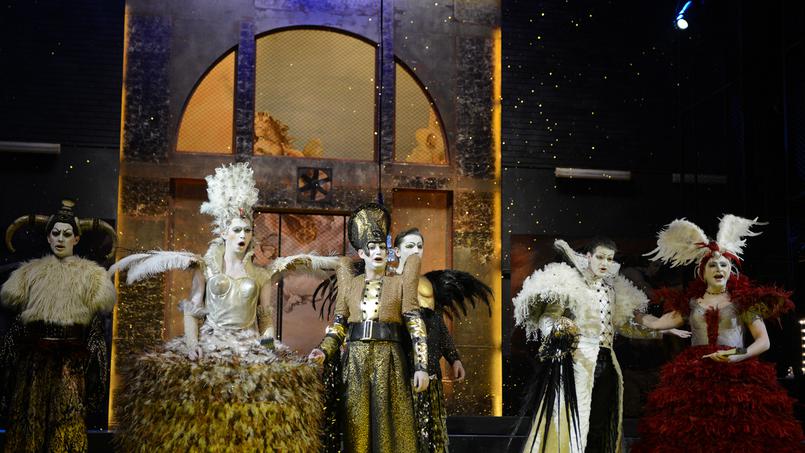
This is the most I have enjoyed a Baroque opera maybe ever.  This is regie, of course.  The clothes are modern with lots of WWII military uniforms.  There is a bar scene where all the characters seem to meet by accident.  Maybe it's on the frequently mentioned Campidoglio. When Rome conquers England, they return with Elizabeth II's crown.  One of the scenes showed the ceiling of the Pantheon which brought some character to the mostly abstract sets.

What makes this a great opera is the well designed plot.  No matter how difficult the complexities are for our heroine, she conquers them all.

I was going to say there is no hit tune until Nerone sang "Come nembo" while snorting cocaine.  This is known because Bartoli recorded it.  The most unusual thing about this production is the staging of the character Nerone.  I think we are to presume that he is a very athletic, well-tattooed juvenile delinquent.  He loves his mother and acts up continuously.  Kate Lindsey said she had to train for this role.  We believe her.  Her rendition of "Come nembo" was excellent.

The music was always excellent, but no one topped the magnificent Joyce DiDonato who created a wonderful, perfectly believable evil character and topped it with gorgeous singing.

Friday, June 28, 2019

Orlando in San Francisco


Conductor: Christopher Moulds*
Director: Harry Fehr*
Production Designer: Yannis Thavoris*

Zoroastro, doctor: Christian Van Horn (bass)
Orlando, hero: Sasha Cooke (originally alto castrato, here mezzo)
Dorinda, nurse: Christina Gansch* (soprano)
Angelica, rich American: Heidi Stober  (soprano)
Medoro, patient: Aryeh Nussbaum Cohen* (originally contralto, here countertenor)

Our production of Orlando, an opera in three acts by George Frideric Handel seen at the San Francisco Opera, has leapt into the latest craze in opera regietheater:  opera as psychotherapy.  We have seen this recently in:
  • Bizet's Carmen from Aix-en-Provence 7/9/17.  Don Jose is being treated for marital difficulties.
  • Weber's Oberon, or The Elf King's Oath live streamed from the Bayerische Staatsoper 7/30/17.  Psychiatrists experiment on random members of the audience.  Gods and fairies are delusions.
  • Berlioz' Les Troyens 2/28/19.  After the Trojan War, the survivors are institutionalized in a mental hospital with PTSD.
So our hero is showing signs of mental illness after fighting for Britain at the beginning of WWII .  In an early scene photographs of Edward VIII before and after his abdication are shown, including one where he and Wallace are friendly with Hitler.  This sets the context.  Hitler is probably still easy to identify, but I might wonder about Edward VIII.

Orlando is having hallucinations which are projected on the set as seen above.  We see handwriting, a large engagement ring, lights, a woman's eyes, etc. 

Act I

Orlando is in a hospital bed.  He is shown rescuing a woman in a wheelchair.  Both Dorinda and Angelica fall in love with Medoro, who has injured his leg.  Orlando has given Angelica an engagement ring.  Characters are introduced in rooms of the hospital.

Act II

Dorinda lets Angelica have Medoro, and Angelica gives Dorinda Orlando's ring.  Orlando is furious over this turn events and threatens everyone.  At the end of the act we hear bombs exploding

Act III

Orlando is completely bonkers by this time and is locked up.  Spoiler alert:  he is treated with not too shocking shock treatments, and is cured.  Angelica and Medoro are allowed to go in peace.  Orlando puts his uniform back on and retreats.


I felt that this modernization was very successful.  It fit the story surprisingly well.  However, sometimes plot points went by in a way that allowed you to completely miss them.

In Handel's time Orlando was a male castrato and Medoro was a woman.  We have the long ago example of Marilyn Horne to reverse this.  Our countertenor Aryeh Nussbaum Cohen is nice looking and has a beautiful voice.  My favorite singing was by Christian Van Horn, a bass who sings coloratura.  Who ever heard of such a thing.

Among the women Christina Gansch received the most applause for her act III aria.  She is someone to look out for.  Our stalwarts Sasha Cooke and Heidi Stober were both excellent actresses and good in their roles.  Their voices didn't always precisely fit the music they were singing.  Orlando in particular is quite low.

One becomes impatient with endless da capo arias, but all in all it was very enjoyable.  The orchestra included recorders, a small organ but no harpsichord, and a theorbo.

The screens in the balcony are coming down.  This is sad.  I can't read the titles from where I sit without using binoculars, while the ones on the screens are very clear.  This has to do with money.  I'm not happy about it.

Monday, April 22, 2019

Ariodante 👍🏻

👍🏻
Conductor: Gianluca Capuano
Production: Christof Loy

Nathan Berg: King of Scotland (bass)
Kathryn Lewek: Ginevra, his daughter (soprano)
Cecilia Bartoli: Prince Ariodante, her betrothed (originally a castrato)
Rolando Villazón: Lurcanio, his brother (tenor)
Christophe Dumaux:  Duke Polinesso (contralto countertenor, originally a woman)
Sandrine Piau: Dalinda, Ginevra's attendant (soprano)
Kristofer Lundin:  Odoardo (tenor)

This is the Salzburg production of Handel's Ariodante, 2017, starring the one and only Cecilia Bartoli.  In Kathryn Lewek they have found an excellent soprano who is smaller than Cecilia to play her love.  Their voices are beautiful together.  The presence of many men in business suits makes it regie.  At the very beginning Cecilia speaks to us in Italian to explain her story.  The set is large and almost blank.

Cecilia's entrance is made in a full suit of armor.  One cannot stop staring at her.  In her first aria after the king has declared Ariodante to be his heir, she sings all that coloratura while getting increasingly drunk.  I didn't know this opera was a comedy.  Villazon prevents her from falling down.  On the eve of the wedding there is a party where people dance in period costumes, including Ariodante and Ginevra. The bits where Cecilia dances are relatively short but enjoyable.  So far so good. 

The plot is one of those she loves him, while he loves someone else, etc.  Polinesso is the villain.  He plots to steal Ginevra.  Dalinda loves Polinesso, and Lurcanio loves Dalinda.  Polinesso bribes Dalinda to disguise herself as Ginevra to fool Ariodante.  He succeeds with this ruse and drops one of Ginevra's dresses on the floor outside her room.  Ariodante sings "scherza infida" and puts the dress on.

The efforts to bring the story to life seem very successful to me.  Ginevra laments the loss of Ariodante, but when he returns, he's wearing his beard and the dress Polinesso gave him, and Ginevra freaks out.  Suddenly she's interested in all the other men around her.  Hmmm.  The aria by Ginevra that appears here is accompanied by a lot of physical violence which looks too real to me.

This entire opera is performed with great emotional intensity.  If you've followed the news about this, you know that Ariodante eventually turns into Cecilia Bartoli.  So then she's singing and smoking a cigar at the same time.  It doesn't look lit, but....  When I was married long ago, my husband smoked a pipe, and I swear he would blow smoke rings exactly like that.  I swear.  This indicates a level of expertise.

It has a peculiar but happy ending.  It is nice to see Rolando, and Kathryn Lewek was marvelous.  Hail La Bartoli.  I did kind of like the beard.

The production is about gender ambiguity.  At the beginning our hero doesn't seem very happy while at the end he/she is full of smiles.   For more pictures see here.


Friday, June 22, 2018

Giulio Cesare alla PS


Forgive me.  I approach everything from the perspective of obsession and am watching Peter Sellars' take on Handel's Giulio Cesare from 1993.  There is no indication of a live audience.  Jeffrey Gall is Caesar, my fourth countertenor experience in this role.  He has a brighter sound than Scholl, Daniels or Fagioli.  His coloratura is impressive.  One of the firsts for me here is Lorraine Hunt en travisti as Sesto.  I would not have gone in quest of Peter Sellars if it weren't for the hidden treasures of Lorraine.  This is filmed somewhere in Europe.


Tolomeo, Cleopatra's brother, is sung by Drew Minter, Cleopatra is Susan Larson and Cornelia is Mary Westbrook-Geha.  My point of departure for the role of Cleopatra is Cecilia Bartoli, and Susan Larson sounds nothing like her.  I don't know how much of this I can watch.

I am mentally reviewing the versions of this opera that I have seen and can only conclude that it is regarded as a comedy.  In Zurich the Egyptians wear striped boxers.  In Salzburg Cleopatra rides a rocket.  At the Met we have wandered into a Bollywood movie.  It's hard to take any of these seriously.

This one is also not serious.  Caesar is president of the United States, apparently, due to seal of the President on the podium.  Tolomeo most resembles a punk teenager.  We have begun to notice that Peter Sellars' version of Regietheater moves every opera to somewhere American.  This is what he knows, so this is what he does.  The first person who appears representing Tolomeo and delivering Pompey's head is dressed a bit like Fidel Castro.  This at least is serious.

Caesar and Ptolemy are negotiating, and after a while Caesar starts throwing cups and felt tipped markers at Ptolemy.  Caesar has a lot more pens in his pockets and he throws them.  Then he opens the water bottles, spills water all around, and exits smiling.  He's always smiling.  Sellars seems to have anticipated our current administration.

By now I am used to the musical quality of the Bartoli GC.  Perhaps I am spoiled forever.

In Act II both Ptolemy and Achilla are harassing Cornelia.  They are laying it on pretty heavy.  So far she just frowns.  Ptolemy wraps her in a garden hose.  Sesto plans to accompany his mother into Ptolemy's harem where he can exact his revenge.  I am watching this for curiosity.  It isn't redeeming itself.  Only Lorraine is outstanding.  She waves her machine gun around menacingly.

They go with comedy all the way to the end.
#ad 

Sunday, March 25, 2018

Alcina on Medici.tv


Marc Minkowski | Conductor 
Adrian Noble | Stage director

Anja Harteros | Alcina
Verónica Cangemi | Morgana
Vesselina Kasarova | Ruggiero
Kristina Hammarström | Bradamante
Alois Mühlbacher | Oberto
Benjamin Bruns | Oronte
Adam Plachetka | Melisso

I have been subscribing to medici.tv without actually watching much of anything.  I notice that there are films from San Francisco on here.  All are highly recommended.

So I decided I should watch Handel's Alcina from the Vienna State Opera, 2011, with Harteros and Kasarova.   This is a typical opera seria with a traditional staging.  The best part is at the beginning where Alcina and Ruggiero are flirting.

You would want this for the singing which is very high class.  Anja in giant fro gets the most applause.  Why isn't Alcina played scarier?  This is hard to understand about this opera.  Here she seems genuinely in love and hugs everyone at the end.

Alois Mühlbacher is elsewhere called a countertenor who sounds like the boy soprano he is supposed to be according to Wikipedia.  This is a significant role, and Minkowski makes a fuss over him at the end.

This is for the Handel lover.  The camera makes a quick flash over to the audience, and I thought it might be Donna Leon, a known Handel lover.
#ad

Saturday, March 10, 2018

Semiramide in HD

Camarena - DeShong - Meade - Abdrazakov
👍🏻
Conductor...........Maurizio Benini
Production..........John Copley

Semiramide, Queen of Babylon, widow of King Nino, soprano:  Angela Meade
Assur, a prince, descendant of Baal, bass:  Ildar Abdrazakov
Arsace, Commander of the Assyrian army, contralto:   Elizabeth DeShong
Idreno, an Indian king, tenor:   Javier Camarena
Oroe, high priest of the Magi, bass:   Ryan Speedo Green
Azema, a princess, descendant of Baal, soprano:   Sarah Shafer
Mitrane, Captain of the Guard, tenor:  Kang Wang
Nino's Ghost, bass:  Jeremy Galyon

This wasn't my first time with Rossini's Semiramide.  My first time was probably the only time it played at the San Francisco Opera in 1981 with Montserrat Caballé, Marilyn Horne and James Morris.  I sat next to a woman who was a Caballé fan, and we alternated sighing for the two female stars.  This in spite of the weirdness of the costumes.  Richard Bonynge conducted.


I bought a film from the Bel Canto Society filmed in 1980 with a very similar cast which included Sam Ramey.  The singing is amazing if you'd like to hear it.

And then a year ago I watched a stream from Munich starring Joyce DiDonato and Daniela Barcellona which I enjoyed very much for the singing but which was modernized.


Let's just say I had certain expectations today.  For one thing I expected not to like it.  Instead I got surprises.

Semiramide is Rossini's last opera seria.  It may in fact be the last opera seria at all.  This form of opera means serious opera, has serious subject matter, consists of endless rows of da capo arias and ensembles, and usually has a happy ending.  The singing is the point.  You can see from the pictures that this is the first time in my experience that any effort was made to make the costumes look Assyrian.  In Marilyn's version the soldiers looked a bit like playing cards.  In Joyce's everyone seems like modern middle-eastern.  Today's costumes may not be pretty, but they are trying to be period.

I was genuinely surprised by how much I enjoyed Angela Meade in this role.  She has a steelier voice than either Caballé or DiDonato.  In fact that could be said of the other singers as well.  DeShong is steelier and heavier than Horne or Barcellona.  Camarena is heavier than Brownlee or Ariaza.  The result is a shift to a much more intense and dramatic work altogether.  All are working together to set a tone of intense tragedy.

There's only one problem with that:  all that intensity can become tedious.  Sometimes I appreciated it, and sometimes I didn't.  Bonynge and company focused on beautiful singing above all else.  This is pleasing in an entirely different way.

I was surprised by Ryan Speedo Green.  What a voice.  I was surprised by the clarity of the plot.  I saw the Commendatore from Don Giovanni in Nino's Ghost.  I liked it in a surprising way.

Tuesday, August 15, 2017

La Clemenza di Tito from Salzburg

Vitellia and Tito
 👍🏻
Teodor Currentzis | Conductor 
Peter Sellars | Stage director

Russell Thomas | Tito Vespasiano (b) USA
Golda Schultz | Vitellia (b) South Africa
Christina Gansch | Servilia (w) Austria
Marianne Crebassa | Sesto (w) France
Jeanine De Bique | Annio (b) Trinidad
Willard White | Publio (b) Jamaica

This is Mozart's La Clemenza di Tito from the Salzburg Festival in a staging by the American Peter Sellars.  I put letters next to the cast to show that most of the cast is black.  They are from everywhere.  I know what this would mean to Americans but am not sure how a European audience would react.  It would be difficult to persuade me that the timing of this was a coincidence.  All appear to be fine singers.  This is on medici.tv until November, and I see no titles.

When the opera opens the crowd of mostly white people are herded into a corner by army.  Some of the women wear head scarves.  Tito picks Sesto and Servilia out of the crowd.  This is such wonderful music.  How have I not known this?

There are Roman arches across the stage as the only reminder of the Roman Empire, but the costumes are all modern.  I read elsewhere that Tito is compared to Nelson Mandella.  This is rather more profound than I normally expect from Peter Sellars.  This is clearly a concept production, much more so than the Claus Guth from Glyndebourne.  Mandella, the great reconciler is evoked.  Clearly Sellars has changed it into a story of racial conflict and broadened the impact by placing it in modern South Africa and using black singers.

Sesto and Annio

Sesto shoots Tito who does not die.  This is intensely serious.  A miracle could happen -- I could become a fan.  This is so brilliant I am truly amazed.  The timing couldn't be more right.  It goes to the top of my list of great Regietheater.

Annio sings a Kyrie for those who have died in the raid on the Campidoglio.  Jeanine De Bique's Annio was for me the best singing.  I liked Golda Schultz but thought she struggled with the low parts of her arias.  The use of chorus is spectacular and may truly be his area of expertise.  Russell Thomas raises Tito to new heights and then dies in the hospital.  Tutto perdono.  Are we ourselves so large?

This version has a sad ending which is achieved in part through the presence in this performance of music not originally in the score for this opera, music undoubtedly added by Peter Sellars.  One may feel free to complain.  The first clue came with the Kyrie sung by Annio.  He liked the singer and wanted her to have more to sing.  In part the tragic ending is created through the addition of serious music from Mozart's Great Mass in C minor.

I felt the brilliance of this interpretation long before the ending and therefore did not require this musical interpolation.

Thursday, August 03, 2017

La Clemenza di Tito Glyndebourne

 👍🏻
Conductor:  Robin Ticciati
Director:  Claus Guth

Tito:  Richard Croft
Vitellia:  Alice Coote
Sesto:  Anna Stéphany
Servilia:  Joélle Harvey

Claus Guth is one of the masters of Regietheater.  Looking at the above picture from his production of Mozart's La Clemenza di Tito we are reminded of a production of Lohengrin from La Scala a few years ago where the action takes place on a river bank with similar looking grass.  Yes.  That too was Claus Guth.  More recent experiences are the PTSD Fidelio and Salome in a men's wear store. So an opera about an emperor of Rome takes place in a grassy field.  I may see some water behind.  It seems to be a cabin in the woods.  The original tenor quit over "artistic differences."


I like all these singers.  Alice Coote is outstanding, in spite of the fact that she lights cigarettes all the time.  They're talking about places in Rome, burning down the Campidoglio, but we see only grass.  They explain in the interval that this is to remove all hints of cultural context.  A swamp could be anywhere any time.

This particular swamp is where these same people played together as children.  Films play in the background showing children playing.  This production focuses entirely on the emotional relationships between the characters.

I hadn't until recently realized that this is such a wonderful opera.  Beautiful arias, beautiful sentiments.  And best of all it's Mozart.  In such an opera it is possible to sing with complete sincerity.  The soul is open.  My own experience of this opera is informed by Cecilia Bartoli's performances on her early Mozart recording of the arias:  "Non più di fiori," "Deh per questo istante solo" and "Parto, ma tu ben mio."

No flowers for me.  Non piu di fiori.  She repents and thinks she will not marry.  It is opera seria so they all live happily ever after.  Glorious.  Sesto is the star.  Anna Stéphany was a replacement for a pregnant Kate Lindsey.  She looked and sang beautifully and received the most applause.

Sunday, July 23, 2017

Artaserse with 5 Countertenors

Artabano, Mandane, Arbace, Megabise, Artaserse, Semira.  I think.
👍🏻
Conductor–Diego Fasolis
Director--Silviu Purcărete

Artaserse, Prince and then King of Persia; friend of Arbace, in love with Semira--Philippe Jeroussky
Mandane, Sister of Artaserse; in love with Arbace (en travesti)                   -- Max Emanuel Cencic
Artabano, Prefect of the Royal Guard; father of Arbace and Semira            -- Juan Sancho
Arbace, Brother of Semira; Friend of Artaserse; in love with Mandane        -- Franco Fagioli
Semira, Sister of Arbace; in love with Artaserse (en travesti)                       --Valer Barna Sabadus
Megabise, General of the Persian Army, confidant of Artabano; in love with Semira --Yuriy Mynenko

This is a film of the opera Artaserse by Leonardo Vinci on a libretto by Metastasio which was first performed in Rome in 1730.  It was the last opera for Vinci who died that year, and the first for Metastasio.  Vinci is one of the great Baroque Italian composers whose operas are only now being revived.  Women were not allowed on the stage in Rome, so all the characters were originally sung by castrati except Artabano who is a tenor and the villain.  This performance exists to remind us that opera is an Italian art form.

All the castrati are here countertenors and some of the most famous countertenors of our time.  These guys are amazing.  The opening pair are Cencic and Fagioli, both incredible, and the music is gorgeous.  The range of colors in our 5 countertenors is pretty fascinating.  It remains to be seen if the fascination will wear off before the opera ends.  So far 6 Rossini tenors pales in comparison.  They have been assembled in Nancy in the west of France.

At the start there is some breaking of the fourth wall in case you missed that these are all guys.  Some start out in their modern clothing, for instance.  Stagehands appear, and all of them are girls.  Hmmm. These are theatrical stagehands--when the real stagehands appear, they are all men.

There is an attempt here to present Baroque costumes, though they seem to suddenly appear and disappear.  Now that Artaserse is king he appears in an incredible white wig with horns and a white outfit.  Then Artabano appears in the same outfit.  Jeroussky has the most beautiful voice, but there is much to admire here.  The most spectacular is probably Fagioli, but they're all pretty amazing.

Plot.  There is an offstage murder of the present king, Artaserse's brother.  This makes Artaserse king and causes a lot of accusations.  Artabano is probably to blame.  He and Megabise plot to marry Semira to Megabise instead of Artaserse.  Since the male characters all wear the same white outfit, it's very hard to keep track of who is who.  Some visual help would have been good.  Artabano tries to poison Artaserse, but when it appears that Arbace will drink the poison, Artabano confesses.  It has a happy ending, as do almost all opera seria.

What it is actually about is singing, of course.  If you are at all curious to know what Baroque opera was really like, this is probably your best opportunity.  This is the Italian Baroque opera and not the French version which had no castrati.  These guys belt it out in a way that is surprising.  It is a unique experience, unlike anything I have seen in all my years of going to the opera.


Jaroussky removes his hats and wigs as soon as possible, giving the impression that he doesn't much care for dressing up.  The tenor is banished.  All six characters return for a song at the end.  One of the "girls" brings out the conductor.  The music is spectacular, not just the singing.  Find a way to add this to your experience of opera.

#ad

Saturday, July 08, 2017

Saturday, March 25, 2017

Idomeneo in HD


Conductor...................James Levine
Production..................Jean-Pierre Ponnelle

Idomeneo, King of Crete:  Matthew Polenzani
Idamante, his son:  Alice Coote
Ilia, princess from Troy:  Nadine Sierra
Elettra, princess from Argos:  Elza van den Heever
Arbace:  Alan Opie
High Priest:  Noah Baetge
Voice of Neptune:  Eric Owens

Eric Owens was also the host for the Metropolitan Opera HD presentation of Mozart's opera seria Idomeneo, composed when Mozart was only 24.  It is very much in the traditional Neapolitan style of endless da capo arias.

Idomeneo has sworn to Neptune that if he lives through a storm at sea, he will sacrifice the first person he sees on the shore to him.  He lives.  He walks down the stage already lamenting the death to come when his son Idamante approaches him.  The plot has the best possible ending.  Idomeneo does not kill his son but instead cedes his kingdom to him.  Opera seria usually has happy endings.

It was as long as Tristan and did not start early.  A lovely film of a much younger James Levine coaching Jessye Norman and Kathleen Battle in Ariadne auf Naxos was inserted between acts II and III.  I miss them.  It was nice to see them, but this added to the length of the performance.

The camera showed Levine conducting the Mozart overture today, and I thought his movements looked much better than the last time I saw him.  This didn't help the draggy tempos. There needed to be cuts.  By the third act it all began to seem tedious.  I think we are in a period where people refuse to cut anything.

People have jumped on Elza van den Heever for her manic performance, but I found her refreshing and the highlight of the program.  I always love Nadine Sierra, and she was outstanding here.  There were three tenors, but none of them were in the Mozart tenor tradition.  We had big singing and intense drama from all of them, especially our hero Matthew Polenzani.  Perhaps Alan Opie is considered a baritone, but this role was on the high side.  The only disappointment was Alice Coote who seemed out of sorts.

Saturday, March 04, 2017

Semiramide from Munich

👍🏻
Conductor: Michele Mariotti
Production:  David Alden

Semiramide, Queen of Babylon, widow of King Nino: Joyce DiDonato
Assur, a prince, descendant of Baal: Alex Esposito
Arsace, Commander of the Assyrian army: Daniela Barcellona
Idreno, an Indian king: Lawrence Brownlee
Oroe, high priest of the Magi:  Simone Alberghini 
Azema, a princess, descendant of Baal: Elsa Benoit 
Mitrane, Captain of the Guard:  Galeano Salas
Nino's Ghost:  Igor Tsarkov

The role of Semiramide in Rossini's opera Semiramide is usually sung by the same people who sing Lucia, people like Montserrat Caballé, Joan Sutherland, June Anderson, etc.  It was, however, composed for Isabella Colbran who is generally considered a mezzo-soprano.  (Elisabetta, regina d'Inghilterra, Otello, ossia Il Moro di Venezia, Armida, Mosè in Egitto, Ricciardo e Zoraide, Ermione, La donna del lago, Maometto II,  Zelmira, and Semiramide are the operas written for Colbran.)  After her success in La donna del lago, Joyce DiDonato clearly wanted to try her hand at another Colbran role.

I experienced a lot of technical difficulties with this stream from the Bayerische Staatsoper and finally ended up listening on my iPhone, not an ideal medium for watching an opera. 

The cast for this opera was simply spectacular.  DiDonato and Barcellona sing beautifully together.  It is one of the great bel canto operas with an endless stream of gorgeous music.  It may well be considered Rossini's masterpiece.

As with most of the streams from the Bayerische Staatsoper, this performance will probably disappear forever.  This makes me sad.

Tuesday, January 03, 2017

Giulio Cesare

👍🏻
I watched the live stream of Handel's Giulio Cesare from Salzburg in Cecilia Bartoli's inaugural season as artistic director of the Whitsun Festival in 2012.  The production was enormously distracting, so much so that I wrote mostly about it.  There were crocodiles, a Rolls Royce, deals over oil wells, a fan dance, etc.  And occasional obscene gestures.

What I noticed less of was the incredibly gorgeous singing, especially by Cecilia Bartoli, Andreas Scholl, Anne Sofie von Otter, and Philippe Jaroussky, with Giovanni Antonini conducting.  Jaroussky is at his most beautiful, and his duet with Anne Sofie von Otter is emotional. 

In the past year the stream has become a DVD, and in the last month this DVD has received a Grammy nomination for best opera recording.  Does that happen?  I notice that of this year's 5 nominees, Król Roger and Giulio Cesare are DVDs. 

This is the standard for modern Baroque performance.

#ad

Thursday, September 15, 2016

Rinaldo


This film (audio only) of Handel's Rinaldo is of a live performance by the Academy of Ancient Music on January 16, 1999.  The cast is similar to the recording which came shortly after this except instead of David Daniels, we have Ewa Podles.  I think I like it better.  Make up your own mind.

Sunday, August 07, 2016

Agrippina at West Edge

👍🏻
Music Director/Conductor/Harpsichord: Jory Vinikour
Stage Director: Mark Streshinsky

Agrippina, wife of Claudio: Sarah Gartshore (soprano)
Nero, her son: Celine Ricci (here a mezzo, originally castrato)
Poppea: Hannah Stephens (soprano)
Ottone, Claudio's friend: Ryan Belongie (here a countertenor, originally a woman)
Claudio, emperor of Rome: Carl King (bass)
Pallante: Nikolas Nackley (bass)
Narciso: Johanna Bronk  (here mezzo, originally castrato)

Agrippina is an opera by Handel that was composed in 1709 for Venice.  Why have I never seen or heard of this opera before?  I imagine it is very important to know that it was composed for Venice because the commercial theater there was fond of sexual plots.  Poppea, La Calisto, that kind of thing.  Proper handling of the sexual plot by West Edge Opera has made this an amusing Baroque opera without any distortion of the story.  Structurally it is a Neapolitan opera with an endless series of da capo arias. In Venice both women and castrati sang.  Shortly after this Handel moved to London.  It is important to know that in Venice Agrippina was a hit.

Poppea is the sexual center of attention here as she was in Monteverdi's opera.  She tells us how to draw men's attention and lists for us three men who are interested in her:  Nero, Ottone and the Emperor Claudio.   She is most attracted to Ottone and does not like Claudio at all.

Agrippina has but one objective--she wants her son to become emperor of Rome.  She has no interest in her husband's interest in Poppea and instead uses it to manipulate Claudio for her own ends.  This is a surprisingly good plot.  The opera ends when she wins.  Here I want to complain.  They flashed words on the surtitles screen explaining what happened to the characters after the opera had ended, but they went by so fast I had no idea what they actually said.  A bit slower might be better.  Slower or not at all.

One feature of this opera was brief full-on male nudity.  Agrippina is singing, finishes her aria and says to an unseen man that he needs to get lost.  Nude man jumps out of the bed and runs off stage.  Full male nudity is much rarer in the theater than female and is therefore still entertaining.  People entered down the center aisle of the theater, including Claudio who spoke political phrases in English like an American politician.  I shook his hand as he passed.

The hit tune from this opera is "Come nembo," or at least that's what it's called in Il Trionfo del Tempo e del Disinganno which was composed for Rome.  In Agrippina it has a different text.  It is known because Cecilia Bartoli has recorded it.  Here it is sung by Celine Ricci.

The quality of the singing was excellent throughout, the make or break feature of any Baroque opera performance, with the peak experience coming from Celine Ricci.  Here is Celine in her incredible costume and makeup as Nero.

Photo by Cory Weaver.

Neapolitan opera, the kind Handel wrote, is probably the most difficult genre to stage successfully.  It works to do silly, mostly irrelevant things as was done in Partenope recently at the San Francisco Opera, and in Agrippina it works just to stage the opera as it is revealed in the libretto.

I won't again try to watch 2 operas in a day, but nevertheless I was very pleased with this.

_____________________________


I so enjoyed writing about and listening to Agrippina from West Edge that I immediately bought the All About History magazine with the featured article about Nero.  So what is current thinking about Emperor Nero who apparently killed off all possible successors?

I was especially interested in the current thinking on who burned Rome.  The argument goes from one side that Nero burned Rome to kill Christians.  The other side say the Christians burned Rome so Nero would take the blame.  Crucial factoid in this argument is that the rumor that Nero burned Rome is in fact contemporary with the actual burning.  It is possibly tacked on later that it had anything to do with Christians.  The article seems to conclude that it was not arson.  Just a fire.  A really huge fire.  The argument against Nero setting it is that his own houses burnt down.  This point of view is completely new to me.

I knew the story that Nero fiddled while Rome burned.  The curious story is that Nero considered himself an artist and gave performances at an array of venues.  His citizens who had formerly loved him came to find him disgusting, a lower class artist type engaged in an activity not suitable for the heir of Julius Caesar.

This last may be relevant, at least a little.


Tuesday, January 27, 2015

Acis and Galatea

 Corey Jamason (seated), Kyle Stegall (our Acis) and Nola Richardson (our Galatea)

Conductor:  Jeffrey Thomas

Galatea:  Nola Richardson
Acis:  Kyle Stegall
Damon:  Zachary Wilder
Polyphemus:  Mischa Bouvier

Handel's Acis [ACE-iss] and Galatea was originally devised as a one-act masque which premiered in 1718 [some of these words borrowed from Wikipedia].  I decided to use the Wikipedia description of this work because it is a bit difficult to pin down.  It isn't an opera.  Why?  In that period opera was in Italian.  The text here is in English by John Gay before he became famous for The Beggars Opera.  It's completely outside of Handel's oratorio period.  So we're going with masque, a popular form during the life of Henry Purcell whose work this somewhat resembles.  There is Purcell-like text painting, for instance.  There is no dancing.  Never mind.

I went last night to hear the American Bach Soloists perform Handel's Acis and Galatea.  For me they are the best classical group that appears anywhere near Sacramento.

And what a wonderful piece.  Who knew Handel could compose such fun, frolicking music?  The finale of Act I says, "Happy we!  What joys we feel!  What charms we see!" and a celesta suddenly appears to accompany the chorus.  This number was encored at the end.  Have I ever seen an encore at an orchestral concert in America?  They do it all the time in Italy.

Even the monster Polyphemus who appears in Act II to produce the sad ending is strangely charming.  Mischa Bouvier is one of my special favorites.  Why don't we see him in more places?  He sings, "Die, presumptuous Acis, die!" in a rather adorably savage way.  No, I can't explain it.  It's a love triangle.  I'm not sure what the character Damon is for.  He's like the voice of your mother in your ear telling you not to do bad things.


As a kind of prelude, Bach's Brandenburg Concert 4 was performed, with solos by Elizabeth Blumenstock (above) on violin, and Judith Linsenberg and Debra Nagy on recorders.

Everything they do is fabulous.  And Mary Wilson received a mention in Opera News best of 2014 in Laudate Pueri Dominum with American Bach Soloists (ABS).

Thursday, October 16, 2014

Partenope

Think of her as one of a pair of twin girls:  PeNELope and ParTENope.  Penelope, Partenope, Penelope,  Partenope.  You'll be close enough to how to pronounce it.

We are referring, of course, to the Handel opera Partenope now playing at the San Francisco Opera.  Get up from your couch and get down to see this.

David Daniels selfie

Cast

Partenope:  Danielle de Niese
Rosmira:  Daniela Mack
Arsace:  David Daniels
Emilio:  Alek Shrader
Armindo:  Anthony Roth Costanzo *
Ormonte:  Philippe Sly

Conductor:  Julian Wachner * 
Production:  Christopher Alden
Dramaturg:  Peter Littlefield


I was ready for this because I read this tweet from David Daniels:

Opening Night of PARTENOPE  #Cards #Bourbon #cigarettes #gasMasks & #HANDEL TOYZ!

It has all this and tap dancing, toilet paper, bare chested man not baritone and a gorgeous homage to art deco.  Favorite joke:  Sound of a toilet flushing followed by Arsace saying "I hear her."  It all kind of went like that.

The production, originally in English at the ENO, is a constant flow of references to the artists of Paris in the twenties.  There is a film by Man Ray, gas masks a la photographer Lee Miller, Ezra Pound, etc.

Lee Miller photograph

The plot can be briefly summarized.  Partenope has three male suitors:  Arsace, Armindo and Emilio.  At the start of the opera she prefers Arsace and has completely rejected Emilio.  She is ambiguous toward Armindo.  Rosmira arrives disguised as a man who wishes to kill Arsace.  At the end Arsace has returned to Rosmira and Partenope has turned to Armindo.  Ormonte is a servant?  As Baroque plots go, it is quite sweet and uncomplicated.

This is the first time in all my years at the San Francisco Opera when I have seen a Dramaturg listed in the program.  A dramaturg is someone who conducts historical research and places the action within the historical period.  You see this in European opera companies quite a lot.  So why would you need a dramaturg for Partenope?

They have moved the action from 1730 to 1930 Paris.  Or perhaps, since Partenope is an historical figure, from 300 b.c. to 1930 Paris and the great art movements between the wars.  So Partenope may or may not be the photographer Lee Miller, Arsace may or may not be the writer Ezra Pound and Emilio is definitely the photographer Man Ray.  Or Maybe Arsace is Tristan Tzara, also a writer.  I'm sure there were more historical references I didn't pick up on.  Perhaps the dramaturg is for making any sense at all of the historical environment of 1920's Paris.

I simply loved it.  It was beautiful to see and hear.  The set was simply gorgeous, and it was populated by some of the most gorgeous singers around.  The countertenor Anthony Roth Costanzo entertained us with beautiful singing, astounding acrobatics on the staircase, a scene where he bares his chest for Partenope and tap dancing.  AND he gets the girl.

Alex Shrader photographs people, develops the pictures and hangs them on the wall, all while entertaining us with some spectacular singing.  One aria is sung while....  I'm giving too much away.

Danielle de Niese gets four wonderful costumes, including a tuxedo, to display gracefully while she sings her arias.


In case you were wondering why Partenope wore a tuxedo in Act II, this is from the movie Morocco 1930 where Marlene Dietrich wears one in her night club act.

The sweetest arias were for Arsace, sung beautifully by David Daniels.  I can't exactly explain the effect this had on me which consisted of smiles and contentment.

In spite of all the smoking I didn't smell any tobacco smoke in case you are worrying about that.

Oh, and I forgot shadow puppets.

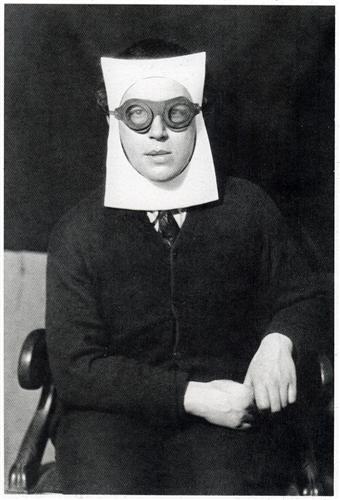
André Breton - Man Ray

At last!  This is a portrait of Andre Breton, the founder of surrealism, by Man Ray.  Yeah!!  Alex Shrader wears something that looks like this in Act I.

Friday, May 16, 2014

Rossini's Otello on DVD

👍🏻
Conductor: Muhai Tang
Production: Moshe Leiser & Patrice Caurier

Otello: John Osborn, tenor
Desdemona: Cecilia Bartoli, mezzo (originally Isabella Colbran)
Elmiro (Desdemona's father): Peter Kálmán, baritone
Rodrigo (man chosen by Elmiro to marry Desdemona): Javier Camarena, tenor
Jago: Edgardo Rocha, tenor
Emilia (Jago's wife): Liliana Nikiteanu

This DVD of Rossini's Otello (1816) from the Zurich Opera records the same series of performances I reviewed here from a live stream on medici.tv.

The plot of this opera is not the same as Shakespeare or Verdi.  It is clearly an opera seria but shows none of the traditional traits.  Twelve years before La Muette de Portici changed opera forever, the two main characters die.  This was unheard of.  My researches tell me that this opera was provided with an alternate happy ending, but we in the English speaking world would be outraged.  There are four scenes.  All of the action takes place in Venice rather than Cyprus.

Act I
In the Doge's palace Otello is presented to the Doge as the hero of a recent battle where he recovers Cyprus for Venice.  He has already married Desdemona, but this is a secret.  Desdemona's father Elmiro has a candidate to marry her in Rodrigo.  Otello announces that he and Desdemona are already pledged to one another, enraging Elmiro.

In this version Desdemona contributes however innocently to her own doom.  She writes a letter to Otello and encloses a lock of her own hair, but the letter falls into her father's hands.  In order to prevent an argument with Elmiro she tells him the letter is intended for Rodrigo.  Jago tells this version to Otello who believes him.

Act II  Scene 1
We are in Desdemona's room in the palazzo. She tells Rodrigo she is Otello's wife. 

Act II Scene 2
We are in Otello's hangout, a dump with a pool table and refrigerator.  Not only is Otello black, but he is not from Desdemona's social class either.  There are simply too many things against him, hero or not.  There are small issues of continuity in this scene but they shouldn't distract from the incredible singing.  Jago stirs the pot.  The ever hovering Emilia is there to save the situation.  Desdemona has a mad scene here and pours beer over her head.  P.S. I now interpret this as defiance of her father who has come to take her home.

Act III
We are in Desdemona's room in the palazzo.  She writes "Nessun maggior dolore che ricordarsi del tempo felice"  ["Nothing is Sadder than the Memory of Happiness."] on the wall.  She sings a very beautiful rendition of the willow song.  She kisses Emilia because she knows she's doomed.  When Otello arrives, she is angry and defiant with him, very different from Verdi.  Otello kills her then himself.

John Osborn as Otello is in black-face.  Since race is the whole point of the story, this seems right.  Black-face is a comic minstrel tradition only in the United States, so criticizing a French/Swiss production for doing it would seem pretty silly.  It is shocking how much Otello hates Desdemona. 

Cecilia is taking on heavier repertoire these days, and Otello seems on the heavy end of her abilities but still well within her grasp.  She is very intense here.  Someone asked me about her the other day.  She was everywhere for a while and then suddenly she was gone.  I explained that her Columbia Artists Management manager moved back to Europe and she along with him.  I followed her there, at least in spirit, but for most Americans she ceased to exist.

This is an outstanding sample of her work now, her emotional intensity turned to serious drama.  This is bel canto at its most serious extreme.  For people who hate regie it won't work, but I'm not one of them.  Perhaps you aren't either.  Love it along with me.
#ad

Friday, May 09, 2014

Matilde di Shabran


I'm not sure why I decided to buy this DVD of Rossini's Matilde di Shabran, but it turned out to be a great idea.  It's called an opera semiseria or melodramma giocoso which means it is somewhere between seria and buffa.  It also uses a new kind of love plot--love as a weapon of women's power.

Corradino, Heart of steel:  Juan Diego Florez, tenor
Matilde di Shabran:  Olga Peretyatko, soprano
Raimondo Lopez, father of Edoardo:   Marco Filippo Romano, bass
Edoardo:   Anna Goryachova, contralto
Aliprando, physician:  Nicola Alaimo, baritone
Isidoro, poet:  Paolo Bordogna, bass
Contessa d'Arco:  Chiara Chialli, mezzo-soprano
Ginardo, keeper of the tower:  Simon Orfila, bass

We have Corradino, a tenor who hates women and believes only in the warlike qualities of men.  We have Matilde, an orphan assigned to the care of Corradino who believes very much in her own sexual power over men.  We have Edoardo, a prisoner of Corradino and his rival.  We have the almost buffo bass Isodoro who appoints himself court poet.  We have Contessa d'Arco who has been promised to marry Corradino in a treaty.

Florez and Peretyatko are very well matched vocally and theatrically, which is to say they are both magnificent.  We can easily believe in the raging hero and the beautiful triumphing soprano.  They meet and he immediately falls in love.  It wouldn't make an opera if he didn't. 

All the other characters are also well cast.The music is very much reminiscent at times of Rossini's buffo works, but when the story gets serious, he becomes a bit more original.  There is a period of extended storminess, but in the end female charms triumph over everything.

The singing is outstanding.  The production is traditional and formal.  It has a large and very spectacular role for coloratura tenor.  The relatively minor part of Edoardo has lots of spectacular singing as well.  Matilde says at the end, "If you want me, you must open your heart to goodness."  That Rossini is quite a guy.

At the premier in Rome a riot followed the performance.
#ad

Saturday, July 13, 2013

La Donna del Lago


 Joyce DiDonato and Daniela Barcellona

Since I will probably not make it to Santa Fe to see this opera, I watched the film from the Royal Opera on YouTube.  This is the cast:

Joyce DiDonato (Elena),
Juan Diego Florez (Uberto),
Daniela Barcellona (Malcolm),
Michael Spyres (Rodrigo),
Simon Orfila (Douglas).

There are so many complaints about the productions on YT that it is something of a surprise that no one seems to mind this one.  It made no sense to me at all.  It's like an archeology club that is digging up these people to stare at them for a while and then put them back into their display cases.  Ick.  It's supposed to be a young woman sailing around in a boat, maybe a bit hard to stage.  I'd like to see someone try.  In Santa Fe you actually are outside.

Joyce is wonderful, and the other people are fine.  Daniela Barcellona is the largest person on the stage, dwarfing all the others, which makes her completely believable as Malcolm.  If you can't go to Santa Fe, watch this.  Here.