Showing posts with label Countertenors. Show all posts

Sunday, July 23, 2017

Artaserse with 5 Countertenors

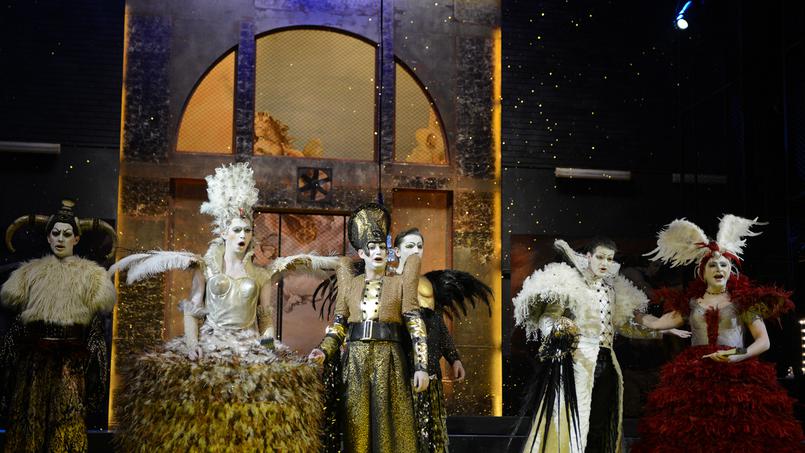
Artabano, Mandane, Arbace, Megabise, Artaserse, Semira.  I think.
👍🏻
Conductor–Diego Fasolis
Director--Silviu Purcărete

Artaserse, Prince and then King of Persia; friend of Arbace, in love with Semira--Philippe Jeroussky
Mandane, Sister of Artaserse; in love with Arbace (en travesti)                   -- Max Emanuel Cencic
Artabano, Prefect of the Royal Guard; father of Arbace and Semira            -- Juan Sancho
Arbace, Brother of Semira; Friend of Artaserse; in love with Mandane        -- Franco Fagioli
Semira, Sister of Arbace; in love with Artaserse (en travesti)                       --Valer Barna Sabadus
Megabise, General of the Persian Army, confidant of Artabano; in love with Semira --Yuriy Mynenko

This is a film of the opera Artaserse by Leonardo Vinci on a libretto by Metastasio which was first performed in Rome in 1730.  It was the last opera for Vinci who died that year, and the first for Metastasio.  Vinci is one of the great Baroque Italian composers whose operas are only now being revived.  Women were not allowed on the stage in Rome, so all the characters were originally sung by castrati except Artabano who is a tenor and the villain.  This performance exists to remind us that opera is an Italian art form.

All the castrati are here countertenors and some of the most famous countertenors of our time.  These guys are amazing.  The opening pair are Cencic and Fagioli, both incredible, and the music is gorgeous.  The range of colors in our 5 countertenors is pretty fascinating.  It remains to be seen if the fascination will wear off before the opera ends.  So far 6 Rossini tenors pales in comparison.  They have been assembled in Nancy in the west of France.

At the start there is some breaking of the fourth wall in case you missed that these are all guys.  Some start out in their modern clothing, for instance.  Stagehands appear, and all of them are girls.  Hmmm. These are theatrical stagehands--when the real stagehands appear, they are all men.

There is an attempt here to present Baroque costumes, though they seem to suddenly appear and disappear.  Now that Artaserse is king he appears in an incredible white wig with horns and a white outfit.  Then Artabano appears in the same outfit.  Jeroussky has the most beautiful voice, but there is much to admire here.  The most spectacular is probably Fagioli, but they're all pretty amazing.

Plot.  There is an offstage murder of the present king, Artaserse's brother.  This makes Artaserse king and causes a lot of accusations.  Artabano is probably to blame.  He and Megabise plot to marry Semira to Megabise instead of Artaserse.  Since the male characters all wear the same white outfit, it's very hard to keep track of who is who.  Some visual help would have been good.  Artabano tries to poison Artaserse, but when it appears that Arbace will drink the poison, Artabano confesses.  It has a happy ending, as do almost all opera seria.

What it is actually about is singing, of course.  If you are at all curious to know what Baroque opera was really like, this is probably your best opportunity.  This is the Italian Baroque opera and not the French version which had no castrati.  These guys belt it out in a way that is surprising.  It is a unique experience, unlike anything I have seen in all my years of going to the opera.


Jaroussky removes his hats and wigs as soon as possible, giving the impression that he doesn't much care for dressing up.  The tenor is banished.  All six characters return for a song at the end.  One of the "girls" brings out the conductor.  The music is spectacular, not just the singing.  Find a way to add this to your experience of opera.

#ad

Tuesday, January 03, 2017

Giulio Cesare

👍🏻
I watched the live stream of Handel's Giulio Cesare from Salzburg in Cecilia Bartoli's inaugural season as artistic director of the Whitsun Festival in 2012.  The production was enormously distracting, so much so that I wrote mostly about it.  There were crocodiles, a Rolls Royce, deals over oil wells, a fan dance, etc.  And occasional obscene gestures.

What I noticed less of was the incredibly gorgeous singing, especially by Cecilia Bartoli, Andreas Scholl, Anne Sofie von Otter, and Philippe Jaroussky, with Giovanni Antonini conducting.  Jaroussky is at his most beautiful, and his duet with Anne Sofie von Otter is emotional. 

In the past year the stream has become a DVD, and in the last month this DVD has received a Grammy nomination for best opera recording.  Does that happen?  I notice that of this year's 5 nominees, Król Roger and Giulio Cesare are DVDs. 

This is the standard for modern Baroque performance.

#ad

Thursday, October 13, 2016

Eliogabalo


Conductor:  Leonardo García Alarcón
Production:  Thomas Jolly

Eliogabalo (Roman Emperor): Franco Fagioli (countertenor)
Alessandro Cesare (Eliogabalo's cousin): Paul Groves (tenor)
Flavia Gemmira (Alessandro's girlfriend): Nadine Sierra (soprano)
Giuliano Gordio (Flavia's brother): Valer Sabadus (countertenor)
Anicia Eritea (Giuliano's girlfriend): Elin Rombo (soprano)
Atilia Macrina: Mariana Flores (soprano)
Zotico: Matthew Newlin (tenor)
Lenia (old female servant): Emiliano Gonzalez Toro (tenor)
Nerbulone, Tiferne: Scott Conner (bass)

This performance from the Paris Opera of Eliogabalo by Cavalli in Italian with French subtitles is rather more cold than even I can tolerate.  I tried watching it without knowing anything, and this didn't work out for me.  For an excellent discussion of this production see The Idle Woman. It was composed for a Venetian carnival performance in 1668 which did not take place.  Many speculate why this would happen.  Cavalli was the most important Venetian opera composer but was coming to the end of his life.  It may also have been censors.  One writer suggests that it may have been too serious for carnival.  It's first performance was in 1999, then René Jacobs revived it in 2004, and it's played in several locations since.  A description of the plot can be found here.  View the stream here.

The music is clearly still in the style of the late operas of the great Monteverdi.  I am no longer "cold" in this aspect of the performance and enjoy it very much.

Act I

Campidoglio (the square on the capitol in Rome)
Emperor Eliogabalo has returned to Rome.  A rebellion by the Praetorian Guard has been put down.  The plot concerns itself primarily with his sexual interests.  He's no longer interested in Eretea and needs new women to harass.  There are frequent appearances of young men wearing only loin cloths, such as our Amor above.

I find the arias, especially by Nadine Sierra and Paul Groves, particularly beautiful.

Hall in the Senate
I've been in the Senate and there are no halls.  Women in tall hats are entering.  Eliogabalo has replaced the male Senate with an all female one.  Eliogabalo himself is dressed as a woman and sings their praises.  We can say already that this opera is about cross-dressing, mostly men dressing as women, such as Lenia who is a tenor.

The women cover their faces and are told to embrace one another.  The one who guesses who is touching them wins.  Atilia guesses and becomes a proconsul.  Flavia cannot guess when it is Eliogabalo and goes off embarrassed.

Act II

If you are tired of the impossible to stage da capo arias of Neapolitan opera, this may be just what you want.  This is from the era when the composers wrote their own recitative and regarded it as an important part of the work.  This opera is strangely relevant.  Who would have thought our own country would become something like this.

Nadine suddenly sings a very high note.  Fun.

The most shocking thing about this production is how not shocking it is.  Obviously Eliogabalo is a scandal.  How can such a dark and low key production express this scandal?

Eliogabalo prepares a banquet with two prominent pitchers.  Zotico and Lenia taint the pitchers--one is sleeping potion and the other poison.  Nerbulone drinks the sleeping potion.  Large black owls descend on the table, and the banquet is cancelled.  The owls dance.  Franco Fagioli is enjoying a peak in his career.  His countertenor is very robust.

Act III

I am a fan of Nadine Sierra and am happy to see her performance here.  Eliogabalo is the only character who gets interesting costumes.  He sticks his arms and feet into a bath and they come out covered in gold.  He gets in.  One of the people dressed in a loin cloth appears to be a girl.  He thinks about Flavia while everyone else thinks about killing him.  Eventually they succeed.

One would choose an opera about this particular Emperor for the debauchery, surely.  It was probably rejected for the seriousness.  I personally would have liked a less serious production.  The music is glorious but just a little long.

Circo Massimo
Everyone is at the games, but Eliogabalo does not arrive. Then it is reported that he is dead.  Flavia brings in his head and explains that the guards killed him when he broke into her room.  Alessandro becomes emperor, marries Flavia and everyone lives happily ever after.  This music is very beautiful, but I imagine the Venetians wanted more bang for their buck.

Thursday, July 07, 2016

Il Trionfo del Tempo e del Disinganno

Bellezza-Piacere-Disinganno-Tempo

Conductor:  Emmanuelle Haïm 
Production:  Krzysztof Warlikowski

Bellezza (beauty):  Sabine Devieilhe (soprano)
Piacere (pleasure):  Franco Fagioli (countertenor)
Disinganno (disillusion):  Sara Mingardo (mezzo-soprano)
Tempo (time):  Michael Spyres (tenor)

I have seen Handel's oratorio Il Trionfo del Tempo e del Disinganno staged before.  This time I watched it on medici.tv from Aix-en-Provence.  It is a youthful work written by 22 year old Handel while he was visiting in Rome.  At that time in Rome opera was forbidden and of course women singing in public was also forbidden.  All the high voices would have been sung by castrati.  The previous time I saw this it was mounted in Zurich as a vehicle for Cecilia Bartoli as Piacere, and even Anna Bonitatibus who replaced her was incredible.  It forms the core of Cecilia's album Opera Proibita.

It's a hard work to stage since it is just a philosophical discussion and has no plot.  The subtitles were in French.  Watching a philosophical discussion in languages you only partially understand is a problem.

Early on Disinganno says to Bellezza "La bellezza non ritorna piu."  I repeated this out loud several times. (Beauty never returns.)  For some people like Jennifer Lopez it never leaves, apparently.  Just remember that at 75 no one looks that great.  Sorry. If this work has a plot, it is putting Ballezza in her place.  Eventually you'll look ugly just like us.

Bellezza and her unnamed boyfriend attend a party where drugs are taken.  They are seen passing the drugs around by kissing.  Then suddenly first boyfriend and then Bellezza faint.  Both are taken to the hospital where boyfriend is declared dead.  He makes many more appearances, sometimes only in his underwear, without actually seeming alive.  Bellezza both does and doesn't recover.  Mostly her mascara runs, which is sort of ugly.  She is teased by pleasure and lectured by time and disillusion.

This staging worked pretty well but bogged down in the center.  In Zurich amusing things went on behind the main singers, and that happens to a certain extent here.  The biggest problem is that there is no Cecilia or even Anna Bonitatibus to keep us amused.

Minkowsky is wilder and more exciting than Emmanuelle Haïm.  Here's what I heard in Zurich.


#ad

Sunday, November 08, 2015

Countertenor

I am ready to finish this off.

This is here to help you learn about the countertenor. It's intended to educate listeners rather than singers.

A countertenor is natural male voice that sings falsetto to allow him to sing music that was originally written for a woman or a castrato (a man castrated in childhood to retain his high voice, something that went on in the 17th and 18the centuries).  In opera their use allows male roles to be sung by male singers, a feature that means nothing to me but seems to matter to others.  Most countertenors are actually baritones. The voice range for a countertenor usually is the equivalent to a mezzo-soprano or contralto, but can include sopranos.

These are examples of roles written for the countertenor voice:   Oberon in A Midsummer Night's Dream (Britten), Annas in Jesus Christ Superstar (Lloyd Webber), Akhnaten in Akhnaten (Glass), Trinculo in The Tempest (Adès), etc.  Please notice that all these examples are modern, three out of four are British, and none of them are written by Italians.

This is David Daniels singing "I know a Bank" from A Midsummer Night's Dream.


Wednesday, October 22, 2014

Sexiest in Partenope

I had so much fun at this opera that I can't seem to let it go.  You may choose which one of them is the sexiest.

Partenope:  Danielle de Niese


Arsace:  David Daniels


Ormonte:  Philippe Sly


 Armindo:  Anthony Roth Costanzo * 


Emilio:  Alek Shrader


Rosmira:  Daniela Mack


Rosmira exposes herself to Emilio and he turns these pictures into a giant mural.


Wednesday, May 14, 2014

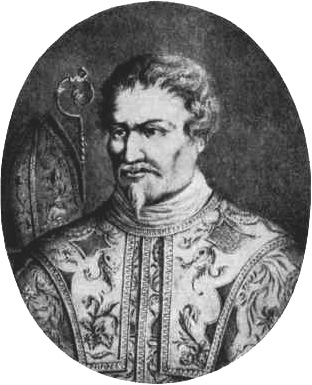
Agostino Steffani

File:Agostino Steffani.png 


I had only rudimentary contact with classical music before I began majoring in it in college. My education consisted largely of complete immersion in the style and repertoire of J.S. Bach.

My freshman theory book was by a man named McHose and consisted of statistical summaries of how chords progressed in the harmonized chorales of Bach. "58% of the time a II chord proceeds to a V chord." This sentence is completely made up, but you get the idea. Picture hordes of graduate students counting these. We learned to play chorales on the piano.

And we sang Bach. As an undergraduate I performed solos from the Matthew Passion, the B Minor Mass, the Christmas Oratorio and various cantatas. My idea of the Baroque is Bach.
When I studied history later, I realized that the contrapuntal technique of Bach came from the Renaissance, or what became known in the Baroque as the prima pratica. The counterpoint of the Renaissance continued on throughout the Baroque, while the seconda pratica grew up simultaneously.

The prima pratica came from the Netherlands (Josquin and Lasso) while the seconda pratica (Caccini and Monteverdi) came from Italy. Bach wrote in all the forms of his era and achieved his own dense and complicated amalgamation of the two Baroque styles.

Once at the beginning of this blog I wrote about the missing classic Italian composers. In my education they were lists of names. Now one of these names, Agostino Steffani, appears in Cecilia Bartoli's project to revive him. Steffani is a middle Baroque Italian completely immersed in the seconda pratica. This consists of a radical thinning of the texture, generally to bass and melody but seldom exceeding two upper voices over a bass line and chords. Bach and Steffani are different worlds, but with his trio sonata-like texture of two counterpointing upper voices Steffani may be closer to the Baroque ideal.

There are no fugues. My brain expects choral music to include fugues. There are hints of counterpoint in the choral sections, but nothing as complex as a fugue.

He seems to understand well the emotional requirements of his music. The religious music is very somber. I am having difficulties adjusting my expectations. It is important to realize that a criticism of this style is a criticism of the Italian middle Baroque, a style until recently we have known virtually nothing about. I think it is best to silence the din of expectation, to relax and enjoy it.  In fact, the entire process of learning to love something new begins with calming the din of expectation.

In this uncritical state of mind it relates less backward to the Renaissance than forward to the Rococo. For the Italians expression of the text is paramount. I would imagine that he has been ignored all these years because it has been German musicologists who decided who would be emphasized from the composers of the past. They prefer a high level of complexity. They, too, have been strongly influenced by Bach.

I hear Italian sweetness and ornate style in Steffani, all of it a pleasure to hear. For the people of the time they preferred Italian sweetness and virtuosity to German intellect. Italian music swept the world, and at long last we are getting to hear it for ourselves.

The singers on the Stabat Mater album are Nuria Rial , Cecilia Bartoli , Daniel Behle , Franco Fagioli , Julian Prégardian , Salvo Vitale (Bass).  The one that sounds like a particularly assertive Bartoli is Fagioli.  The singers are not identified by category on the album.  When Bartoli is singing, we hear her always present charm.

The interpretation of this work is unusually respectful and circumspect.  Solo or duet with bass is his preferred texture.  Music on catholic texts tends to fall into two categories:  the performance types which are primarily theatrical in nature (B-minor mass, Missa Solemnis, Verdi requiem, etc.) and works of a serious religious nature intended to enhance worship.  This is one of the latter category.  It is not difficult to imagine this as part of an actual religious service.  However, apparently this is the work that Steffani wrote as a gift for the Academy of Ancient Music in London.

I have put off writing this because this is tough.  I am used to the wild and theatrical Henry Purcell whose music cannot be distinguished by its intended use.   Steffani doesn't seem like any musician I know which isn't a basis for criticism.  It's a beautiful and deeply spiritual album.

#ad

Friday, February 21, 2014

Jaroussky Farinelli


This is an album of arias and duets by Nicola Porpora which were composed for the castrato Farinelli.  Porpora was famous as the great trainer of castrati, including, of course, Farinelli.  He was born in Naples in the middle of the early days of the Neapolitan opera school.

The album includes 11 tracks, 2 with Cecilia Bartoli, 7 of which are world premiere recordings.  The very long aria "Alto Giove" is apparently not one of the world premieres, but it is very beautiful in Jaroussky's voice.

The duets are lovely.  Cecilia generally sings soprano to his alto.  I especially love the second duet "La Gioia Ch'Io Sento" which bursts upon us unexpectedly.  It is all very very sweet.  Have a little sweetness in your life.

#ad

Monday, November 25, 2013

Brief History of Cross-dressing in Opera


Please forgive me. This is written out of my head and involves no research. Usually I research things, but it can ruin my train of thought.

In the beginning (Greece, Shakespeare, etc.) theater was a masculine activity.  Often society decided that all public appearances by females were immoral. The world was pretty much the same as it now is in Saudi Arabia. Men did things and women stayed home and had babies and cleaned house. If you're my age, you can remember this. Don't go around asking yourself why there were no women composers or painters. Composing and painting are jobs, and women were not allowed to have jobs. Except prostitution, of course. Women were angels or devils with no in between statuses that allowed for holding jobs. Opera singing is also a job.

In the early era of opera the situation was somewhat confusing to follow. In Venice and Mantua women appeared on the stage in female roles.  In Rome and the Papal States all roles were played by men with the high voices sung by castrati (men surgically altered to retain their child voices). There were plenty of castrati around to serve in this capacity. Women singing in church was still forbidden in most places. This means lots of cross-dressing in opera, all by men, such as would have occurred in Shakespeare. High voices were preferred, and castrati sang both male and female roles.

The French were violently opposed to the idea of castrating men to provide high singers. Their female roles were always sung by women. Then Napoleon conquered Italy and put a stop to castration there, apparently imparting the French horror over the practice to the Italians. Over the next 100 years the practice died out until eventually there were no living castrati.

But it is important to remember in the French tradition that Rameau's Platee includes a cross-dressing frog tenor in the title role--the character is female and composed for a tenor. There are no legitimate female operatic tenors, so the role would be sung by a man.

By the time of Mozart, who in his person embodied all the musical practices of all the musical centers of Europe of his time, an additional cross-dressing tradition arose: roles for teenage boys were sung in their pre-pubescent high voices and were portrayed by women. The most famous example of this is Cherubino in Le Nozze di Figaro.


Summary--opera seria included roles for castrati, opera buffa did not. There is a very nice role in an opera by Cavalli (Venetian school, heir to Monteverdi, lived before the seria/buffa split--La Calisto--looked the name up) where Jove pretends to be a woman. As Jove he is a baritone, as the female he is a falsetto soprano. Very funny. This is cross-dressing outside the traditional stereotypes, and as far as I know is the only early opera role intended to be sung falsetto.


Rossini came after the invasion by Napoleon. He composed both for castrati and women singing men, with the preponderance being the latter. Women began to replace castrati during this time in the portrayal of heroes in serious opera.  It is surprising how few castrato parts there are in Rossini. Women singing male roles is far more frequent.


One wishes to hear the sound of two high voices singing together: I Capuletti e i Montecchi, still always sung by two women; Semiramide. The plot makes one of them a man, the music makes both of them women. DiDonato and Kasarova have kept Capuletti alive, but Semiramide is now very rare now that Marilyn Horne has retired. Women sing these bel canto roles and have since the beginning. Countertenors were not known in Italian opera in any period.

The only part of the cross-dressing tradition that survived into operas composed in the twentieth century is the tradition that teenage boys should be sung by women: Octavian and The Composer.

My sense of the cross-dressing tradition of opera is that it comes from two causes--the original reluctance to allow respectable women to appear in theater, which morphed into the later realization that seeing people portray the other gender was itself a distinct pleasure, a pleasure that works in both directions.
__________________________

In modern times certain traditions are followed when reviving older operas.


In my youth Handel and Vivaldi revivals involved Marilyn Horne donning masculine attire, including very tall helmets to compensate for her short stature. Alfred Deller was the only known practicing countertenor, and I don't think he sang very much staged opera. This would require research.

I am reminded that Sarah Bernhardt, a French stage actress, portrayed Hamlet.  And there is a movie of The Tempest where Helen Mirren plays Prospero.

Then came the countertenor explosion. If there were an opera composed for 6 countertenors (don't worry, there isn't), casting this would no longer be a problem. Some of them are actually good. No woman could achieve the heroic intensity of David Daniels' Giulio Cesare. The new tradition says that if a male role was written for a castrato, it should be sung by a countertenor, but so far the countertenors have not completely displaced the female mezzo-sopranos. It has so far not become a tradition for teenage boys with high voices to be sung by countertenors. The main objective of this revolution seems to be to reduce the amount of cross-dressing in opera.
______________________

Which brings us to the problem: society wishes to look down on cross-dressers of either gender in or out of opera, accusing them of doing it on purpose I suppose.

Alice Coote, a spectacularly gifted operatic cross-dresser, complains out loud that she actually is a woman. She also sings Charlotte and Carmen.


Susan Graham has a song written for her where she complains similarly. She also sings La Grande Duchesse, Iphigenie and Dido to great acclaim. (I almost looked this up. Caught myself in time.) Susan has the additional disadvantage of being tall.


The most spectacular of all operatic cross-dressers is Vesselina Kasarova who I am pleased to say has not complained, at least not in my hearing.  She sings Carmen.
________________________


And now Elīna Garanča (cannot display her correct name without looking it up) has announced that she is retiring from trouser roles, as they are usually called. She wants to become a Verdi mezzo. My official opinion on this subject is that while Netrebko can truly say that her voice has transitioned to Verdi, Garanča is premature. She has a dark but not a particularly heavy voice. People don't seem to be able to differentiate between the two--a distinction that is vital to the vocal health of the singer. What matters is the actual physical heaviness of the voice, not how heavy you can fake it. This is the same reason Jonas is not ready for Tristan. Elīna Garanča so far has always cancelled on the west coast, so I have not been in the room with her.

After her Cenerentola, Garanča announced a similar retirement from bel canto. She wants to sing only Carmen forever. Perhaps she simply doesn't want to dress up like a boy any more. Sesto in Clemenza could be any age.  She mentioned specifically only Cherubino and Octavian.  One would prefer to think that major career decisions were not made for reasons of social bigotry.

The Strauss trouser roles, and perhaps others from Romantic repertoire, are not vocally similar to Mozart. Kasarova warns that it is dangerous to sing Octavian too soon. If you're 18 and can sing him, it isn't too soon for Cherubino.

I have friends who don't like to see cross-dressing in opera. I explain that only in England do countertenors have a long tradition. Italian operas were not composed for the male falsetto and don't sound right in their voices. They are establishing turf in the Baroque era, and even I am beginning to like it. I respond well to people reinventing a musical genre.

So for some people everyone should appear in public, and that includes on the stage, in their gender assigned costume. There is even a Google (I googled this, I confess) question that explains that being a countertenor doesn't necessarily have to do with being gay. The thing it most likely relates to is that the particular singer sounds better in his falsetto voice than he does in his natural voice. You can see films on YouTube of Philippe Jaroussky singing in his normal crooner baritone voice. You would never have heard of him singing like this.

Apparently Jaroussky has announced that he does not wish to appear in a female role. I think it is correct to lump this together with Garanča's announcement. The type of vocal issues that arise for Garanča are not relevant to Jaroussky, since there is no established tradition for countertenors and no roles composed for them until Britten.  (Footnote:  all of Bach's high voice music would have been written for falsettists or boys, but this is not opera.  Still not from research.)

Opera is by now an ancient tradition. I attended the 400 years of Orfeo performance. I don't want to get into the sociological ramifications of this issue, but I feel firmly that looking down on the honored cross-dressing tradition of opera is disrespectful of the genre. It's fun. Relax and enjoy it.

The picture at the top is Erwin Schrott in Les Vepres Siciliennes at ROH.  For a list of roles that involve cross-dressing see here.
Tuesday, September 18, 2012

Mission is Launched


Aren't they cute.

Here is a description of the launch of Cecilia Bartoli's Mission concert series in Munich yesterday at Schloss Schleißheim .  The interesting part comes at the end where the reviewer describes a kind of Baroque jam session between Bartoli and a trumpeter.  That would be something to hear.  The concert ended with a duet with Philippe Jaroussky.  I've heard a bit of their duets together, and they are a joy.


Apparently there were fireworks at this concert. I can't stop laughing.  How do they get them to go off in rhythm with the music? 

Thursday, July 19, 2012

Orlando Furioso DVD


Conductor:  Jean-Christophe Spinosi
Orlando:  Marie-Nicole Lemieux (contralto)
Alcina (sorceress):  Jennifer Larmore (mezzo-soprano)
Angelica:  Verónica Cangemi (soprano)
Ruggiero:  Philippe Jaroussky (countertenor)
Astolfo:  Christian Senn (baritone)
Bradamante:  Kristina Kammarstrom (mezzo-soprano)
Medoro:  Romina Basso (mezzo-soprano) (heard in the recording of Ercole)

This DVD came unbidden in my mail.  Let's see.

The male characters in Vivaldi's Orlando Furioso (1727) are Orlando (originally sung by a woman), Ruggiero (originally sung by a castrato), Astolfo (sung by a bass) and Medoro (also originally sung by a castrato).  The female characters are Alcina, Angelica and Bradamante who is in disguise as a warrior (all sung by women).  Are we confused?  As if that weren't bad enough, one of the castrato parts is sung by a woman named Basso.  Just go with it.

Recently has come the news that a new/old manuscript by Vivaldi has been found in Turin that has proved to be a completely different Orlando Furioso than the already known one that this DVD is based on. The new/old manuscript dates from 1714 and has a baritone for the lead character. Maybe some day soon we will see that one.  I digress.

As if we weren't confused enough, this opera is one of those Baroque love plots.  Angelica and Medoro are in love, but Orlando also loves Angelica.  Ruggiero and Bradamante are in love, but Alcina also likes Ruggiero.  Orlando goes mad and havoc ensues.  You would only put on this opera because you had a coloratura contralto capable of endless rage arias.  I've seen it with Marilyn Horne, and she was outstanding.

The singers in this video are youthful and vigorous in their seemingly endless coloratura.  The production is period and set in a ramshackled castle.  The colors are dark and also the emotions. The men are mere pawns of Alcina--no surprise--and Jennifer Larmore is deliciously evil in the part.  The part is slightly low for Jaroussky, but he sings it beautifully anyway.

The intensity is surprising and builds to the end.  Besides Jaroussky I think I like Kristina Kammarstrom best.  Any discussion of singing in the Italian Baroque must consider this.  I think the virtuosity of this period is outside our awareness, since for us Baroque opera is the German Handel.

They are all amazing.  Orlando rants occasionally in French.  The period costumes emphasize the madness of Orlando.  She plays it for pure madness.  Bravi.
#ad

Saturday, January 21, 2012

I think I'm in Love


I think I fell in love today at the Live from the Metropolitan Opera in HD presentation of The Enchanted Island.  Maybe I fell in love with the ever more fascinating and spectacular Joyce DiDonato as Sycorax.  I was pleased to see she got top billing.

Or perhaps I fell in love with Danielle de Niese as the spectacular spirit Ariel. She got all the best arias and looked adorable in her costume.

It is even possible that I fell in love with David Daniels.  He is very serious in the role of Prospero, and perhaps that is what I needed.


I know I love madly Luca Pisaroni as Caliban.  He complained about having to shave his hair for the role, but he was successfully lovable and hideous all at the same time.


Perhaps I fell in love with Placido Domingo in his first role as a god.  How is that possible?  Hasn't he always been a god?  Today is his birthday. 


Probably I already loved the conductor William Christie, who did not conduct from the harpsichord.  I didn't love anything more than he did.

The pastiche was a success.  I enjoyed the English text enormously.  If English translations were always this good, we would argue for singing more operas in English.  Everyone sang it well.  The oddest selection for retexting was "Endless Pleasure, Endless Love" from Semele made into an ensemble.


The thing that was least like a real Baroque opera was the frequent use of ensemble numbers.  Real Baroque opera is just one da capo aria after another.  In this they represented I would say about half of the opera instead of the usual 80 percent.

I found it amusing that Ariel messes up and shipwrecks the wrong boat.  The odd plot was very well handled.  If you've seen The Fairy Queen, you know that this makes way more sense.

It was enchanting.
#ad

Saturday, December 03, 2011

Rodelinda in HD


Today we were treated to Handel's Rodelinda live from the Metropolitan Opera.  It is an excellent opera.  One of the hard parts of creating opera is finding a good libretto.  In the Baroque and Classical periods this was much simpler:  you just stole it from an existing opera.  So Handel has stolen an excellent libretto, and even without any hit tunes, has created an excellent opera.  In its original production it starred Cuzzoni and Senisino.  You would be hard pressed to beat that.

Renée Fleming, our wonderful title singer, says it is her youngest daughter's favorite opera, because it is about family.  It's about royalty, until the verismo serious opera is always about royalty, but it's also about a child who is treasured by his parents, and parents who love each other and who work very hard to bring their family back together.  The required happy ending is truly joyful this time. 

The direction, by Stephen Wadsworth, was practically miraculous.  The movement from aria to aria and scene to scene was very smooth, and the singing actors well understood their roles.  The non-singing child who begins the opera in bed with his mother was very fine in his role.

Few countertenors are as revered as Andreas Scholl who played the Senisino role, Bertarido.  Senisino was a contralto, and a uniquely expressive singer.  Scholl goes very deeply into the emotions of his character and is especially beautiful in his duet with Fleming toward the end.  And who knew he was such a clown?  Deborah Voigt asked him what made him decide to be a countertenor, and he answered in a very high voice.  :-)  Then he remarked that he had originally been a counter-terrorist and the transition to countertenor had been easy.

Stephanie Blythe impressed.  She runs counter to every trend and succeeds magnificently in spite of this.

Joseph Kaiser, Lestyn Davies and Shenyang complete the cast.  The conductor was Harry Bicket.  He conducted from the harpsichord.  I explained to my seatmates that at the original production that would have been Handel sitting at the harpsichord.

Of the eight Handel operas I have seen staged since I started this blog I think I liked this one the best.  Bravi tutti.
#ad

Sunday, November 06, 2011

Tuesday, November 01, 2011

Jaroussky


This is embarrassing.  In my youth we had only one countertenor--Alfred Deller--and he was strictly take it or leave it.  Now there are countertenors everywhere.  I've always hated them, both for the odd sound of their voices and for the fact that they were taking parts from my beloved mezzos.  So how should I confess that I really love Philippe Jaroussky?  It's so embarrassing.

He appeared at Hertz Hall in Berkeley on Sunday afternoon, the same time as the opening of Xerxes at War Memorial across the bay.  I've seen him before, though only from the back, at Salle Pleyel as Sesto in Giulio Cesare.

He shared the stage with a group called Apollo's Fire, conducted by Jeannette Sorrell.  There was an interesting story told between arias about Jaroussky and Sorrell exchanging letters of mutual admiration.  Apollo's Fire would be a difficult name to live up to.


Apollo's Fire play standing.  Except for the cellos.  I don't know if you can play a cello standing.  The theorbo player also sits, but Ms Sorrell stands at the harpsichord.  When they stand, their bodies become involved in the emotion of the music.  This is some of the most passionate playing by a Baroque ensemble I have ever heard.

I added this picture because it's the only one I have that shows the theorbo player on the right end.  These are everywhere now.  In Baroque music theorbo is now as common as the harpsichord and cello for realizing the figured bass.

This is an Italian style ensemble with no winds.  Many of the instrumental numbers are arranged by Jeanette Sorrell, the conductor.  I am going to guess that this is due to the sketchy nature of the orchestration in the original scores.  It is hard to picture this, but the original purpose of the figured bass was much like a modern fake book, to provide a basis for extemporizing.  Not many can do this today.  Instead of carefully planned orchestration such as we have today, a piece might be played by whoever was available, and they would extemporize their parts.

The entire concert was Handel and Vivaldi, so the period of the music was basically identical to Saturday night's program, and similarly it alternated instrumental with vocal numbers.  The violinist Olivier Brault played a Vivaldi concerto and shared another Vivaldi concerto with Johanna Novom.  It was all very dynamic and exciting.

So why Philippe Jaroussky?  He sang Handel in the first half of the program, including an aria from Ariodante, and Vivaldi in the second half.  His voice is actually beautiful and shows a lovely vibrato, a rarity among countertenors.  And he phrases the dickens out of everything.  Both slow tempo and up tempo showpiece arias were wonderful.  He sang three encores including a final glorious "Ombra mai fu."

How can this be happening?  At the end we waved at each other.  In Berkeley this is the sign that the concert is over.


Wednesday, August 17, 2011

O Solitude

👍🏻
I can't believe I'm writing this.

I bought Andreas Scholl's O Solitude because Borders was going out of business, and it was cheap.  I also bought Hilary Hahn's Higdon and Casals' Bach cello suites.

Henry Purcell deserved his title Orpheus Brittanicus.  For me he is divine.  Music reached a state of perfection in the middle Baroque, and here in this English music there is no Italian showing off or German intellectualizing.

It's a wonderful recording.  The phrases sweep with such grace.  Just think of the countertenor as a new, somewhat strange instrument.  "Music for a while shall all our cares beguile."  Perhaps it is the ideal postlude to a practically perfect Fairy Queen.

What have all these centuries been for when already such perfection has been achieved?
#ad

Saturday, August 06, 2011

Griselda


From l:  Griselda, Costanza, Gualtiero, Roberto.

Every year the Santa Fe Opera does one new or neglected opera, and this year it is Vivaldi's Griselda.  Obviously, 1735 isn't new, so that leaves neglected.

The plot is not politically correct.  King Gualtiero divorces his wife Griselda and threatens to marry someone else for the sole purpose of improving his political standing.  Peter Sellars, the production designer, changed the ending.  In the original there is a kind of double wedding where mother Griselda and Daughter Costanza get together with their respective men.  Instead the King announces simply that all is forgiven, you're still queen, and Griselda just goes on sweeping the floor like it's all too much for her.  Perhaps this helps our modern sensitivities, but it does not save this cruel, anachronistic plot.


I've seen stagings of Baroque operas I liked more--I was quite fond of Rinaldo in Zurich--but I don't really know if any staging could save Griselda.  Gronk painted the set.  Everything looks like modern northern New Mexico.  Do we care one way or the other?  Not really.

Because it's really all about the singing.  And gorgeous singing it was, too.

David Daniels as Roberto is probably the biggest name, and he sang very well, but for me I can't get past the countertenor thing.  Sorry.

Tenor Paul Groves as King Gualtiero, the lowest voice on the stage, was excellent.  My previous reservations about his singing--pushed down tone--were nowhere in evidence.  His coloratura is smooth and natural for such a dark voice.

You could not do this opera without contralto Meredith Arwady as Griselda.  The role was written for Vivaldi's girl friend who, everyone keeps telling us, was a terrible singer.  I was happy to see Meredith take a dip into the Baroque but hope for something more congenial next time.  She was the emotional heart of this otherwise heartless opera.


I enjoyed Amanda Majeski as Ottone, Griselda's other suiter.  This character was translated into a highschool kid with jeans and sneakers and a gun.

The unqualified star of the evening was the incredible, spectacular, gorgeous Isabel Leonard, a mezzo in the role of Costanza.  There were rumors of a shoving match for attention between Paul and David, a seemingly pointless activity, since it was clearly Isabel who stole the show.  Hers were the best arias and she aced every single one of them, including the famous "Agitata da due venti," the hit tune for this opera.

Griselda is saved by singing.

[See Kinderkuchen History 1715-40]

Monday, June 27, 2011

May the Gods Forgive me


Somebody on the forum has found this film of a countertenor imitating Cecilia. He's really pretty good, though certainly not divine.

Monday, April 11, 2011

Cold

Someone sent me a link to this:


It's an homage to this:


I have heard of Scholl, of course, but all the rest is new to me. It is two renditions of "The Cold Song" from Henry Purcell's King Arthur.

This is what they are saying:

What power art thou
Who from below
Hast made me rise
Unwillingly and slow
From beds of everlasting snow

See'st thou not how stiff
And wondrous old
Far unfit to bear the bitter cold

I can scarcely move
Or draw my breath
I can scarcely move
Or draw my breath

Let me, let me,
Let me freeze again
Let me, let me
Freeze again to death
Let me, let me, let me
Freeze again to death...

This is all unbelievably weird and of course cool.

I notice that Scholl has done a whole album of Purcell. There can never be too much Purcell.  I could easily go on a whole Purcell jag.

Sunday, April 10, 2011

Resolutions Revisited

In January of 2006 I made a few resolutions. I want to see how I'm doing with them.

1. I will retire from my job. As soon as I stop enjoying it. Honestly. I've been resolving to do this for quite a while, and some people are tired of hearing about it. Being sent to London is making this harder.

---I retired in May of 2006 and haven't regretted it for a minute.

2. I will make an attempt to find at least one falsettist I like. I won't work too hard at this.

---I must say this took until 2010, but I find I do like Philippe Jaroussky, whom I first heard at Salle Pleyel in Giulio Cesare in Egitto. He is quite pleasant to listen to.

3. I will decide where I am going to live after I am retired. This is also difficult.

---I ended up in Sacramento. I like my apartment, but I'm not sure this was the greatest decision.

4. I will try to weigh less at the end of the year than I do now. I should try to find out how much that is.

---I do weigh about 15 pounds less than when I was working.

5. I will go to at least five opera houses I have never been to before. There are two in London, so that should make a nice start. I will also try to get to Munich this year. There are at least three there.

---I have done quite well with this one. Besides the two in London, I have been to the Dorothy Chandler Pavilion in LA, the Santa Fe Opera, Glimmerglass Opera, the Arena di Verona, the Baths of Caracalla, Munich Opera, Palais Garnier, and Opera Bastille. I could do better.

6. I will spend more money than I make. This is not a goal you have to set for yourself, but in my case I am a terrible cheapskate.

---I seem to have been successful in 2008 and the years since them. I'm way behind this year.

7. I will try to change my opinion about at least three things.

---Does everybody that ever appeared on American Idol count? No, I suppose not. Joyce DiDonato. She continues to move rapidly up my list. I made it all the way through Tristan and now rather like it, but not as a favorite. I liked Domingo's Cyrano a lot more in San Francisco than I had in London. It's iffy that I have done much in this category. After all, I like an awful lot of stuff.

8. I will have a new favorite opera.

---This was a silly resolution. How could you possibly prefer anything to Der Rosenkavalier?

9. I will try to fall in love. This gets harder to do as you get older. I think it's hormones. I will assume that opera infatuations also count.

---I have been successful here. It was after this that I began chasing around to see Jonas Kaufmann. It is nice to see that others are doing this, too.

It is surprising to have so much success in the resolution game. I think you have to pick the right resolutions.