Showing posts with label Steffani. Show all posts

Wednesday, May 14, 2014

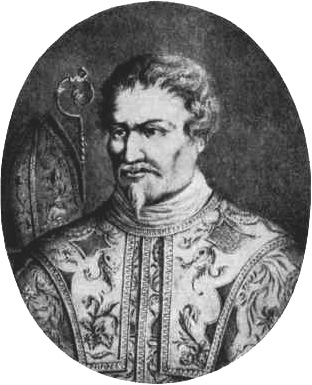
Agostino Steffani

File:Agostino Steffani.png 


I had only rudimentary contact with classical music before I began majoring in it in college. My education consisted largely of complete immersion in the style and repertoire of J.S. Bach.

My freshman theory book was by a man named McHose and consisted of statistical summaries of how chords progressed in the harmonized chorales of Bach. "58% of the time a II chord proceeds to a V chord." This sentence is completely made up, but you get the idea. Picture hordes of graduate students counting these. We learned to play chorales on the piano.

And we sang Bach. As an undergraduate I performed solos from the Matthew Passion, the B Minor Mass, the Christmas Oratorio and various cantatas. My idea of the Baroque is Bach.
When I studied history later, I realized that the contrapuntal technique of Bach came from the Renaissance, or what became known in the Baroque as the prima pratica. The counterpoint of the Renaissance continued on throughout the Baroque, while the seconda pratica grew up simultaneously.

The prima pratica came from the Netherlands (Josquin and Lasso) while the seconda pratica (Caccini and Monteverdi) came from Italy. Bach wrote in all the forms of his era and achieved his own dense and complicated amalgamation of the two Baroque styles.

Once at the beginning of this blog I wrote about the missing classic Italian composers. In my education they were lists of names. Now one of these names, Agostino Steffani, appears in Cecilia Bartoli's project to revive him. Steffani is a middle Baroque Italian completely immersed in the seconda pratica. This consists of a radical thinning of the texture, generally to bass and melody but seldom exceeding two upper voices over a bass line and chords. Bach and Steffani are different worlds, but with his trio sonata-like texture of two counterpointing upper voices Steffani may be closer to the Baroque ideal.

There are no fugues. My brain expects choral music to include fugues. There are hints of counterpoint in the choral sections, but nothing as complex as a fugue.

He seems to understand well the emotional requirements of his music. The religious music is very somber. I am having difficulties adjusting my expectations. It is important to realize that a criticism of this style is a criticism of the Italian middle Baroque, a style until recently we have known virtually nothing about. I think it is best to silence the din of expectation, to relax and enjoy it.  In fact, the entire process of learning to love something new begins with calming the din of expectation.

In this uncritical state of mind it relates less backward to the Renaissance than forward to the Rococo. For the Italians expression of the text is paramount. I would imagine that he has been ignored all these years because it has been German musicologists who decided who would be emphasized from the composers of the past. They prefer a high level of complexity. They, too, have been strongly influenced by Bach.

I hear Italian sweetness and ornate style in Steffani, all of it a pleasure to hear. For the people of the time they preferred Italian sweetness and virtuosity to German intellect. Italian music swept the world, and at long last we are getting to hear it for ourselves.

The singers on the Stabat Mater album are Nuria Rial , Cecilia Bartoli , Daniel Behle , Franco Fagioli , Julian Prégardian , Salvo Vitale (Bass).  The one that sounds like a particularly assertive Bartoli is Fagioli.  The singers are not identified by category on the album.  When Bartoli is singing, we hear her always present charm.

The interpretation of this work is unusually respectful and circumspect.  Solo or duet with bass is his preferred texture.  Music on catholic texts tends to fall into two categories:  the performance types which are primarily theatrical in nature (B-minor mass, Missa Solemnis, Verdi requiem, etc.) and works of a serious religious nature intended to enhance worship.  This is one of the latter category.  It is not difficult to imagine this as part of an actual religious service.  However, apparently this is the work that Steffani wrote as a gift for the Academy of Ancient Music in London.

I have put off writing this because this is tough.  I am used to the wild and theatrical Henry Purcell whose music cannot be distinguished by its intended use.   Steffani doesn't seem like any musician I know which isn't a basis for criticism.  It's a beautiful and deeply spiritual album.

#ad

Monday, September 23, 2013

The one and only


Cecilia Bartoli dueling with the trumpeter in a concert in Moscow--"A facile vittoria" by Steffani.

The view from almost 20 years in:  She is my ninja.  She overcomes all obstacles.  She can leap tall buildings at a single bound.  I only wish I had something she wanted. 

Tuesday, July 30, 2013

Pre-bought CDs

I have already purchased a few albums out soon.  First we have our two Verdi albums.

Jonas Kaufmann's Verdi on his new Sony label due to be released on September 17 in US.  He will sing arias from Aida, Il Trovatore, Un Ballo in Maschera, La Forza del Destino, Don Carlo, Louisa Miller, Simon Boccanegra, I Masnadieri, Otello and Macbeth. 

Anna Netrebko's already announced album will be out on August 20 in the US.  She will sing arias from Macbeth, Giovanna d Arco, I Vespri Siciliani, Don Carlo and Il Trovatore.

And this is the Agostino Steffani Stabat mater, the latest installment in Cecilia Bartoli's Mission project due out on September 10 in US.   I see that Fasolis and I Barocchisti already recorded this over a decade ago.

When they arrive, I'll let you know how I like them.  In addition you may be interested in Rolando Villazon's already released Verdi album which overlaps only a little with Jonas's album.


Saturday, October 27, 2012

"This mysterious man is my mission"

[This is translated from Die Welt. Their German is a bit above my grade.]

Music mystery: The singer Cecilia Bartoli explains how she and Donna Leon discovered the composer Agostino Steffani
by Manuel Brug

La Ceci, as the mezzo-soprano Cecilia Bartoli is tenderly called by her fans, has taken three years since her so far sixth and most successful theme album "Sacrificium" about the "sacrifice" of Neapolitan eunuchs. Three years, where she could search for her follow-up project. The corresponding concert tour was still called "dangerous liaisons". A few weeks ago oblique YouTube clips appeared. Then, the true title of the project was eventually revealed: "Mission". Including a whole range of CD, DVD, iPad game, and even a new Donna Leon novel appears. It all revolves around the music of the mysterious singer (probably: castrato), composer, diplomat and perhaps spy Agostino Steffani (1645-1728). He was born in the Veneto, worked in Munich, Hannover, Düsseldorf, Rome and Brussels, died in Frankfurt, where he is buried in the Cathedral. He had his corner in the history of music as an important link between Carissimi, whose student he was, Scarlatti, and Handel. Now the 46 year old Bartoli with cleverly selected at times highly virtuosic, at times sensitive elegiac pieces from 12 operas, including four gorgeous duets with Philippe Jaroussky, would like to make him famous. Who, if not her should succeed at this?

We met in the 26th year of her career, the still best known mezzo-soprano in the world after the hurried presentation of the CD in the Munich Baroque Schloss Schleißheim - where Bartoli after concert, dinner and fireworks still in a green-pink dirndl had to tap a keg of beer. [Oktoberfest was fast approaching.]

DIE WELT: As I showed around the "mission" cover with the bald head, I was more than once asked: Oh God, does Bartoli have cancer? Are you being provocative?

Cecilia Bartoli: Of course not, but the cover is already attracting attention, if it fits. I think this worked well with "Opera Prohibita," where as Anita Ekberg reloaded I hop into the fountain. And also with my sexless statue on "Sacrifcium" I was very pleased. These photos should just tell you something, not just show me in a beautiful dress. That to me is far too easy, just like any colorful aria program. I want to convey a message and play a character. Senseless glamour photos I now feel are almost an insult. These travesties make me even richer as a performer. In "mission" we have gone a step further, as we tell a whole story in pictures that will trace the exciting and still enigmatic life of Steffani at least a little tongue in cheek. This mysterious man is my mission.

DIE WELT: With a big product family. Because you have sold 10 million CDs, does the record company give you total freedom?

Cecilia Bartoli: So far I have not disappointed them, although this time they were quite impatient, even nervous. Three years is long, but I want to be one hundred percent sure that it is good, for which I have spent so much effort. It's like with a good pasta ragout: you need the best ingredients - and much time.

DIE WELT: Do you actually always have several irons in the fire?

First one spins only a little, then one focuses oneself. No, I don't even have concepts for the next ten years, I want to be spontaneous, to start again from scratch after each CD. The notes need to track me down. And I have noticed that the composers in times of great change interest me especially, the links - such as Gluck and Salieri. They are no Handels and Mozarts, but they have enabled them and deserve our attention. Then we can often love the greats even more. I worked with Steffani sheet music, by the way, first in 2005 for "Opera Prohibita".

Are you here alone?

Of course not, I always put together my teams, sometimes coincidence also helps. The conductor Thomas Hengelbrock, with whom I ventured my first Norma, for example, has advised me on Steffani. Then also Diego Fasolis, with which I have now issued the CD. I knew the name, of course, had heard this and that, but the heavenly jewels of Steffani first found only by browsing. And not just the Chamber duets, for which he was known--and I absolutely wanted to sing with Philippe Jaroussky because our voices mingle so gloriously--, but also wonderful Opera Arias, that no one had touched. That speak of real, great feelings, convey in a very special way between Italian, German and French baroque style.

Which is already very much.

But not all! Because then was revealed an incredibly adventurous life between Italy, Germany and France, between Church and Palace diplomacy, as a missionary of Catholicism in Protestant lands, as a possible accomplice in the tragic Königsmarck-murder affair, where two lovers caressed each other in letters with texts from his opera libretti, to his estate, which disappeared in the Vatican, and only in the nineties was accessible again. That was more exciting.

So the sales-rich Italo-Crime expert Donna Leon had to enter!

No, no, you know exactly Donna's God is Handel, she even funded CD projects, and we've known each other a long time. I just wanted to share my discoveries with her. At first she was unwilling like everyone else, thought I wanted from her a small introductory text for a Handel CD. But then she quickly became as inflamed as I, and wrote a whole novel, that also reveals many Steffani facts, with a new main character, a clever doctor of musicology. Now she waits, if this perhaps could be a new character next to Commissario Brunetti. Her end remains open in any case.

CD, DVD, book, iPad - Bartoli on all channels!

Not Bartoli, "Mission" is my mission. With the iPad game we want to offer something for younger people, it's exciting and playful - and as a reward, there are Arias! I am very curious how this goes, although there is no killer game! There is a lot to tell about Steffani, that it needed no CD booklet. Although it's still pretty thick.

Such a range of products, to each a presentation in historical places, in Lucca, in the Palace of Caserta and now Schleissheim, where until recently Christoph Waltz as Cardinal Richelieu had his Office in the "three Musketeers" in just this Ballroom: Are you actually clear that such an effort is made only for you in the classical music industry?

Yet, that's why it is always an obligation in the next project. Schleißheim was built by elector Max Emanuel, with whom Steffani practically grew up, but he has probably never seen the building. This day is always a beautiful graduation ceremony for the long employment with a theme before it gets going live with the concerts, because I burst from tension and expectation.

Are you otherwise under pressure?

I try to not let it get to me, but clearly, the welfare of the company depends on such a very expensive CD. But my audience wants to be challenged, wants to learn something. I must surprise them with something new, otherwise people are almost disappointed. Therefore I hope also that those moments that inspire me to Steffani, who made ​​me realize that this time he's the right one, and the audience let the sparks fly.

Which moments are those?

I always call it his transcendence, the excessiveness, which points to a different sound world. This is very delicate, but always felt. As well as the vulnerability of this music. And I'm hearing more and more Renaissance echoes.

Where did you find the sheet music?

We have first looked in Munich and Hanover, there's also a lot, but the best and most editions were found in London and Vienna, which indicates just how popular he was, that people prepared copies there. I've plowed through it all on microfilm. With the castrati, as with the young Steffani, always resonates a moment of sexual diffusion. You never know exactly what attracted the Roman cardinals to these singers, but also the young Handel. And Steffani was by none other than the Elector Ferdinand Maria of Bavaria when barely 13 years old, was brought from Padua to Munich ...

He had apparently fallen in love with his beautiful voice, or was there more, we do not know. I could not find any clues. And we must not forget: Gay or not, it was in the Baroque period a very different definition than it has today.

Do you believe in a Steffani Renaissance?

Otherwise I wouldn't be sitting here! But more must follow. Hello Decca, we should be sure to record his opera "Niobe." Have you heard?

Cecilia Bartoli: Mission (Decca) Donna Leon: The Jewels of Paradise (Diogenes)

Monday, September 24, 2012

First Listen


La Bartoli is for me by now an old love. I often ask myself if it were merely a coincidence that she turned out to be the most remarkable musician of her time. Surely it must be. I've never been known for prescience.

She has an inordinate power over me and drags me around wherever she wants to go. Did I really want to be fascinated by Baroque Italians, I ask myself. I was pleased to read today that Sacrificium, one of my particular favorites, is in fact a public favorite as well. It spoke most directly to my heart.

And now I find that I am not at all dragged into the music of Agostino Steffani, that he represents my old friends of the middle Baroque--the period of old favorites like Biber and Purcell. We are none of us to blame that we have never listened to him. My heart is already right at home here. The period has a straightforward innocence that cannot be found in Bach, Handel and Vivaldi for all their genius.

Can it be that the artist only gets better? Once again she reinvents herself to suit the music. It will surely be remembered now that at a certain time in history music was Italian.

This review has been coming and going because it's a little more personal than I might prefer.  I've really enjoyed the rather excessive build up to this album release.  My copy should arrive in a week or so.  My sense of it is that it's very pleasing.
#ad

Tuesday, September 18, 2012

Mission is Launched


Aren't they cute.

Here is a description of the launch of Cecilia Bartoli's Mission concert series in Munich yesterday at Schloss Schleißheim .  The interesting part comes at the end where the reviewer describes a kind of Baroque jam session between Bartoli and a trumpeter.  That would be something to hear.  The concert ended with a duet with Philippe Jaroussky.  I've heard a bit of their duets together, and they are a joy.


Apparently there were fireworks at this concert. I can't stop laughing.  How do they get them to go off in rhythm with the music? 

Wednesday, August 01, 2012

Oh Darn


My efforts to guess what Cecilia Bartoli is recording continue to be a complete bust.  I have missed it again.   I went with Domenico Zipoli, but it turned out to be the other guy, Agostino Steffani.

I have a theory.  I once posted a list of Italian composers between Monteverdi and Rossini, and Cecilia is trying to make sure she records all of them.  Zipoli wasn't in the list.  She did a whole album of Vivaldi.  Alessandro Scarlatti is on Se tu M'ami and Proibita.  Porpora and Vinci are on Sacrificium.  She recorded the Pergolesi Stabat Mater with June Anderson.  Paisiello, Caccini, Cavalli, Carissimi and Cesti are on Se tu M'ami.  Caldara is on three different albums.  That doesn't leave very many.  I realize this is far too egocentric to possibly be true. 

Webisode 1


Webisode 2


Webisode 3


Webisode 4


This one is a favorite.  She threatens to call the police and picks up a banana and holds it to her ear.  This is a lot of fun.

Go to http://www.deccaclassics.com/mission to gain access to exclusive content from Cecilia Bartoli's new album 'MISSION'

There is a tour associated with this, of course.  We assume she will not be performing bald.