Sunday, May 19, 2013

Falstaff in Portland


I am in Portland, Oregon, for reasons unrelated to opera and was asked out of the blue if I would like to go to see Falstaff at the Portland Opera.  This is the Verdi year, so everyone has chosen to do Falstaff, including the San Francisco Opera and the Metropolitan Opera live in HD next fall.

The only familiar name in the cast was Susannah Biller as Nanetta.  She spent the entire opera smooching with Nicholas Phan as Fenton, pausing briefly to sing a very nice aria toward the end.  She is progressing nicely in her career.

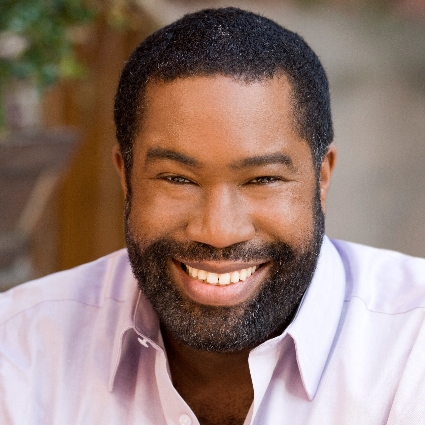
There were some pleasant features to the production. Falstaff, sung by Eduardo Chama, was played with more dignity than is usually the case.  When women smile at him in the street, he imagines them to desire him passionately.  The joke is that he is hugely fat.  At one spot he kneels on the floor before Alice and cannot get back up.  My favorite part of the production was the two story window in the Ford's house.  The servants carry Falstaff in the laundry hamper up to the second floor.  Then when they toss him out the window, you can see him descend into the Thames.

I have known people who love only Falstaff of all Verdi's operas, but I am not one of them.  I prefer more arias, even in comedy.  Nevertheless, the performance was enjoyable.

Saturday, May 18, 2013

Gramophone Hall of Fame 2013


Though it sounds like something that should have existed for 50 years at least, the Gramophone Hall of Fame began last year.  Here are this year's inductees:

Conductors Karl BÖHM ● Adrian BOULT ● Sergiu CELIBIDACHE ● Colin DAVIS ● Gustavo DUDAMEL ● Carlo Maria GIULINI ● Bernard HAITINK ● Mariss JANSONS ● Rafael KUBELÍK ● James LEVINE ● Charles MACKERRAS ● Zubin MEHTA ● George SZELL ● Bruno WALTER     

The only thing surprising here is the presence of the still very young Dudamel. 

Singers Montserrat CABALLÉ ● Renée FLEMING ● Thomas HAMPSON ● Anna NETREBKO ● Leontyne PRICE ● Bryn TERFEL ● Fritz WUNDERLICH

The three singers from the past are all richly deserving, especially my favorite Leontyne Price.  This year shifts the emphasis to active artists:  Fleming, Hampson, Netrebko and Terfel. At least there's no one in this category I've never heard of as there seem to be in the other categories.   There are no mezzos at all this year. 

Pianists Leif Ove ANDSNES ● Vladimir ASHKENAZY ● Emil GILELS ● Wilhelm KEMPFF ● Arturo Benedetti MICHELANGELI ● Sergey RACHMANINOV

String/brass/woodwind players Maurice ANDRÉ ● Julian BREAM ● James GALWAY ● Heinz HOLLIGER ● Steven ISSERLIS ● Yo-Yo MA ● Wynton MARSALIS ● Albrecht MAYER ● Anne-Sophie MUTTER ● Emmanuel PAHUD ● Jean-Pierre RAMPAL ● Jordi SAVALL ● Andrés SEGOVIA ● John WILLIAMS 

Vocal and instrumental ensembles Alban Berg Quartet ● Amadeus Quartet ● The King's Singers ● The Tallis Scholars

Producers/engineers/record label executives Bernard COUTAZ ● Fred GAISBERG ● Klaus HEYMANN ● Goddard LIEBERSON ● Kenneth WILKINSON

If they're going to do a list like this every year, they might want to shrink the size.

Wednesday, May 15, 2013

Gatsby Movie


I was constantly distracted throughout Luhrmann's movie The Great Gatsby by the almost silent character golfer Jordan Baker, played by Elizabeth Debicki. She dresses the set so amazingly one hardly remembers one is supposed to be fascinated with Daisy.


In the movie everything is explained, something that was not true of the opera I reviewed here.  The story is about old money vs new money.  Gatsby imagines it's just about money, that if he has it, he has Daisy.  My house is as big as yours, and I have glitter and celebrities.  I think he realizes he isn't going to win before he sacrifices all for Daisy.

The only controversy that surrounds the film concerns the soundtrack.  He chose a rapper, Jay-Z, to provide music instead of traditional jazz.  I noticed a bit of Rapsody in Blue, but that was it.  In the opera they distinguished sharply between ambient music, music that is supposed to exist in the period, and background music.  I stopped caring when it served only as standard movie music.  I guess it bothers you only if you know.  It is not possible to not know once you know.


Tuesday, May 14, 2013

Don Carlo at ROH


The reviews are in and everyone loves Jonas Kaufmann and Anja Harteros in Verdi's Don Carlo at the Royal Opera in London.

Here's the review in the Telegraph.

And here is the rave from Opera Today.

Here we have the Independent.

Here is the Daily Mail.

 My posting of Anja singing Elisabetta coincided with the final dress rehearsal.  Curious.

Monday, May 13, 2013

Ranking the Simulcasts

Every year I rank that year's simulcasts from the Metropolitan Opera, but this year I seem to be having some difficulty.  Nothing completely thrilled and nothing completely failed either.

The new operas for me are an amusing collection:  The Tempest, Maria Stuarda and Parsifal.  Since seeing The Tempest, I have seen and read quite a bit about the Shakespeare play, a work entirely from the playwright's imagination and his last work.  In spite of this the opera text was not by Shakespeare, a flaw surely.

A friend prefers Maria Stuarda with Maria as the soprano and Elizabeth as the mezzo.  I know that Joyce DiDonato, our Maria, has sung Elizabeth, but I have no basis for comparison.

Really only the end of Parsifal was new, since in the past I always left before that.  it was musically quite wonderful and a great pleasure.

The Met is gradually drifting into the mainstream of 21st century opera productions, though if I loved something, it was probably for the singing.  Looking back at the list, my favorites would have to be Matthew Polenzani in Elixir of Love, Elīna Garanča in Clemenza di Tito and everyone in Ballo in MascheraBallo has to get the top ranking for that rarest of all operatic events--great Verdi.

Bad.  I can't get excited about Botha no matter what he sings.   Also, I love opera seria and don't care to see it turned into a joke as I felt Giulio Cesare was.  This production is very popular on Amazon.

Perhaps I'm becoming jaded.


We must change our lives -- Interview with Cecilia Bartoli

[Dr. B: This is my translation of an interview from DIE ZEIT, on May 7, 2013 by Christine Lemke-Matwey. Thanks to the Forum. The interviewer has a somewhat literary style that is a bit beyond my capabilities, but I will do what I can.]

Cecilia Bartoli is the prima donna assoluta of our time. In Salzburg she sings for the first time in Vincenzo Bellini's opera Norma. [She actually debuted this role in Dortmund in 2010.] A conversation about tragic female characters, matching shoes and Italian politics


The Italian mezzo-soprano Cecilia Bartoli Salzburg, in April, to any halfway post card enabled corner is cut, milled, dug and built at the station anyway and still, the 470 years old Sternbräu they even have quite plucked away (the traditional restaurant needs a "facelift", it's called). Just there Cecilia Bartoli struggles towards the festival building, packed over hill and dale with several bags. It's a pretty picture, as the artist, dressed in black, passes an election poster of incumbent Governor Gabi Burgstaller on ("Who is the man in the word does not run away from it") on the Social Democrat to the red Snow-mouth wearing a yellow "pay attention" jacket.

The Bartoli guided Whitsun Festival held this year little fits the motto of "Opfer" [victim or sacrifice-her theme for the Pfingstfestpiele]. She herself on May 17 in the House for Mozart will debut as Vincenzo Bellini's Norma - a role that hardly anyone would have believed of her. [I have translated this paragraph very badly. Salzburg is getting a facelift. Cecilia is trudging through construction obstacles with a lot of baggage, passing political posters for an upcoming election.]

Cecilia Bartoli: Buon giorno, we are sitting in the audience, yes? You can see there some of our Norma stage set.

DIE ZEIT: Signora Bartoli, hasn't the Salzburg public who you know like to interfere in artistic matters, not complained about your festival motto? Among young people in Germany is "Opfer" [victim] a dirty word, no one would like to be a victim.

Bartoli: I love the German word "Opfer"! It shimmers, it has very different meanings depending on the perspective from which you look at it. The English know for "Opfer" two concepts: sacrifice and victim, so also "Opfer bringen" [bring sacrifice] and even "Opfer sein" [be a victim], ​​victims of oppression, victims of hate and violence, victims of their own overconfidence. However, as an Italian woman, I think also of the Latin, offere, to the "Offertory" in the Catholic Mass ...

DIE ZEIT: And after this little etymological excursion, Governor Burgstaller was reassured?

Bartoli: To me no one has complained. And it would be no bad thing if the politicians would take the art so seriously that they could be provoked by an opera from 1831!  By a woman like Bellini's Norma, who comes to us as a very human example of someone who in a conflict situation sacrifices: her children, her love and her life. Norma has the power to overcome her emotions. Who today is still able to do this?

In the audience, there is dim light for a rehearsal break. The stage set can be seen to some extent, the notes and notes of the reporter are not. So be it. Cecilia Bartoli speaks in a low voice, almost beseechingly, her eyes flashing. Her latest personal excavation lies close to her heart, one sees.

Bartoli: What do you see on stage?

ZEIT: Mattresses on the floor, a bicycle on the wall, tables, chairs ... a building from the thirties or forties of the 20th Century, I would say maybe a school that has been misused and now serves as a storage building?

Bartoli: Not bad! When Norma was premiered in 1831 in Milan, Italy was occupied ...

ZEIT: By Austria.

Bartoli: Yes, dear Salzburger, by Austria! And Bellini's librettist Felice Romani saw himself naturally confronted by the censorship of the occupiers, that is, he must tell the story he wanted to tell by making it as innocuous as possible, putting in some exotic costumes. He did that. The Italians are the Gauls, the Austrians are the Romans, and the whole thing takes place in the first Century before Christ. Norma is a rebellious, highly political piece, it's about rebellion, about the struggle of the oppressed against their oppressors. The Austrians were able to easily misunderstand. On the other hand Norma is about love and passion, and about a larger than life conflict: Norma, the Gallic Druid priestess who loves the Roman Pollione, she loves her greatest enemy and even has two children with him. How will she ever explain this to her people?

ZEIT: Anything that has to do with love, one takes easily from Italian opera. The political, however, one likes to see and hear far away.

Bartoli This is why we build two bridges in Salzburg: a musical one that tackles the bel canto and has been meticulously researched, with which singers, vocal subjects which Bellini had in 1831. I tell you what Maurizio Biondi and Riccardo Minasi ...

ZEIT: ... the two editors of the first critical edition of Norma ...

Bartoli: ... have it all figured out, this is the purest detective story! As the autograph of the score speaks to one, that gives me goosebumps to this day, this wealth of information! One has only to read it correctly. And we also build a scenic bridge, one that puts the action in the Second World War, when the Fascists in Italy reigned and the people were oppressed in other ways. Norma is now a partisan, a woman, as we know from the movies of Italian neorealism, Roberto Rossellini's Rome, Open City and other films. If you like, the Salzburg Norma is not least a tribute to Anna Magnani, the great Italian actress, and I have the honor in this production to look a bit like her.

ZEIT: The Magnani was also only 1.60 meters tall.

Bartoli: Thanks for the compliment. Maria Malibran, after Giuditta Pasta one of the most famous Normas of all, should even have been five centimeters shorter!

ZEIT: Do we have today, in the era of quotas and post-gender debates, a problem with towering women, with priestesses and prima donnas? Why on the stage do they always bow down to "normal" people.

Bartoli: Because Superior is not in flowing robes or the base on which these women were asked, but in the personality, the charisma! This must be visible. But maybe we distrust such personalities also stronger than before, because we ourselves produce hardly any. That goes especially for the music: We have never seen so many well-trained singers like today - and so few exciting performers, so few artists who follow their inner vision and don't allow themselves to be irritated by any market and any fashion. Another example: What is beauty? The nose is like this, the lips like this, the makeup like this, between New York and Salzburg everything looks the same. And the one who deviates from the norm is considered controversial. We have no more desire to be different.

ZEIT: Maria Callas was also like this in the fifties, otherwise why would she have starved away 30 kilos in just one season?

Bartoli: In her roles she was different, and that's the difference. Today, globalization is sitting in the middle of the stage. Maria Callas was not just the sad jet set icon and rival of Jackie Kennedy, she was primarily an outstanding artist! What Norma recording do you have at home?

ZEIT: The classic is probably the one with Callas, Christa Ludwig, Franco Corelli and Tullio Serafin from 1960. You know the legendary photo that shows Callas and Ludwig in the studio, singing the duet "Si, fino all'ore estreme" in the second act? Callas is with wasp waist and high heels on the front of the microphone, Ludwig is a meter behind, her stockings on, she has her worn out shoes next to her.

Bartoli: This photo is a wonderful metaphor for what happens when the performance practice is more important than all the manuscripts and historical sources. In the 20th Century no one thought that Bellini was a contemporary of Schubert, a composer on the cusp of early romantic! They saw only the great prima donnas with their great voices and wondered how you could satisfy them. They cobbled them to foreign title roles and changed the voice classifications and keys, let the dynamics be dynamic, tempi tempi and retouched sometimes this way and sometimes that. What barbaric acts! Giuditta Pasta, the Norma of the Milan premiere, must, according to all that we know, have been a mezzo-soprano, while the first Adalgisa, Giulia Grisi, was a lyric soprano - exactly the other way around from Callas and Ludwig, or Sutherland and Marilyn Horne! Isn't that crazy?

ZEIT: Maria Callas did everything wrong?

Bartoli: That's not the point. It's about freeing a piece like Norma of the patina to make it easier to understand. Take Norma's famous Cavatina "Casta diva" in the first act: There is an enormous difference if the introduction is played with a wooden flute or a modern instrument made of metal, and if I vocally regard the whole thing as a prayer and consequently sing piano, pianissimo, or I regard it as a display piece, with a fully loaded Opera House waiting. Callas was a child of her time, and I am too. Speaking of Callas ... (Cecilia Bartoli digs in one of her bags and brings out a pair of flat, worn out boots.) These will be my Norma shoes! Something more comfortable than high heels, don't you think? Norma is our partisan, as I said, she has to be fast and good on her feet.

ZEIT: Evil tongues say that through your archaeological research and discoveries you would find for yourself as it were a side entrance into a repertoire for which you do not have the voice under conventional conditions.

Bartoli: I never wanted to sing Norma, how would I ever have come to such an absurd idea? It was only when I was studying Maria Malibran, the great bel canto singer, with her repertoire, it was not until I saw: Ah, she sings many of my roles, but she also sings Norma, I asked myself: How can that be? No, no, the shoe is the other way around (she stretches the Norma-boots in the air and laughs): The modern orchestra does not love the singer.  Between pit and stage is not communicated, but roared. Below the instruments roar, above the singers roar, and now guess who wins in the end. That's why I much prefer working with specialist ensembles.

ZEIT: Will you expand your circles of the early Romantic period wider to Verdi or Puccini?

Bartoli: But yes, only with Wagner I'll wait a bit! Seriously, Wagner has opened my eyes and ears. I was very young when I heard Die Walküre at the New York Met.   4,000 seats, a huge room, a huge orchestra, huge voices. Mamma mia, I thought, if Wagner here already sounds like this, how did he first sound in Germany, in Bayreuth? The next summer, Jimmy Levine invited me to Bayreuth, and again I heard Die Walküre - and I sat there and was thunderstruck! 1,000 seats, a cover over the orchestra pit, all very small, very intimate. That was what Wagner wanted! How can we have just misunderstand him so?

ZEIT: Wagner was a passionate advocate of Italian bel canto, he adored Bellini. What can the Germans today learn from the Italians?

Bartoli: Not much, I fear. If you believe our politicians and you can see how the culture budget is cut and slashed everywhere, the opera plays almost no more role. This does not mean that there is no audience for it, but it is, and I think this is fatal, that the musical life is limited to a few large houses and that there only are played La Traviata, La Boheme, Madame Butterfly and Turandot. Verismo, verismo, verismo, the purest dictatorship! What an impoverishment! Where are Monteverdi, Pergolesi, Vivaldi, Rossini, Caldara? What a rich opera nation we were!

ZEIT: Couldn't politics benefit from opera? If you closed the Roman Parliament in a Salzburg Norma performance, sent ...

Bartoli: ... then maybe some would realize that we need to change our lives. We cannot go on like this, it is irresponsible to have a family of five cars and five computers, just because there are five family members. We must learn to do without, and now I'm back at the " Opfer " We have to make sacrifices in order to overcome the crisis that 20 years under Silvio Berlusconi have maneuvered us into. And it is not only an economic crisis, it is also and above all the spirit of the culture. Italia appartene all'italiani [Italy belongs to the Italians], do you understand? (Am I deceived, or does Cecilia Bartoli suddenly have tears in her eyes?) Italy does not belong to the politicians, it's ours. We must realize that we need to take care of our garden. Then we will also be useful for Europe someday.

ZEIT: Norma goes to her death at the end, she dies for her children and for her unfaithful lover. Is not that a typically female solution from a typical male point of view? The woman clears out - and immediately the world is back on track?

Bartoli: Afterward Pollione follows her, so the loads are not distributed very unevenly. But I know what you mean. For me it is important that Norma takes the initiative, because we are not much further than by Bellini. Why are there so few women in leadership positions, why must the Pope still be a man? Imagine, if in March in the Vatican instead of Signor Bergoglio a Signora Bergoglia was announced! It would have been an explosion! We may have no fear. Some want a female Pope, others listen all their lives to Maria Callas, the third group are most likely at home in the kitchen cooking Pasta alla Norma. The main thing, we do what we do voluntarily.

ZEIT: What's the recipe again? [For Pasta alla Norma, we presume.]

Bartoli: eggplant, tomatoes, basil, ricotta salata - a typical dish of the south, Bellini was Sicilian. The eggplant should be crispy on the outside and inside so tender that they melt on the tongue. As with a mature, fulfilling sound.


[More pictures here.]

[Dr. B:  The interviewer is the same woman who did the interview here, different newspaper.  She's very in your face with Cecilia, much more than other interviewers.  My present plans are to attend the final Norma performance in the summer.]

Thursday, May 09, 2013

Irresistable


These guys are in Baden Baden for Don Giovanni.  The picture is by Catherine Pisaroni.  The cast is Erwin Schrott as Don Giovanni (right), Luca Pisaroni as Leporello (left), Anna Netrebko as Donna Anna, Charles Castronovo as Don Ottavio (hat), Jonathan Lemalu as Masetto (second from left) and Malena Ernman as Donna Elvira.  It must be cold.  I am taken with Schrott's fashion statement--bare chest, jacket with fur collar.  Hmmm. 

I am starting to wish I was rich.

Tuesday, May 07, 2013

American Bach Soloists


I selected this picture because it looks like the interior of the Davis Community Church where I attended a concert of the American Bach Soloists conducted by Jeffrey Thomas.  This is my second visit after the Bach St. John Passion.  You will notice that that they are a tiny group who crowd onto the small stage of the church.  You might also notice that there is no theorbo.  This alone makes them interesting in the world of original instrument orchestras.  Even the Metropolitan Opera orchestra performing Giulio Cesare had a theorbo.  Visible in the picture is the very small organ they use for Bach.

The concert had three sections.

Handel's cantata Silete vente for soprano, in this case Mary Wilson.

A group of Bach arias, sung by bass-baritone Mischa Bouvier.

Handel's Apollo & Daphne for soprano and bass.

I don't believe I have ever heard any of these pieces before, but they were all lovely, especially the Silete vente cantata.  Mary Wilson is very expressive in this repertoire.  Mischa Bouvier is also excellent.

My life over the last few decades has drifted to operatic performances with the attendant operatic melodrama.  Concert performances of vocal repertoire generally involves a quieter expressive style which can be in its own way equally enchanting.

My son is concerned about the continuo group for Baroque performance.  Here the continuo group was constantly in flux.  Group one, if I recall correctly, used both harpsicord and organ and both cello and string bass.  For Bach we had only organ and cello.  This group included something new--an aria accompanied by only cello and organ, with the cello as a very active soloist.  This is logically not really a continuo group.

For Apollo and Daphne the harpsichord reappeared but not the organ.  This ensemble creates the impression of a group of soloists just as their name advises.  My feeling is that outside France this is probably authentic.  At one point the violins put their instruments in their laps and plucked them like guitars.  This was a more robust sound than the usual pizzicato. 

They are having a festival at the San Francisco Conservatory July 12-21 that includes 2 performances of the B Minor mass and a serious rarity--Missa Salisburgensis by Biber.  I understand that this piece would not fit into the Davis Community Church.

Sunday, May 05, 2013

3 Domestic Operas


This is the new guy at the Sacramento State opera theater:  Omari Tau.  This weekend he put on Triptych, An Evening of One-Act Operas, consisting of Samuel Barber's A Hand of Bridge, Mark Bucci's Sweet Betsy From Pike and Seymour Barab's A Game of Chance

Two performances of A Hand of Bridge one week apart.  How likely is that?  The libretto is by Gian Carlo Menotti who seems not to have actually played bridge.  The bidding stops at 5 hearts--clearly Sally's suit.  She should be declarer and not dummy.  She complains about always being dummy, possibly a form of spousal abuse.  At the end of the hand the play goes "2 of hearts," "seven of hearts," "trump."  But hearts IS trump.  You can't trump trumps.  Oh well.  Each player day dreams about something else, clearly the point of the opera.

David - Kyle Sullivan
Geraldine - Rachelle Lang
Bill - Michael Beale
Sally - Chloe Angst


Sweet Betsy from Pike is based on the famous song.  Betsy (Rachel Sprague) is shot and Ike goes off with the narrator (Vanessa Martucci).

A Game of Chance has an unusual plot.  Three women are sitting on a park bench knitting.  One by one they get up and complain about their lives.  The first woman (Knitter 3 sung by Linda Herring) wishes she were rich.  The Representative enters on a scooter carrying a very large check for writing a slogan which the three women sing.  These two exit.  The second woman (Knitter 2 sung by Kathy Cusson) wishes she were famous.  For her The Representative enters on a bicycle with a contract to publish her manuscript.  They exit.  The third woman (Knitter 1 sung by Rachelle Lang) wishes for love, and this time The Representative enters on a motor cycle.  She is to be reunited with an old lover.. The opera ends with an ensemble in which all four characters complain about their fates:  I didn't ask for enough.  It would be a far better opera if the final section was more extended.  I liked the staging very much.

Kyle Sullivan was the star of the show.  He played David, Ike and The Representative.  He may have been chosen because he could carry Betsy.

These operas are making me understand why the big opera composers, people like Adams and Glass, prefer serious political subjects for their operas. American domestic life is not the most fascinating theme for an opera.

It is important to note that this production also used computer projections.

Friday, May 03, 2013

Sexy Pictures

I'm always on the lookout for new sexy pictures of opera singers.  Here are a few.


This one is called Rene Pape Easy Rider.  I'm not too young to remember this movie.


This is Noah Stewart in The Pearl Fishers. He works out.


Every picture of Vittorio Grigolo is sexy.


The same could be said of Dmitri Hvorostovsky.  This picture is by Pavel Antonov.


And I'm not exactly sure why I find this picture of  Piotr Beczala sexy.  It's sort of the Thin Man syndrome.  Or just exactly why is Die Fledermaus so sexy?

Clearly I need a new sexy picture of Jonas.  The girls don't seem to be keeping up.

I use a lot of pictures from around the internet uncredited, but many of them are in costume.  I always assume these are freely available as publicity.