Sunday, January 07, 2007

I Puritani in HD


They brought out the big guns for this Metropolitan Opera broadcast of I Puritani. We had Beverly Sills cracking wise ("The tenor role is so high only a dog could sing it.") We had Renée Fleming interviewing Anna Netrebko not once but twice. Anna made faces to show what she does not do for the television cameras. She graciously complemented Renée for her work in Bellini's Il Pirata earlier in the season. Renée could interview for a living.

I am pointing this all out so A will be envious of us movie theater attendees. We got lots of closeups of Anna who looked fabulous, as always. The down side was the sound was too loud and the brightness was a bit low.  I looked for A in the audience but didn't see her.

Since Flute was sold out, they moved us into a larger theater in the same complex. The technical delivery mechanism is clearly imperfect. We'll have to see. The sound went bad on occasion--once in the middle of the mad scene. It would be desirable if adjustments could be made in the receiving theater--we were assured that this was not possible.

Elvira..................Anna Netrebko (soprano)
Arturo..................Eric Cutler (tenor)
Riccardo................Franco Vassallo (baritone)
Giorgio.................John Relyea (bass)
Enrichetta..............Maria Zifchak (mezzo-soprano)
Gualtiero...............Valerian Ruminski (bass)
Bruno...................Eduardo Valdes (tenor)

Conductor...............Patrick Summers
Production..............Sandro Sequi

We are pleased to report that the production included the by now already traditional bit of Anna standing on the furniture (bench in the mad scene.) She also lay down on the floor and hung a bit into the orchestra pit for a while. Beverly Sills talked of standing and singing, but Anna is never allowed to do this. She must run wildly from place to place so people can complain that she sounds short of breath. I have never seen such an athletic opera singer or one from whom so much athleticism was expected.

The plot of I Puritani isn't much. Elvira, a puritan, loves Arturo, a cavalier, and everything is set for their wedding when Arturo discovers that the Queen is hiding in their midst and decides he will rescue her instead of getting married. Elvira thinks the worst and goes mad. It's an excuse for a mad scene, the glory of bel canto. Everything ends happily.

The costumes were prettier than the ones in Opera News, but made no sense. Anna looked lovely. One always wishes to see what she will do. Her singing was also lovely.

The tenor, Eric Cutler, winner of the 2005 Richard Tucker Award, did not quite achieve Rubini, but the insanely high notes were reasonably well done. He must have been hard to find. He was nice to see and hear, and looked well with Anna.

They stood for Anna.
#ad

Wednesday, January 03, 2007

Making Music

I am always fascinated by the process of art. We are supposed to delight in the finished product, the performance, with no thought of how it came to be. I was telling a friend that the reason American Idol is interesting is because it lets you a little bit into the processes--you get to see the performances becoming. I remember how it worked in my own life--the passion of the song leaped out of me, but the painstaking correctness and musicianship did not always come. And sometimes I could not damp down the passion enough to hear the corrections. Judy Garland, the greatest shaper of songs we know, while experienced from childhood and brimming over with talent, still had to be taught her art. I forget the man's name--he was a laborer behind the scenes at MGM. The trick is to make the magic with every piece, to find its heart, to reach that perfect intersection of work of art and self, to find the music of your soul. I always imagine that Cecilia Bartoli loves the concert format so much because she can present only the pieces that work for her and throw out the ones that don't. But then everything in her fabulous Cleopatra seemed to work. It was simply one magnificent performance after another. I wish there was a film. I often think we would be happier with Renée Fleming if she threw out more. Record too many arias and songs and throw out the ones that aren't working. Why do a magnificent Handel album and leave in the one or two that fall dead? Everyone doesn't get everything, but some people I guess just can't tell the difference. Renée coached Homage with Gerald Moore. I think I thought he was dead. He was a great coach and accompanist and now he just coaches. She works at it and doesn't take her greatness for granted. Maybe all that's missing is a little editing. There is a film of Kathleen Battle being coached. It is often what makes the difference, what lifts the performance above the mundane. It is the question of striving for ecstasy.

Tuesday, January 02, 2007

Opera Broadcasts

Imagine my shock to read that 48 of the 60 theaters where the Metropolitan Opera was broadcast were sold out. People were standing outside the theaters begging for tickets and thinking of driving to Fresno. This is very exciting.

Sunday, December 31, 2006

Favorites by Year 2006 👍🏻

This is the year of my four month stay in London where I saw a lot of live performances. After that I retired from my job.  I traveled to LA to see Netrebko in Manon.  My experiences of Lorraine Hunt Lieberson and Sondra Radvanovsky begin here.  This year I reviewed 41 performances, including 18 DVDs, 22 live performances (in London, Rome, Zurich, New York, LA, DC, Baltimore and San Francisco),  and 1 movie.

Favorite Performances

  • Rome:  Franco Alfano's La Leggenda di Sakùntala in Rome [I just found out this was the first performance of the original version of this opera after the score was found in 2005.]   I briefly popped down to Rome from London.  Rome Opera is stagione, which means at any given time only one opera is playing.  Strange as this may sound, I also saw another opera by Alfano in London that year-- Cyrano de Bergerac.  This may have been my first encounter with Sondra Radvanovsky and included a conversation with her husband Travel **

  • (AN) The Salzburg La Traviata with Netrebko and Villazon
  • This production hasn't worked for the other sopranos like it worked for Netrebko.  See this one, skip the others.  It is simply spectacularly good.  This was not my first Netrebko.  I was already a huge fan long before I started blogging.  As a long time subscriber to the San Francisco Opera, I first saw her in Ruslan and Lyudmila in 1995.  I vividly remember her bursting on the stage as Musetta in La Boheme, probably in 2004.  She was very memorable from the  beginning. DVD


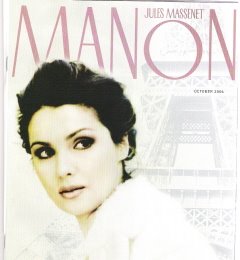
  • (AN) Anna Netrebko in Massenet's Manon in LA   After seeing her in San Francisco and on DVD for years, I flew to Los Angeles to see her Manon.  I wasn't sure she could do this, but she very much exceeded my expectations.  Netrebko is so insanely famous now because of her work in this period.  This production with the same cast appears on DVD from Berlin, highly recommended. Travel  ** ##20
  • (AN) Netrebko's Russian Album CD If you haven't heard this, you simply have no idea.  It is great Russian music by great Russian artists.  CD

Singer of the year 


Anna Netrebko creates her spectacular La Traviata, Manon and The Russian Album in a single year.  Few artists can point to such an achievement.

Didn't Like


I didn't care for the L'Orfeo from the ENO because the staging was incoherent, or for Sophie's Choice for bad vocal writing and just bad music.  I didn't feel the DVD production for El Niño worked at all.


New to Me Opera


There was a long list of new operas this year, including a lot of musicals seen in London.  I was researching unknown Rossini as well:


  1. Adams El Niño (2000) was a DVD.
  2. Alfano's Cyrano de Bergerac (1936) (live in London) **
  3. Alfano's La Leggenda di Sakùntala (1921)(live in Rome) **
  4. Bee Gees' Saturday Night Fever, musical was live in London.  **
  5. Handel's Semele (1744)(live in New York) **
  6. Janáček's Jenufa (1904) was a DVD  
  7. Elton John's The Lion King, musical, was live in London. **
  8. Krieger's Dreamgirls musical was a movie.
  9. Maw's Sophie's Choice (2002)(live in Washington) No thank you.  ** 
  10. Monteverdi's Il Ritorno d'Ulisse in Patria (1640) was a DVD.
  11. Monteverdi's L'Orfeo (1607) was live in London. **
  12. Offenbach's La Belle Hélène (1864) (live in London) **
  13. Prokofiev's Betrothal in a Monastery (1946) was a DVD with Netrebko.
  14. Rossini's Ermione (1819) was a DVD.
  15. Rossini's Bianca e Falliero (1819) was a DVD.
  16. Rossini's Tancredi (1813) was a DVD
  17. Rossini's The Siege of Corinth (1826) (live in Baltimore) **
  18. Shaiman's Hairspray musical was live in New York. **
  19. Sondheim's Into the Woods (1987) was a DVD.
  20. Tchaikovsky's The Maid of Orleans (1881) (live at SFO). ** ++
  21. Webber's The Woman in White, musical was live in London. **
  22. Weir's A Night at the Chinese Opera  (1987)(live in London) **
  23. Williams' Sir John in Love (1929) (live in London) **


##20 top 20 all time
** live, live stream or live in HD

Things Recommended to Buy

#ad

Blogging

My life has fallen into chaos. I moved all my possessions to Ohio, and then the sale of my house fell through. I am going on as if nothing is wrong, but I have a house I can't use.

I was going to Portland, Oregon, and then found the movie broadcasts from the Met were not showing anywhere in Portland. So I went to Sacramento instead.

So then I found the Magic Flute was completely sold out. Who would have thought? It is hard to think of this as a bad thing. I heard some of it on the radio and really liked the Queen of the Night, sung by Erika Miklósa. Her legato and sense of ease was very fine in this difficult music.

I had no trouble getting tickets to the other two and look forward to seeing them. A friend reminds me that while I am watching I Puritani in a movie theater, she will be in the orchestra at the Met. (Insert raspberry here.)

I was showing the Figaro from Salzburg 2006 to a friend and was struck again by how really unpleasant it is. The tempos are all very somber and draggy in addition to the dismally serious production. The kissing scene with Cherubino is amusing. Roeschmann and Schaefer in particular really get into it. Everything is Cupid's fault. He is spreading chaos.

In several places the players do synchronized movements. Why? Who knows? Except when Anna Netrebko does them they look like dance movements while everyone elses look crude. I'm sure part of Anna's attraction is how she moves. Like a dancer or a gymnast.

So now I find that I have lost my ticket to Semele in Zurich. I remembered my passport, but can't remember where I put the ticket. I am hoping to talk the opera there into issuing me another ticket. Otherwise I will stay home.

Chaos. Perhaps I am not cut out to be a gypsy.

Monday, December 25, 2006

Dreamgirls

The movie Dreamgirls opened today. It is an amalgam of so many things it's hard to get them all in. The basic story is modelled on The Supremes, a Motown group from the sixties, and in the movie Beyonce plays the Diana Ross character, and Jennifer Hudson, a newcomer to the films, is the ousted Effie. The casting is particularly fabulous. Eddie Murphy plays the male singer the girls first work as backup singers for, and Jamie Foxx is the manager, Curtis.

Three different periods are represented: the early sixties when The Supremes were in their heyday, 1981 when the musical opened on Broadway and the present. My ears heard 1981 Broadway and not 1961 Motown in the music. The plot is still a viable plot today. There still is a soul style and a white style of American pop music, though soul singing has crossed over into mainstream as it certainly had not done in the sixties. American Idol still does its best to surpress the soul stylists. The role of the present when viewing this movie is that more than just black people can appreciate the soul singing.

Curtis insists that the singers cultivate a more white sound without ornamentation. Some do this more willingly than others, and Curtis gradually weeds the reluctant ones out. Effie is the first to go. He was right, of course. The Supremes made a lot more money with a whiter style than they ever would have made as soul singers.

Beyonce is perfect for singing in the mainstream, and Jennifer Hudson is fabulous as the soulful Effie. Hudson is the star. The plot continues to include her character, to give her songs and screen time, after she is expelled from the group because otherwise all the energy would go out of the show. She deserves the Oscar buzz she is getting. It is a breakout part. She pops like Judy Garland.

Recommended. It's great fun!
#ad

Sunday, December 24, 2006

Speculation

Very rough translation of notice about Cecilia Bartoli's next CD:

"The next CD of Cecilia or her return to Rossini... or rather to his contemporaries since the next recording of Bartoli will be dedicated to the musical universe of the contemporaries of Rossini. Ask me the names neither of the type-setters nor of works, nobody knows them apart from the Lady (the orchestra even had parts where their names did not appear to avoid any escape or any plagiarism...). Publication in the autumn 2007 at Decca, obviously."

Who? Spontini, Mehul, Cimarosa, Cherubini, Piccinni, more Salieri, who? Those are my guesses.

Friday, December 22, 2006

Neruda Songs


I enjoy Peter Lieberson's Neruda Songs on texts by Pablo Neruda without feeling that they tread any new paths. It seems like a soundtrack, if you know what I mean. If this is a soundtrack, what is the movie?

It is a great love story. Burt Lancaster and Deborah Kerr on the beach, perhaps, with the waves rushing over them as they kiss. There is great poignancy here.

My love, if I die and you don't,
My love, if you die and I don't,
Let's not give grief an even greater field.
No expanse is greater than where we live.

...We might not have found each other in time.

just as it never had a birth, it has
no death: it is a long river,
only changing lands, and changing lips.

These are the songs of a great love story, for the composer has written then both to and for his beloved wife Lorraine Hunt Lieberson, for her voice and for her soul, and the result is very beautiful indeed. He knows his wife's voice very well and shows it to wonderful advantage. He knows her sweet notes, knows how to show off the lushness of her middle register, the beauty of her glissando, the darkness of her low notes. Are you other guys paying attention? This is how it's done.

It is even more poignant that these songs appear posthumously. "If I die and you don't...."
#ad

Anna and Cecilia

The Marriage of Figaro with Cecilia Bartoli and Bryn Terfel has long been my favorite. I loved the emotional rapport between them as a couple, and I felt very much a compatibility between the open earthiness of Bartoli, indeed of both of them and the roles they were portraying. I felt the vividness of the duke's assault as I had not done before. I felt love, jealousy, enjoyment as I had not done before.

So this Figaro with Anna Netrebko is rather a shock. I think Anna projects an entirely different kind of sexual energy than Cecilia. Behind Anna's dark smile anything could be lurking. She seems capable of any treachery or passion. Where Cecilia is loving and sensual, Anna is truly ambiguous. Is she betraying Figaro or not? Does she kiss the duke with love or loathing? Is she teasing Figaro in "Deh vieni" or not?

Anna may well be the better actress. Cecilia projects her own warmth to a truly remarkable degree. Anna reflects her vision. She is projecting the darkness and ambiguity of the production.

Sunday, December 17, 2006

Minimalism

I don’t know why I didn’t see it before. I have no excuse. We are deep into minimalism, right? I have identified a minimalist period beginning in 1975 with Glass’ Einstein on the Beach.

So German opera is deep into minimalist productions. The setting is always an unspecified present--vaguely contemporary costumes of no particular fashion. This style of production is everywhere--I almost wrote ueberall--though other types of productions are still around. Semele in New York City and Manon in Los Angeles are too specific to qualify.

In the Salzburg La Traviata it is done with a huge white band and sofas from Ikea.

In Freischuetz a large black object with steps and a doorway is the only set.

La Juive is done in two levels to symbolize the two worlds of jews and catholics.

I suppose Pamela Rosenberg’s productions were mostly in this style as well. Certainly the infamous Alcina where the heroine constantly changes her always black outfits was.

And of course the costumes are mostly black and white. The red dress in Traviata seems the only exception.

And in this Figaros Hochzeit from Salzburg there are stairs, doors, windows, but no furniture and no color.

Early in Act I Figaro finds a dead crow and throws it out the window. Oh, and there’s a cupid, a character dressed exactly like Cherubino (Cherubin d’amore) except with a pair of dainty wings. Cupid, called Cherubim in the credits, is an actual boy who bounds up the stairs two and three at a time, showing us why Cherubino never quite seems like a real boy. I’ve never seen a girl singer who could get that much into her body. It is cupid who keeps the emotions always in turmoil. He flings the characters around like rag dolls and seems to be controlling the action.

Cupid’s work is more blatant here by far than what I am used to. (In fact I went to an amateur production of Figaro in the Austrian embassy last night, and they presented it in a much more traditional style. Maybe more later.) There is quite a lot of kissing. The count kisses Susanna, and his wife sees him, perhaps explaining her feelings in “Porgi amor”.

Most transformed is the scene in the Countess‘ bedroom with the Countess, Susanna and Cherubino rolling around on the floor together. They don’t make it to the dressing up part and only manage the undressing, though not going all the way to nudity. Cherubino enthusiastically kisses both Susanna and the Countess, and is given mini love-making lessons. This changes completely the following scene and explains much more vividly the Countess’ guilt. Making the sexuality more overt certainly helps to explain the plot.

Cupid rises to the level of a concept, but the rest is just generic minimalism. Minimalist productions serve to make vivid the true meaning of the emotions deep in the opera. They are clarified in broad simple gestures.

However, it must be said that this Figaro is not at all funny.

Anna Netrebko is a very inward Susanna, and Dorotea Röschmann is a more interesting Countess than the last time I saw her in London. Christine Schäfer played Cherubino. I didn’t recognize any of the other names but thought that the mix of voices in the ensembles was especially good. In particular, Netrebko and Röschmann go well together. Harnoncourt, the conductor, is heavily booed at the end.
#ad