Wednesday, May 28, 2014

Salzburg Cenerentola

Very 1950s. 


I did not say I wouldn't post any more pictures.  She (Cecilia Bartoli) is in costume, and maybe he (Javier Camarena) is too.  Toi toi toi.

Or maybe not.  It's a rehearsal.  You can't tell anymore.


I want to express my joy in the continuing glory of Cecilia Bartoli's fabulous career.  She is in my heart even when I stay home.  There is an article in the New York Times today about the soon to begin Whitsun Festival and her management of it.  This article says she would like to sing opera in American again.  We are keeping our fingers crossed.


Buffet Don Magnifico

P.S.  I think every currently active Rossini singer in the world is performing.  Tenors alone included Juan Diego Florez, John Osborn, Javier Camarena, Edgardo Rocha, Barry Banks and Lawrence Brownlee.  And didn't I see José Carreras?  Also Cecilia Bartoli, Vesselina Kasarova, Joyce DiDonato, Carlos Chausson, Alessandro Corbelli, Massimo Cavalletti, Franco Fagioli, Michele Pertusi, Ruggero Raimondi, Erwin Schrott and I'm sure a lot more.

Tuesday, May 27, 2014

Ranking the Simulcasts 2013-14

Every year at this time I rank the simulcasts from the Metropolitan Opera, but this year I'm having trouble.  Let's say:

La Cenerentola with Joyce DiDonato first. 


I am putting La Cenerentola at the top of my list because of a lack of technical glitches in the broadcast. It was an ensemble performance of the very highest quality, achieving the intentions of Rossini both musically and dramatically. There was a feeling of self-confidence that included the entire cast.  Congratulations to all.

Werther comes in a close second mainly because of the pantomime at the end.


I saw the repeat which was incredible, but if your experience was of the live transmission, you would be unhappy.   It still didn't top Paris. In particular I preferred Tezier as Albert.  The guy in the soldier's outfit just seemed like a thug. Oropesa is the best Sophie, though. 

Falstaff is in third place.


I'm putting Falstaff in third place for the sheer perfection of the casting and performance.  I also very much enjoyed the production which remembered that Falstaff is upper class.

Next is Rusalka.


Those of us who have loved Renée Fleming's Rusalka over the years are grateful that this production and performance will become a memento of the occasion with a fine cast and traditional production.

Netrebko's Eugene Onegin is fifth.


I was hoping this would better.  I'd like to see her with Dmitri.

Prince Igor didn't really work for me.  The plot is simply incoherent. It can go back to being an orchestral piece.

But the rest is kind of in between, not sufficiently differentiated to be ranked.
The Nose was done as well as it could be.  I was feeling a bit jaded for Tosca,  La Bohème and Cosi fan tutte.

If I slighted one of your favorites, I apologize.  

Monday, May 26, 2014

Annoying

Perhaps I get annoyed by different things.  I admit that it is completely unacceptable to substitute name calling for actual criticism, but the things that annoy me are far more likely to be ignorance.

One of the opera writers insists on referring to Octavian as a page boy.  Now perhaps we are experiencing cultural differences, but in my vocabulary a page boy is either a hair cut or a young household servant.  If Octavian is just one of the Marschallin's servants, then why are they worrying about the Feldmarschall catching them together?  Why wouldn't he just slip back into his working clothes and start acting obsequious?

Octavian is a count, a member of Austrian royalty and appears in the book that catalogs them.  That's why Sophie knows his age and all his baptismal names.  It's why the public shouts his name "Rofrano" when he appears in the street in full regalia in front of Faninal's house.  He is a publicly known figure who met the Marschallin while she was riding in her carriage in the Prater.  Turning this character into a household servant is just plain stupid.

It makes nonsense of the entire rest of the story.  Are we to believe that Sophie has thrown over a Baron for a household servant and that Faninal will be placated about this by any amount of rides with the Marschallin in her carriage?

If you go into public life such as opera singing, you have to expect people to make stupid remarks about you, but complete ignorance by a professional writer of the topic one is purportedly writing about is unforgivable.

Friday, May 23, 2014

Taragate Summary

Slipped Disc has produced an excellent summary of the Taragate scandal.  He thinks it's over now.  We'll see.

Wednesday, May 21, 2014

Blogging

There is currently a row going on in the opera world, dubbed Taragate, about the attacks by male critics on Tara Erraught currently cast as Octavian at Glyndebourne.  See Opera Fresh, Telegraph, Elle, Telegraphagain, etc.  It's all over Twitter, too.  It live streams on June 8 if you want to make up your own mind.

Glyndebourne responds:  "Tara Erraught is an outstandingly talented artist whom we are thrilled to have as part of the cast of Der Rosenkavalier."

Should I feel guilty about this?  After all, I have posted a sexiest opera singers list every year since the beginning of this blog.  I even complained about Anna Netrebko post baby, something that I have reconsidered.  I am used to the way she looks now and still think she is gorgeous.

In the case of the Glyndebourne incident, I still insist that the designer of a production can make his performers look any way he wants.  If you don't like the way Ms. Erraught looks, you should complain about the production.  These people who sing Octavian are women.  That is part of the fun.  If you successfully completely disguise that fact, isn't that a mistake?  If you don't like cross-dressing, stop going to Rosenkavalier or any of the other operas where this goes on.  See extensive discussion of cross-dressing elsewhere in this blog.

I know of at least two young singers who do long distance running to keep their weight down.  Whoever you are, you have seen at least one of them and will probably soon see the other one. 

To Tara herself I would like to remind her there is no bad publicity. 

Tara is singing La Cenerentola next season at the Washington National Opera.

FYI:  Dame Kiri agrees with me.

Monday, May 19, 2014

La Traviata streamed


On May 20 La Traviata will stream live from the Royal Opera Covent Garden.  This is their first live stream ever.  Here is the cast:

Conductor:  Paul Wynne Griffiths

Violetta Valéry:  Ailyn Pérez
Alfredo Germont:  Stephen Costello
Giorgio Germont:  Simon Keenlyside
Baron Douphol:  Ashley Riches
Doctor Grenvil:  Jihoon Kim
Flora Bervoix:  Nadezhda Karyazina
Marquis D'Obigny:  Charbel Mattar
Gastone de Letorières:  David Butt Philip
Annina:  Gaynor Keeble

She exceeded my expectations.  Which were pretty damned high.

Sunday, May 18, 2014

Productions of Rosenkavalier


I watched the first act of a production of Der Rosenkavalier stream on sonostream.tv from Malmö, Sweden.  The first act is the only part that is truly wonderful, plus the trio at the end, of course.  It was done as though it were a clown troop.  The only pieces of furniture in the room were the bed and the little cart with the chocolate, so all those people that come in during the scene had to sit on the bed with the usual bed activities.  The costumes all had polka dots, like clowns.  I didn't notice big shoes, but I did notice polka dots on people's faces.  They needed a public opinion character like in Orpheus in the Underworld to disapprove of everything.  The singing wasn't good enough to compensate for this. 

Which led to the question could it be?  This led to the question could you modify the setting too radically at all?  I am remembering the DVD with Stemme and Kasarova, a duo who could actually compensate with fabulous singing.  But would a rich middle-class gentleman invite a Baron into his kitchen?

Remember Mimi in La Boheme must die on a certain chord or the scene makes no sense.  You should also recall that Richard Strauss's earliest compositions were tone poems with stories.  He bragged that he could compose the knives and forks.  And so he could.  What you are seeing and what you are hearing go together.

For instance, Mohammet's music describes how he moves about the stage.  Can a full grown man do this?  A ballet dancer, perhaps, which isn't at all what we got.

The plot cannot be moved from the period when women were traded like cattle.  When Sophie asks her father to let her out of the marriage, he refuses.  The whole rest of the story is Octavian proving that Ochs is unworthy, so daddy will not insist Sophie marry him.  If the plight of women is just a joke, then what's the point?

I immediately began to fantasize an Iranian Rosenkavalier with burkas since that part of the world still enslaves women.  But there might be bombs, so let's forget that.

The blocking and the opera are inseparable, perhaps more than any other opera.  It would be like a ballet without the choreography.  (Reminder--the ballet is the choreography.)

Unrelated comment.  If you watch enough opera in closeup, eventually you will notice that in the bows the singers often look at the prompter.  What's important here is that during the performance, you didn't notice them looking at him.

Friday, May 16, 2014

Rossini's Otello on DVD

👍🏻
Conductor: Muhai Tang
Production: Moshe Leiser & Patrice Caurier

Otello: John Osborn, tenor
Desdemona: Cecilia Bartoli, mezzo (originally Isabella Colbran)
Elmiro (Desdemona's father): Peter Kálmán, baritone
Rodrigo (man chosen by Elmiro to marry Desdemona): Javier Camarena, tenor
Jago: Edgardo Rocha, tenor
Emilia (Jago's wife): Liliana Nikiteanu

This DVD of Rossini's Otello (1816) from the Zurich Opera records the same series of performances I reviewed here from a live stream on medici.tv.

The plot of this opera is not the same as Shakespeare or Verdi.  It is clearly an opera seria but shows none of the traditional traits.  Twelve years before La Muette de Portici changed opera forever, the two main characters die.  This was unheard of.  My researches tell me that this opera was provided with an alternate happy ending, but we in the English speaking world would be outraged.  There are four scenes.  All of the action takes place in Venice rather than Cyprus.

Act I
In the Doge's palace Otello is presented to the Doge as the hero of a recent battle where he recovers Cyprus for Venice.  He has already married Desdemona, but this is a secret.  Desdemona's father Elmiro has a candidate to marry her in Rodrigo.  Otello announces that he and Desdemona are already pledged to one another, enraging Elmiro.

In this version Desdemona contributes however innocently to her own doom.  She writes a letter to Otello and encloses a lock of her own hair, but the letter falls into her father's hands.  In order to prevent an argument with Elmiro she tells him the letter is intended for Rodrigo.  Jago tells this version to Otello who believes him.

Act II  Scene 1
We are in Desdemona's room in the palazzo. She tells Rodrigo she is Otello's wife. 

Act II Scene 2
We are in Otello's hangout, a dump with a pool table and refrigerator.  Not only is Otello black, but he is not from Desdemona's social class either.  There are simply too many things against him, hero or not.  There are small issues of continuity in this scene but they shouldn't distract from the incredible singing.  Jago stirs the pot.  The ever hovering Emilia is there to save the situation.  Desdemona has a mad scene here and pours beer over her head.  P.S. I now interpret this as defiance of her father who has come to take her home.

Act III
We are in Desdemona's room in the palazzo.  She writes "Nessun maggior dolore che ricordarsi del tempo felice"  ["Nothing is Sadder than the Memory of Happiness."] on the wall.  She sings a very beautiful rendition of the willow song.  She kisses Emilia because she knows she's doomed.  When Otello arrives, she is angry and defiant with him, very different from Verdi.  Otello kills her then himself.

John Osborn as Otello is in black-face.  Since race is the whole point of the story, this seems right.  Black-face is a comic minstrel tradition only in the United States, so criticizing a French/Swiss production for doing it would seem pretty silly.  It is shocking how much Otello hates Desdemona. 

Cecilia is taking on heavier repertoire these days, and Otello seems on the heavy end of her abilities but still well within her grasp.  She is very intense here.  Someone asked me about her the other day.  She was everywhere for a while and then suddenly she was gone.  I explained that her Columbia Artists Management manager moved back to Europe and she along with him.  I followed her there, at least in spirit, but for most Americans she ceased to exist.

This is an outstanding sample of her work now, her emotional intensity turned to serious drama.  This is bel canto at its most serious extreme.  For people who hate regie it won't work, but I'm not one of them.  Perhaps you aren't either.  Love it along with me.
#ad

Thursday, May 15, 2014

La bontà in trionfo


Conductor: Fabio Luisi
Production: Cesare Lievi

Cast

Angelina: Joyce DiDonato
Prince Ramiro: Juan Diego Flórez
Dandini: Pietro Spagnoli
Don Magnifico: Alessandro Corbelli
Clorinda: Rachelle Durkin
Tisbe: Patricia Risley
Alidoro: Luca Pisaroni


This series of Rossini's La Cenerentola at the Metropolitan Opera was a first go for Fabio Luisi, and I must say he was fantastic.  His tempos were great.  His ability to follow the singers was incredible.  Every note was secure, joyful and invigorating.  Someone mentioned in the interviews how nice it was to look down into the pit and see his smiling face.

All of these great singing actors were in form.  I didn't even mind Don Magnifico played by the great Alessandro Corbelli.  He explains that he never plays anything for laughs, and in this performance only the sisters and Dandini seemed to be deliberately aiming for silliness.  Joyce, Juan Diego, Luca, Pietro, all were fabulous.  The entire performance was filled with love and joy.  It was a truly great La Cenerentola.

I apologize to my fellow viewers for conducting and humming along throughout most of this. It is still the opera I have listened to most, and apparently I know every note.

Wednesday, May 14, 2014

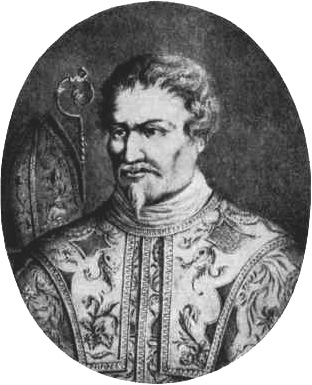
Agostino Steffani

File:Agostino Steffani.png 


I had only rudimentary contact with classical music before I began majoring in it in college. My education consisted largely of complete immersion in the style and repertoire of J.S. Bach.

My freshman theory book was by a man named McHose and consisted of statistical summaries of how chords progressed in the harmonized chorales of Bach. "58% of the time a II chord proceeds to a V chord." This sentence is completely made up, but you get the idea. Picture hordes of graduate students counting these. We learned to play chorales on the piano.

And we sang Bach. As an undergraduate I performed solos from the Matthew Passion, the B Minor Mass, the Christmas Oratorio and various cantatas. My idea of the Baroque is Bach.
When I studied history later, I realized that the contrapuntal technique of Bach came from the Renaissance, or what became known in the Baroque as the prima pratica. The counterpoint of the Renaissance continued on throughout the Baroque, while the seconda pratica grew up simultaneously.

The prima pratica came from the Netherlands (Josquin and Lasso) while the seconda pratica (Caccini and Monteverdi) came from Italy. Bach wrote in all the forms of his era and achieved his own dense and complicated amalgamation of the two Baroque styles.

Once at the beginning of this blog I wrote about the missing classic Italian composers. In my education they were lists of names. Now one of these names, Agostino Steffani, appears in Cecilia Bartoli's project to revive him. Steffani is a middle Baroque Italian completely immersed in the seconda pratica. This consists of a radical thinning of the texture, generally to bass and melody but seldom exceeding two upper voices over a bass line and chords. Bach and Steffani are different worlds, but with his trio sonata-like texture of two counterpointing upper voices Steffani may be closer to the Baroque ideal.

There are no fugues. My brain expects choral music to include fugues. There are hints of counterpoint in the choral sections, but nothing as complex as a fugue.

He seems to understand well the emotional requirements of his music. The religious music is very somber. I am having difficulties adjusting my expectations. It is important to realize that a criticism of this style is a criticism of the Italian middle Baroque, a style until recently we have known virtually nothing about. I think it is best to silence the din of expectation, to relax and enjoy it.  In fact, the entire process of learning to love something new begins with calming the din of expectation.

In this uncritical state of mind it relates less backward to the Renaissance than forward to the Rococo. For the Italians expression of the text is paramount. I would imagine that he has been ignored all these years because it has been German musicologists who decided who would be emphasized from the composers of the past. They prefer a high level of complexity. They, too, have been strongly influenced by Bach.

I hear Italian sweetness and ornate style in Steffani, all of it a pleasure to hear. For the people of the time they preferred Italian sweetness and virtuosity to German intellect. Italian music swept the world, and at long last we are getting to hear it for ourselves.

The singers on the Stabat Mater album are Nuria Rial , Cecilia Bartoli , Daniel Behle , Franco Fagioli , Julian Prégardian , Salvo Vitale (Bass).  The one that sounds like a particularly assertive Bartoli is Fagioli.  The singers are not identified by category on the album.  When Bartoli is singing, we hear her always present charm.

The interpretation of this work is unusually respectful and circumspect.  Solo or duet with bass is his preferred texture.  Music on catholic texts tends to fall into two categories:  the performance types which are primarily theatrical in nature (B-minor mass, Missa Solemnis, Verdi requiem, etc.) and works of a serious religious nature intended to enhance worship.  This is one of the latter category.  It is not difficult to imagine this as part of an actual religious service.  However, apparently this is the work that Steffani wrote as a gift for the Academy of Ancient Music in London.

I have put off writing this because this is tough.  I am used to the wild and theatrical Henry Purcell whose music cannot be distinguished by its intended use.   Steffani doesn't seem like any musician I know which isn't a basis for criticism.  It's a beautiful and deeply spiritual album.

#ad