Saturday, November 16, 2013

Hockney

While in San Francisco, between performances of Barber, I went to the De Young to see the David Hockney exhibit.


Apparently after living in Los Angeles for 25 years, he has returned to England, thus renewing his interest in English landscape.  He has also started painting on an iPad.  One of these "paintings" was mounted in such a way that we could see the strokes being added one by one.  The picture below (Yosemite) is one of these, and perhaps the one above is also.


Almost everything in the exhibition has been done after the millennium.  He is a bit too realistic for my taste.


But this picture, also in the exhibition, may counteract that general impression.  It reminded me of Picasso and concerns itself with problems in displaying a massacre.

There were also films of landscapes made with multiple cameras mounted on the same truck.  Interesting.

I can only say that for him the process of transformation to art is now consistent.  Go out and see it, and make up your own mind.


Friday, November 15, 2013

The Barber of Seville


Rosina receiving her singing lesson

Conductor:  Giuseppe Finzi
Director:  Emilio Sagi

Figaro:  Lucas Meachem (1), Audun Iversen * (2)
Rosina:  Isabel Leonard * (1), Daniela Mack (2)
Count Almaviva:  Javier Camarena * (1),  Alek Shrader (2)
Doctor Bartolo:  Alessandro Corbelli (1), Maurizio Muraro * (2)
Don Basilio:  Andrea Silvestrelli
Berta:  Catherine Cook
Ambrogio:  A.J. Glueckert
Fiorello:  Ao Li
An Officer:  Hadleigh Adams
Notary:  Andrew Truett

I went to the first and second performances of Rossini's Il Barbiere di Siviglia at the San Francisco Opera because I wanted to see both casts.  This is a new production.  This photo of the first scene will give you an idea of how it looks. 


First we are outside Doctor Bartolo's house, then we are in the back garden, and last we are inside the house.  The slanted floor is a kind of door where people and objects enter and exit.  There is dancing that is fully integrated into the action.  There is a storm complete with water.  There is extreme ambiguity about the precise period, but it must be long after Rossini.  The action was very busy, but I found it charming and entertaining.  Berta and Ambrogio, Bartolo's servants, maintained a constant flow of silly, entertaining business.

Perhaps this is the long version which I first saw in Met simulcast where Count Almaviva sings the long aria from La Cenerentola at the end.  The opera used to be performed without it, but perhaps this is now the new standard version.

I felt that the first cast was the more successful, but this was mainly due to the fact that the War Memorial Opera House has somewhat bad acoustics, and they were louder.  One of the primary criteria for a successful opera career is how loud your voice is.  Is this a silly topic?  From the second cast Daniela Mack and Maurizio Muraro were adequately loud.  I apologize for bringing this up.  The loudest person on the stage was probably Andrea Silvestrelli who played Don Basilio in both casts.  He has an incredibly large and resonant bass voice.  I would like to hear more of him.

I was charmed.  I felt lucky to hear Javier Camarena whom I saw in Paris with Natalie Dessay.  He was making his San Francisco Opera debut.  As was Isabel Leonard who appeared here recently in recital at the San Francisco Conservatory.

It was fun.  Sometimes this opera takes a somewhat gloomy turn but that did not happen here.  I yelled a lot.  Bravissimi tutti.

Forgive me for not reviewing them separately.

Tuesday, November 12, 2013

Dmitri as Rigoletto


I listened to the live stream of Rigoletto from the Met last night and was fascinated to hear the announcers discussing how ugly Dmitri Hvorostovsky looked in his Rigoletto costume.  He is, of course, one of the most beautiful men in opera today.  It took quite a bit of looking to locate this picture.  I tuned in for Dmitri who was very intense in this role.  His "Cortigiani" exuded violent rage such as I have not heard before.

There was an audience participation quiz in the intermission:  what character in an opera joins the army during the opera?  I made 2 suggestions, but evidently there are a lot more.

There is opera everywhere now.

P.S.  Dmitri getting ugly.

Following the Conductor

People are always talking about following the conductor in the performance.  This is something I always find puzzling.  In my first professional season--remember my professional experience is not particularly significant--I performed without contact lenses which basically means I couldn't have seen the conductor even if I'd wanted to.  The next season I had contacts, all paid for by the German health system.  The most important reason I needed contacts was because my face had a kind of blank expression due to the fact that I couldn't see anything.  Everyone said that with contacts I looked like I was actually seeing something.  From my point of view it kept me from falling over things.

I recently discussed the talking prompter we used, but I can honestly say I never heard her either.  I have no sense of any of this being a problem.  In the rehearsals you need to see the conductor to find out what he's doing.  In the performance you sing with the music, not the conductor.  Whatever the music is doing, you do that too.  Occasionally cues are required.

If you are not adequately rehearsed, that's another story.  I remember Angela Gheorghiu's concert in Zellerbach where she kept turning to see the conductor.  She didn't trust him.  That's the only explanation I could think of.  The repertoire was all things with which she is very familiar.  They needed to rehearse more.  It felt like they had rehearsed only enough to give a sense of anxiety.  He was a young man.  She should have been stern with him and told him to follow her.

If you don't know the music well enough to tell whether you are with it or not, you shouldn't be there in the first place.


Monday, November 11, 2013

Neon +

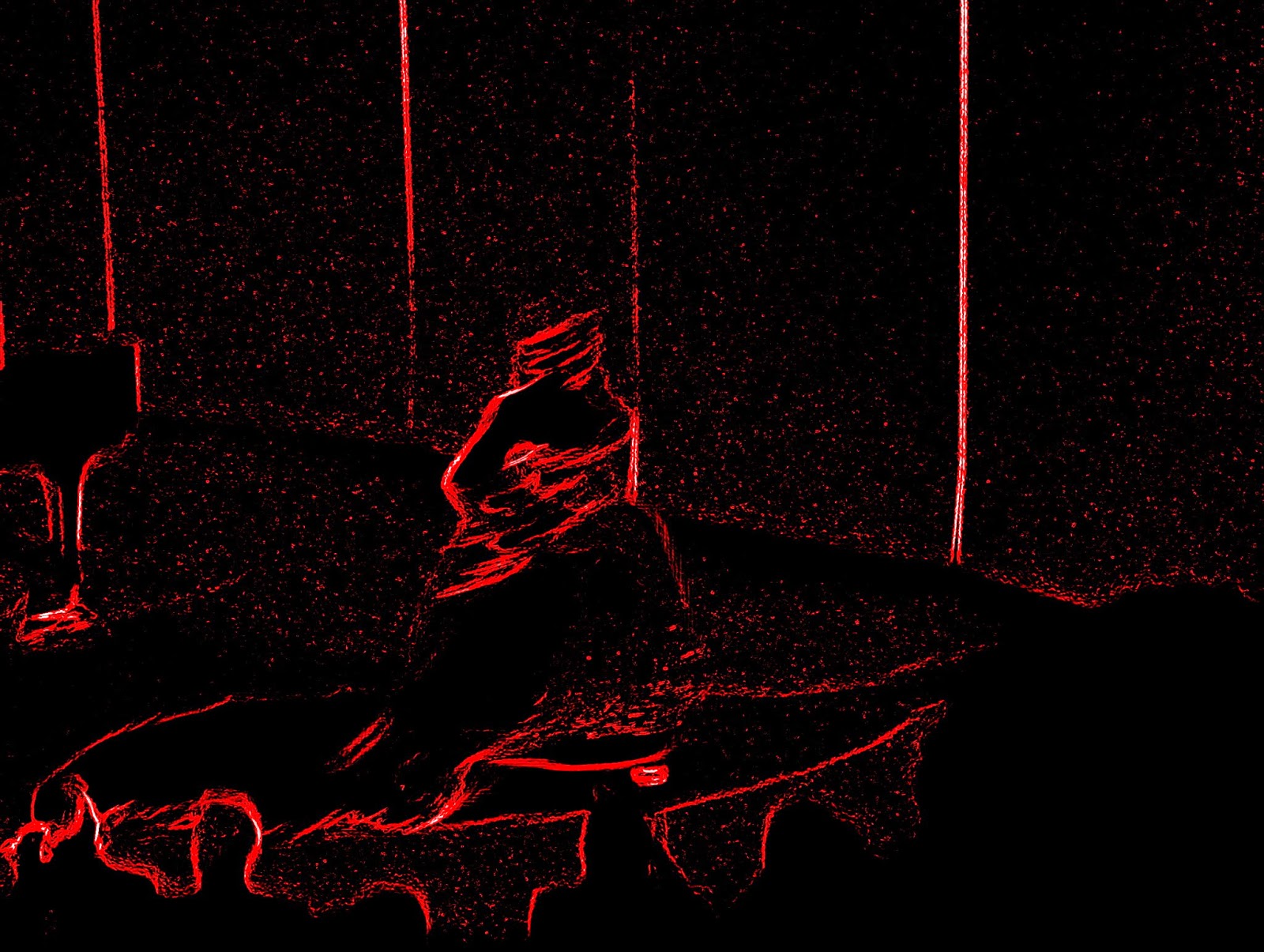
I found out that I can change any photograph into neon using Picasa. So here I am combining my passion for neon with my passion for certain opera singers.

Can't you see this neon of Cecilia Bartoli on top of a hotel in Paris:


This Jonas Kaufmann jumping man neon could hang in your favorite bar:


This one actually looks the most like neon, and I think I would put Anna Netrebko atop a casino in Las Vegas.  Isn't it amazing!


This one of Netrebko would go best in a window in North Beach:


This very serious young man could hang in a tapas restaurant:


Perhaps you'll recall this as "Essence of Bartoli".  Are there abstract neons?  Then it would hang in a museum.


Maybe this one of Harteros and Kaufmann could hang over a ballroom.  They look like they are beginning a dance.


It's impossible to explain how much fun this is.  I pick a sports bar for this neon of Joyce DiDonato:


This Joyce belongs on the cover of Vanity Fair:


Saturday, November 09, 2013

Tosca in HD


Conductor: Riccardo Frizza
Production: Luc Bondy

Angelotti: Richard Bernstein
Sacristan: John Del Carlo
Cavaradossi: Roberto Alagna
Tosca: Patricia Racette
Scarpia: George Gagnidze
Spoletta: Eduardo Valdes
Sciarrone: James Courtney
Shepherd: Seth Ewing-Crystal
Jailer: Ryan Speedo Green


Saturday was Tosca live from the Metropolitan Opera.  The Met is into stunt doubles these days.  For instance, this famous scene from Das Rheingold is done by two stunt doubles:


One of the biggest criticisms of this production of Tosca the first time around was the scene at the end where Tosca jumps.  It looked like they threw a large rag doll out the window.  It's a bit of a leap for a soprano, quite a bit higher than Senta's leap in Flying Dutchman in San Francisco.  So this time they used a stunt double.  She looked fabulous.  There was also a stunt double at the beginning to stand in for Angelotti when he climbs down the wall in the church.  This one was very smooth.

There is still a lot more to criticize here.  I defy you to find a church that drab anywhere in Rome.  Even the Protestant church is fancier than that.  But this is all old news.

I especially liked Roberto here.  He looks and sounds very good right now and was only occasionally off the pitch, never seriously.  Racette is always a good singer and a marvelous, multidimensional actress.   We enjoyed the enthusiasm when she stabbed Scarpia.  This is her year.

We were interested in Scarpia sung by George Gagnidze.  He had a translator in his interview, and we couldn't tell what language he was speaking.  He is from Georgia and received a rousing boo when he appeared for his bow.  This is supposed to be good, but I wasn't sure he understood that.  He made an excellent villain.


Blogging

In the intermission for Tosca live from the Met in HD was a short look at a piano rehearsal for Falstaff which will simulcast on my birthday.  They were rehearsing the end of Act II where Falstaff is thrown into the Thames in a laundry basket.  Angela Meade is Alice Ford, Lisette Oropesa is Nanetta and Stephanie Blythe is Mistress Quickly. 

James Levine was conducting in his automated chair, but next to him was a white-haired woman with a score on a music stand making gestures that at times resembled conducting.  Levine conducted all the time in the way one is accustomed to seeing, but the woman seemed only to conduct the singers.  She would hold up her hand with the palm toward the singer, and when it came time for the entrance, she would point at them.  I am revealing the incredible limitations of my professional experience when I say that it took me a minute to figure this out.  This person can only be the prompter.

When I sang in a professional theater, there was a prompter in the wings who only spoke the words just prior to when the singer sang them, usually not loud enough to be heard.  The woman in the film today never seemed to say anything.  Levine ignored her.

Magic Flute from Salzburg

Papageno and his Papagena

The Salzburg Marionette theater showed The Magic Flute at Mondavi Center tonight.  I especially wanted to see this since I had missed it in Salzburg.  It was enormous fun.  I can now feel my trip to Salzburg is complete.

In the puppet theater the singing was in German and the spoken words were in English. I was glad the translation was appropriately dignified and silly at the same time.  The nasty cracks about women found frequently in Flute were omitted.  Below is a link to the recorded version of the opera used for the music. 

The marionettes are about 2/3 life size.  At the end the human performers were shown to the audience, and we could see there were 8 of them.  I was especially fascinated when the characters seemed to circle one another.  How do they do that?  Their movements seemed very natural.

The marionette theater was positioned rather far back from the apron of the stage, making it difficult see.  The stage itself is much less than 2/3 the size of the average opera stage, but the action was always clear.

#ad


Friday, November 08, 2013

Interview with Nina Stemme

Here is an excellent interview with Nina Stemme.

Rock Stars of Opera


Noah Stewart points out this article in the November issue of Details magazine called Rock Stars of Opera. A short blurb appears for each of five young American tenors.  I am listing them in the order shown above.

Alek Shrader


I have seen Alek in Thomas Ades' The Tempest and in Rossini's Barber of Seville.  He is a lyric tenor with great flexibility.  In San Francisco he was sometimes difficult to hear, but this happens a lot for us.

Stephen Costello


I have seen Stephen in Moby Dick, at the Richard Tucker Gala with his wife, in Anna Bolena with Netrebko and in La Boheme in LA.  He is a lyric tenor of great sweetness.

Michael Fabiano


Michael is the most spectacularly gifted of this group.  I have seen him as Cassio in Otello with Botha and in Lucrezia Borgia with Renée Fleming.  He is IMHO a spinto tenor with a bright, almost Pavarotti-like tone.  His phrasing is also mature and sophisticated.  For him the sky is the limit.

 Noah Stewart


I know Noah primarily from the years when he trained at the San Francisco Opera.  He appeared there in the world premiere of Glass' Appomattox.  Then he was swept up into the Katherine Jenkins world in Great Brittain.  He works out and appears frequently in Hunks lists.  He recently won Operagasm's sexiest man award.  Right now he is in Madrid singing Purcell's The Indian Queen.  I think he needs to find his path.  All of them have commercial releases, but only Noah has his own album.

Bryan Hymel


I have seen Bryan in Faust at Santa Fe and in Les Troyens in HD.  He also sang Les Troyens at the ROH with Pappano.  Les Troyens is a big chunk to bite off, and Bryan was outstanding.  I'm going out on a limb here, but if you are looking for the Domingo type tenor that can sing anything, Bryan may be your man.  In any event he is the heaviest voice of this group and needs to choose his repertoire with this fact in mind.  Maybe I need to hear him live more.

I have posted all of them before.  They are all in the part of their careers where they are trying to find their niche.